Banner
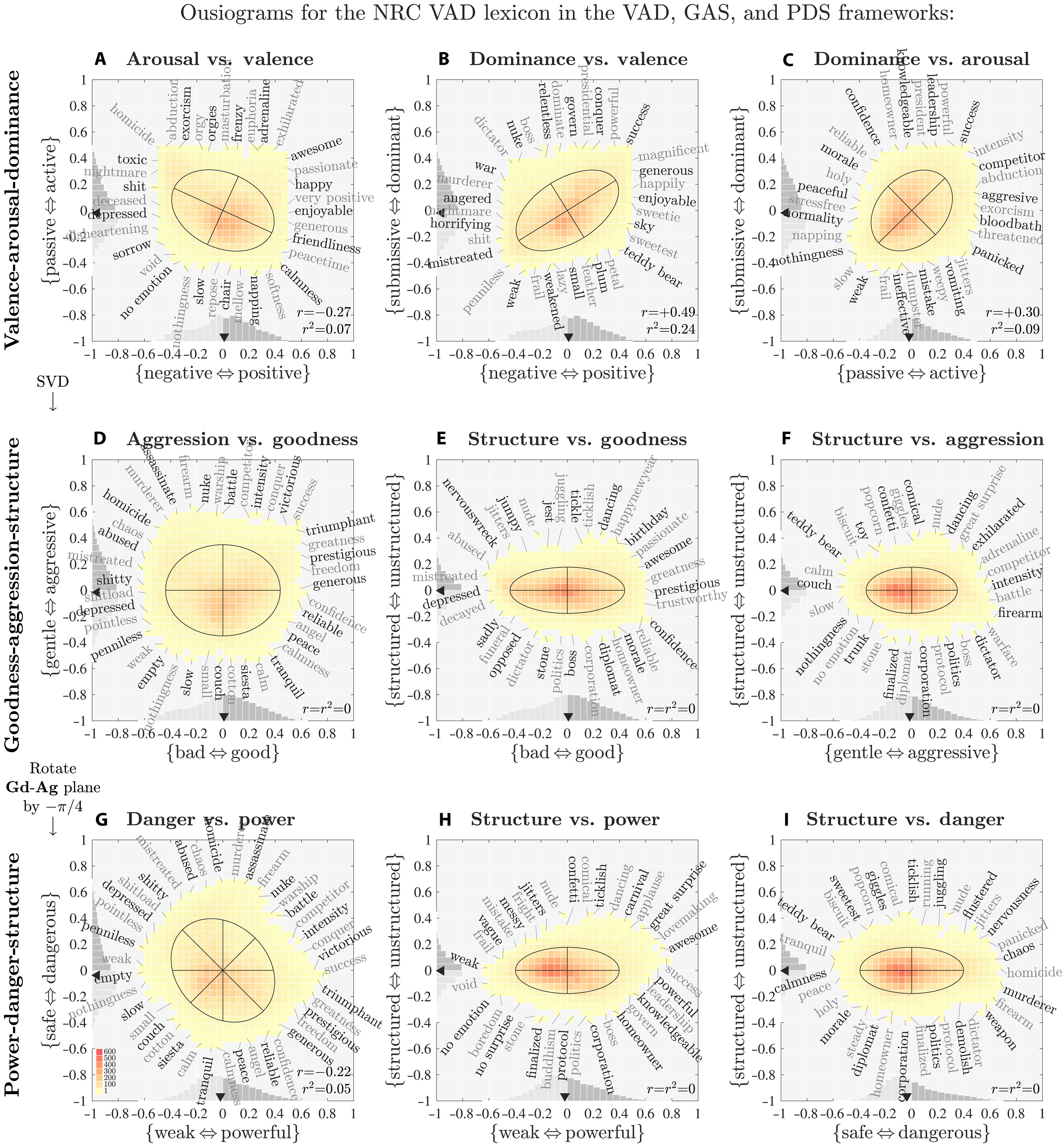
Ousiometrics Analysis Says All Human Language Is Biased

A new tool drawing on billions of uses of more than 20,000 words and diverse real-world texts claims...
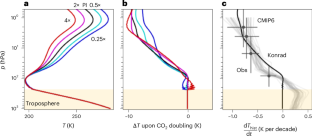
Wavelengths Of Light Are Why CO2 Cools The Upper Atmosphere But Warms Earth

There are concerns about projected warming on the Earth’s surface and in the lower atmosphere...

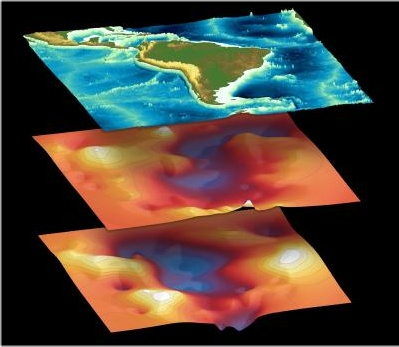
Here's Where Your Backyard Was 300 Million Years Ago

We may use terms like "grounded" and terra firma to mean stability and consistency but geology...

Convergent Evolution Cheat Sheet Now 120 Million Years Old

One tenet of natural selection is a random walk of genes but nature may be more predictable than...

User picture.
News StaffRSS Feed of this column.

News Releases From All Over The World, Right To You... Read More »

Blogroll

Science, technology, engineering and mathematics (STEM) advocacy has become all the rage at colleges, universities and other institutions as the US government spends billions doing outreach to make students more technical.

A new, internationally agreed radiocarbon calibration curve method will allow key past events to be dated more accurately.

The work led by Professors Paul Blackwell and Caitlin Buck from the University of Sheffield's School of Mathematics and Statistics and Professor Paula Reimer from Queen's University Belfast will lead to improved accuracy for archaeologists, environmental scientists and climate researchers who rely on radiocarbon dating to put their findings onto a reliable time-scale.

The release of the new curve will mean that more precise date estimates can be obtained than previously possible and will reduce uncertainty about the timing of major events in the history and development of humans, plants and animals and the environments in which they lived.

The concept of permanent neurological injury is so 20th century.

Instead, there has been gradual recognition of the brain's potential for long-term regeneration and reorganization and so rehabilitations strategies are undergoing radical changes. The potential for five new translational interventions was examined in an recent Neurology Clinical Practice article.

A single dose of the hormone oxytocin, delivered via nasal spray, has been shown to enhance brain activity while processing social information in children with autism spectrum disorders.

 Results showed that oxytocin facilitated social attunement, a process that makes the brain regions involved in social behavior and social cognition activate more for social stimuli (such as faces) and activate less for non-social stimuli (such as cars). 

Australian astronomers have derived a catchy way to prevent catastrophic, multi-billion dollar space junk collisions -  by listening in to the radio signals generated by stations like the popular youth network Triple J. 

The project spearheaded by Curtin University in Western Australia uses the newly operational Murchison Widefield Array (MWA), one of three precursor telescopes for the $2 billion Square Kilometre Array project, to detect radio waves reflecting off thousands of objects orbiting the earth. The study has already tracked radio waves from FM transmitters located near Perth and Geraldton bouncing off the International Space Station as it passed over Western Australia, approximately 500 kilometres above the Earth's surface.   

A new paper in Free Radical Biology and Medicine
suggests that a diet low in vitamin D causes damage to the brain.

In addition to being essential for maintaining bone health, the new evidence found that vitamin D serves important roles in other organs and tissue, including the brain. The study showed that middle-aged rats that were fed a diet low in vitamin D for several months developed free radical damage to the brain, and many different brain proteins were damaged as identified by redox proteomics.

These rats also showed a significant decrease in cognitive performance on tests of learning and memory.