Banner
Pilot Study: Fibromyalgia Fatigue Improved By TENS Therapy

Fibromyalgia is the term for a poorly-understood condition where people experience pain and fatigue...

High Meat Consumption Linked To Lower Dementia Risk

Older people who eat large amounts of meat have a lower risk of dementia and cognitive decline...

Long Before The Inca Colonized Peru, Natives Had A Thriving Trade Network

A new DNA analysis reveals that long before the Incan Empire took over Peru, animals were...

Mesolithic People Had Meals With More Tradition Than You Thought

The common imagery of prehistoric people is either rooting through dirt for grubs and picking berries...

User picture.
News StaffRSS Feed of this column.

News Releases From All Over The World, Right To You... Read More »

Blogroll

Developmental biologists at the University of Wisconsin School of Medicine and Public Health (SMPH) say they have gained new understanding of how digits grow and why each digit is different from the others.

Though the research was done on chick digits, it may have implications for humans born with a genetic condition known as bradydactyly, or stubby fingers and toes.

Despite decades of research, the biological basis of depression is unknown, and the molecular and cellular targets of antidepressant treatment remain elusive, although it is likely that these drugs have one or more primary targets.

Researchers from the University of Illinois at Chicago College of Medicine have discovered that a change in the location of a protein in the brain could serve as a biomarker for depression, allowing a simple, rapid, laboratory test to identify patients with depression and to determine whether a particular antidepressant therapy will provide a successful response.

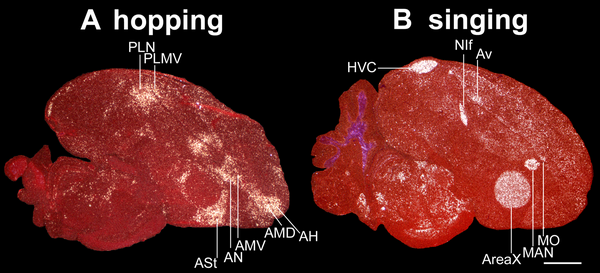
Though they perch far apart on the avian family tree, birds with the ability to learn songs use similar brain structures to sing their tunes. Neurobiologists at Duke University Medical Center now have an explanation for this puzzling likeness.

In all three groups of birds with vocal learning abilities – songbirds, parrots and hummingbirds – the brain structures for singing and learning to sing are embedded in areas controlling movement, the researchers discovered. The team also found that areas in charge of movement share many functional similarities with the brain areas for singing. This suggests that the brain pathways used for vocal learning evolved out of the brain pathways used for motor control.

Bipolar Disorder (BPD or manic-depressive illness) is one of the most serious of all mental disorders, affecting millions of individuals worldwide. Affected individuals alternate between states of deep depression and mania. While depression is characterized by persistent and long-term sadness or despair, mania is a mental state characterized by great excitement, flight of ideas, a decreased need for sleep, and, sometimes, uncontrollable behavior, hallucinations, or delusions.

BPD likely arises from the complex interaction of multiple genes and environmental factors. Unlike some brain diseases, no single gene has been implicated in BPD.

Cocaine addicts often suffer a downward emotional spiral that is a key to their craving and chronic relapse. While researchers have developed animal models of the reward of cocaine, they have not been able to model this emotional impact until now.

Regina Carelli and colleagues report experiments with rats in which they have mimicked the negative affect of cocaine addiction and even how it drives greater cocaine use. They said their animal model could enable better understanding of the emotional motivations of cocaine addiction and how to ameliorate them.

Photosynthesis by plants, algae, and some bacteria is crucial to life on Earth. It results in food from sunlight and in its process organisms release oxygen and absorb carbon dioxide.

Scientists at the Carnegie Institution say a new discovery puts a dramatic twist on what we know - namely that certain marine microorganisms have evolved a way to break the established rules of photosynthesis.

The studies, in Biochimica et Biophysica Acta and Limnology and Oceanography, suggest these marine microorganisms get a significant proportion of their energy without a net release of oxygen or uptake of carbon dioxide.