Banner
Pilot Study: Fibromyalgia Fatigue Improved By TENS Therapy

Fibromyalgia is the term for a poorly-understood condition where people experience pain and fatigue...

High Meat Consumption Linked To Lower Dementia Risk

Older people who eat large amounts of meat have a lower risk of dementia and cognitive decline...

Long Before The Inca Colonized Peru, Natives Had A Thriving Trade Network

A new DNA analysis reveals that long before the Incan Empire took over Peru, animals were...

Mesolithic People Had Meals With More Tradition Than You Thought

The common imagery of prehistoric people is either rooting through dirt for grubs and picking berries...

User picture.
News StaffRSS Feed of this column.

News Releases From All Over The World, Right To You... Read More »

Blogroll

Grammar is a complex human ability yet by the age of three most children can make grammatically correct sentences. Kids with a specific language impairment(SLI), however, continue to make grammatical errors, sometimes even into adulthood. As teenagers they might make errors that other children rarely make after age five; for example, when asking a question they might say “Who Joe see someone?” rather than “Who did Joe see?”.

SLI affects about seven percent of children and is a major cause of children not reaching their educational potential but it's never been clear if these children struggle to process language or just grammar.

Researchers at University College London may have some answers. They have discovered that a system in the brain for processing grammar is impaired in some children with SLI but that these children compensate with a different brain area.

There are ten key questions we have to answer this century, says a new report by the National Research Council. The questions represent where earth science stands, how it arrived at this point, and where it may be headed.

"With all the advancements over the last 20 years, we can now get a better picture of Earth by looking at it from micro- to macro-perspectives, such as discerning individual atoms in minerals or watching continents drift and mountains grow," said Donald J. DePaolo, professor of geochemistry at the University of California at Berkeley and chair of the committee that wrote the report. "To keep the field moving forward, we have to look to the past and ask deeper fundamental questions, about the origins of the Earth and life, the structure and dynamics of planets, and the connections between life and climate, for example."

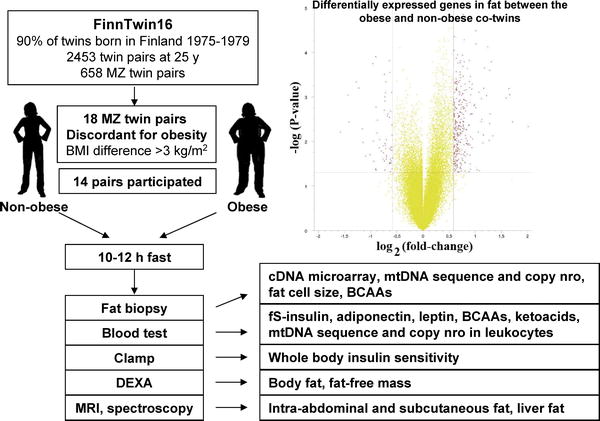
Obesity is associated with clear changes in gene-networks and the dysfunction of mitochondria, say researchers at the University of Helsinki and the National Public Health Institute - worse, the impacts of these cellular changes may aggravate and work to maintain the obese state in humans

Surprisingly, the genes most drastically affected by obesity were ones involved in the breakdown of a class of amino acids known as branched-chain amino acids. These changes in the obese twins were clearly associated with pre-diabetic changes in sugar metabolism and the action of the hormone insulin.

The researchers say that, while healthy eating habits and exercise are important, genes play some role in the development of obesity, so they studied rare cases of young (25 year old) identical twins with large differences in bodyweight and saw clear changes in the function of the cellular mitochondria.

Modern day logic and embedded systems are all around us. They are so ubiquitous and their design so efficient, say researchers at the RUNES (Reconfigurable Ubiquitous Networked Embedded Systems) project in Europe, that these miniature self-contained computers could be optimized to create on-the-fly wireless networks and assist in traffic control and even emergencies.

They use the example of a fire in a mountain tunnel. Ordinarily a tunnel full of smoke and fire would be a difficult situation because it would take time to pin down the location of the blaze and where people were trapped.

Wireless sensors, oblivious to smoke and heat, could make sense from chaos and route maps and instructions to firefighters through handheld terminals or helmet-mounted displays. But there's a caveat - because each system would need to be customized, the wireless networks basically have to be able to build themselves.

The productivity and biodiversity of an ecosystem is significantly affected by the rate at which organisms move between different parts of the ecosystem, according to new research. Ecologists and conservationists hope to use this knowledge to develop strategies to ensure that conservation areas are highly productive and rich in biodiversity.

The study in Nature(1) used a lab-based artificial ecosystem of communities of bacteria to examine what happens when the bacteria move around and evolve to live in different parts of the ecosystem over the course of hundreds of generations. The scientists measured the effect this dispersal of species has on the productivity and biodiversity of the ecosystem over all.

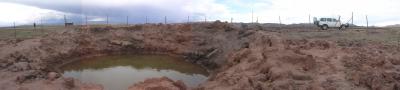
On Sept. 15, 2007, an object hurtled through the sky and crashed near the village of Carancas in Peru. Scientists dispatched to the site found a gaping hole in the ground.

Peter Schultz, professor of geological sciences at Brown University and an expert in extraterrestrial impacts, went to Peru to learn more and he presented the findings from his travels at the 39th annual Lunar and Planetary Science Conference in League City, Texas.

What Schultz and his team revealed: The object that slammed into a dry riverbed in Peru was a meteorite, and it left a 49-foot-wide crater. Soil ejected from the point of impact was found nearly four football fields away.