Banner
Pilot Study: Fibromyalgia Fatigue Improved By TENS Therapy

Fibromyalgia is the term for a poorly-understood condition where people experience pain and fatigue...

High Meat Consumption Linked To Lower Dementia Risk

Older people who eat large amounts of meat have a lower risk of dementia and cognitive decline...

Long Before The Inca Colonized Peru, Natives Had A Thriving Trade Network

A new DNA analysis reveals that long before the Incan Empire took over Peru, animals were...

Mesolithic People Had Meals With More Tradition Than You Thought

The common imagery of prehistoric people is either rooting through dirt for grubs and picking berries...

User picture.
News StaffRSS Feed of this column.

News Releases From All Over The World, Right To You... Read More »

Blogroll

New data has indicated that in rats, "male" hormones drive the decision to become a male during a window of time before male genitalia develop, and that blocking "male" hormones during this time caused male genitalia birth defects.

These defects were associated with a decreased ano-genital distance, leading to the suggestion that measuring human neonatal AGD could provide a noninvasive method to predict those at risk of developing male genitalia birth defects.

Cryptorchidism, the absence in the scrotum of one or both testes (usually because of the failure of the testis to descend), and hypospadias, the abnormal positioning of the opening of the urethra, are common birth defects of the male genitalia and are risk factors for the adult-onset disorders of low sperm count and testicular cancer.

Better regulation is urgently needed for genetic tests, particularly those marketed directly to the public, argue researchers in this week’s BMJ.

In the past 18 months, studies have identified dozens of inherited DNA variations associated with common conditions such as heart attacks, diabetes and asthma, write Professor David Melzer and colleagues

In many cases, these findings provide insight on the cause of the disease, but clinical applications are still mostly unclear. Much work is now needed to identify and evaluate each potential clinical application. Yet, although the work of translating discovery into evidence based practice is just beginning, several companies have already marketed tests, many directly to the public.

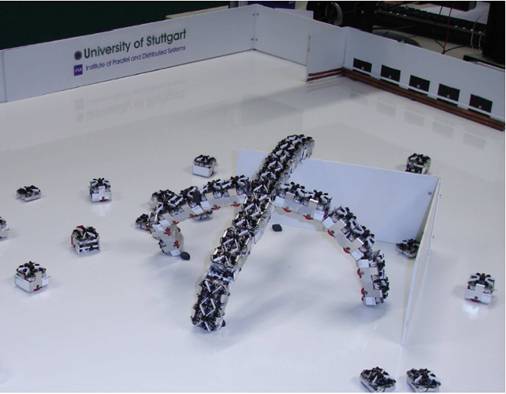
The aim of the ‘Symbiotic Evolutionary Robot Organisms’ project, or ‘Symbrion’, is to understand the principles that govern how robots can form themselves into a single artificial organism. The technique enables them to interact collectively with the physical world, and might ultimately be applied to real-world tasks such as rescuing earthquake victims.

‘Multi-robot organisms’ are made up of large swarms of individual robots, each slightly larger than a sugar cube, which work together to form a single artificial life-form. The organisms are able to share information and energy with one another, and to manage their own hardware and software.

North American buildings release more than 2,200 megatons of CO2 into the atmosphere - 35 percent of the continent’s total - according to a new report issued by the trinational Commission for Environmental Cooperation (CEC). The report says rapid market uptake of energy-saving technologies could result in over 1,700 fewer megatons of CO2 emissions by 2030 - a cut nearly equal to the CO2 emitted by the entire US transportation sector in 2000.

Promoting the green design, construction, renovation and operation of advanced energy-saving buildings could cut North American greenhouse gas emissions more deeply and cheaply than any other available measure, the report advises.

Everyone knows computer chips have increased in speed and shrunk in size over the past few decades and their interconnects, the copper wires that transport signals around the chip and to other chips, have shrunk also. As interconnects get smaller, the copper’s resistance increases and its ability to conduct electricity degrades. This means fewer electrons are able to pass through the copper successfully, and any lingering electrons are expressed as heat. This heat can have negative effects on both a computer chip’s speed and performance.

The $260 billion semiconductor industry won't get too excited just yet but they have to take notice of a Rensselaer Polytechnic Institute study comparing the performance of copper nanowires and carbon nanotube bundles for interconnects. It is the first study to examine copper nanowire using quantum mechanics rather than empirical laws.

Amino acids are organic molecules that are the backbone of the proteins that build many of the structures and drive many of the chemical reactions inside living cells. The production of proteins is believed to constitute one of the first steps in the emergence of life. Amino acids are truly the 'building blocks' of life on Earth but the presence of these compounds in meteorites has led some researchers to look to space as a source.

Scientists at the Carnegie Institution have discovered concentrations of amino acids in two meteorites that are more than ten times higher than levels previously measured in other similar meteorites. This result suggests that the early solar system was far richer in the organic building blocks of life than scientists had thought, and that fallout from space may have spiked Earth’s primordial broth.