Banner
Pilot Study: Fibromyalgia Fatigue Improved By TENS Therapy

Fibromyalgia is the term for a poorly-understood condition where people experience pain and fatigue...

High Meat Consumption Linked To Lower Dementia Risk

Older people who eat large amounts of meat have a lower risk of dementia and cognitive decline...

Long Before The Inca Colonized Peru, Natives Had A Thriving Trade Network

A new DNA analysis reveals that long before the Incan Empire took over Peru, animals were...

Mesolithic People Had Meals With More Tradition Than You Thought

The common imagery of prehistoric people is either rooting through dirt for grubs and picking berries...

User picture.
News StaffRSS Feed of this column.

News Releases From All Over The World, Right To You... Read More »

Blogroll

Our bodies sense painful stimuli through certain receptors located in the skin, in joints and many internal organs. Specialized nerve fibers relay these signals coming from the periphery to the brain, where pain becomes conscious. “The spinal cord is placed between these structures as kind of a pain filter”, says Hanns Ulrich Zeilhofer, Professor at the Institute of Pharmaceutical Sciences at ETH Zurich and at the Institute of Pharmacology and Toxicology of the University of Zurich.

That filter assures that pain is not evoked by everyday stimuli like light touch. This is accomplished by inhibitory nerve cells located in the spinal dorsal horn that release the messenger molecule-amino butyric acid (GABA) at specialized contacts between neighboring nerve cells, so-called synapses. GABA then activates chloride channels on those neighboring cells which relay the pain signals to the brain.

In patients with chronic inflammatory diseases, such as rheumatoid arthritis or after nerve damage, for example following injuries, the pain inhibiting action of GABA becomes severely compromised. Pain signals are then conducted to the brain nearly unfiltered. Benzodiazepines, such as the sedative drug Valium®, which enhance the action of GABA, alleviate chronic pain when they are applied directly to the spinal cord via an injection into the spinal canal.

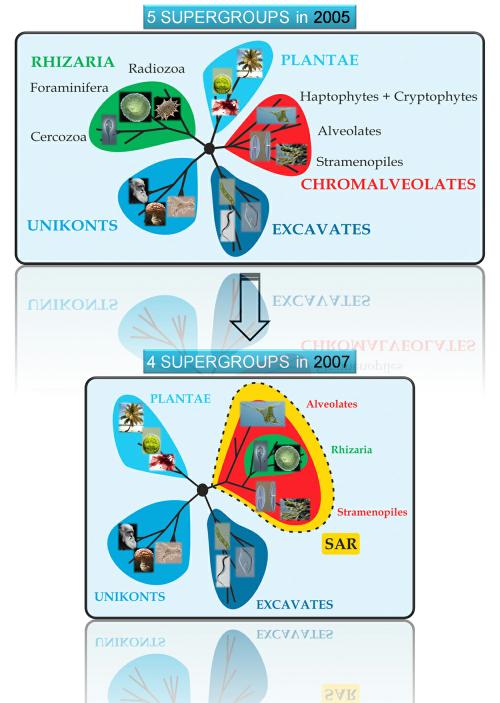
The Tree of Life has lost one of its branches due to the discovery that two formerly separated branches share a similar evolutionary history.

It's more than just re-drawing textbooks.

The discovery by Norwegian and Swiss researchers has gained attention from biologists worldwide. The findings come from the largest ever genetic comparison of higher life forms on the planet. Of 5000 genes examined, researchers identified 123 common genes from all known groups of organisms; these common genes have been studied more closely. The study has required long hours of work from the researchers and an enormous amount of computing resources—supplied through a large network of computers at the University of Oslo.

“The results were pretty astounding.

I wouldn't touch celery without a swath of peanut butter layered on top. I probably wouldn't touch it even then. Celery is not a stand-alone food for me.

But a study in the Journal of Agricultural and Food Chemistry reports identification of the flavor-boosting components in celery - and it reaffirms what cooks have known all along.

In their paper, Kikue Kubota and colleagues note that cooks have long recognized celery’s “remarkable” ability to enchance the complex flavors of soups and broths - it takes on a sweet-spicy flavor after boiling, helping to give food a thick, full-bodied, satisfying taste. Until now, however, scientists have been unable to track down the roots of celery’s effects.

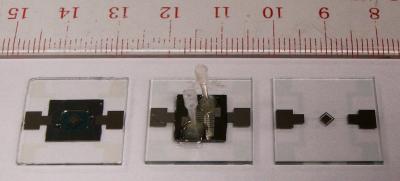
Researchers in Hong Kong have miniaturized technology needed to perform the versatile polymerase chain reaction (PCR) — widely used in criminal investigations, disease diagnosis, and a range of other key applications.

Published in Analytical Chemistry, they report development of a long-sought PCR microchip that could permit use of PCR at crime scenes, in doctors’ offices, and other out-of-lab locations.

I-Ming Hsing and colleagues note that PCR works like a biological copy machine, transforming a few wisps of DNA into billions of copies. However, existing PCR machines are so big and complex that they can be used only in laboratories.

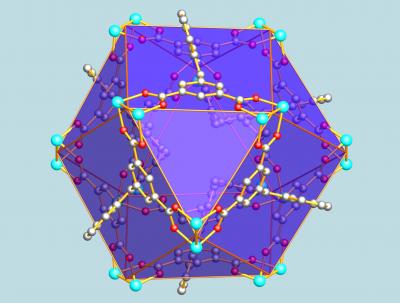
In a major advance in alternative fuel technology, researchers report development of a sponge-like material with the highest methane storage capacity ever measured.

It can hold almost one-third more methane than the U.S. Department of Energy’s (DOE) target level for methane-powered cars, they report in a new study. It is scheduled for the Jan. 23 issue of ACS’ Journal of the American Chemical Society, a weekly publication.

Hong-Cai Zhou and colleagues note that lack of an effective, economical and safe on-board storage system for methane gas has been one of the major hurdles preventing methane-driven automobiles from competing with traditional ones.

Amid growing consumer demand for more environmentally-friendly cleaning products, chemical suppliers are stepping-up their efforts to provide greener ingredients with the same effectiveness of conventional ones, according to an article in Chemical & Engineering News.

Michael McCoy notes that “green” cleaning supplies were once the province of fringe industries but are now attracting the attention of big corporations in the United States and beyond. Increasingly, suppliers are generating consumer cleaning products that contain natural or naturally-derived ingredients, avoid the use of environmentally-harmful chemicals, and generate less carbon dioxide during manufacturing and use, McCoy states.