Banner
Pilot Study: Fibromyalgia Fatigue Improved By TENS Therapy

Fibromyalgia is the term for a poorly-understood condition where people experience pain and fatigue...

High Meat Consumption Linked To Lower Dementia Risk

Older people who eat large amounts of meat have a lower risk of dementia and cognitive decline...

Long Before The Inca Colonized Peru, Natives Had A Thriving Trade Network

A new DNA analysis reveals that long before the Incan Empire took over Peru, animals were...

Mesolithic People Had Meals With More Tradition Than You Thought

The common imagery of prehistoric people is either rooting through dirt for grubs and picking berries...

User picture.
News StaffRSS Feed of this column.

News Releases From All Over The World, Right To You... Read More »

Blogroll

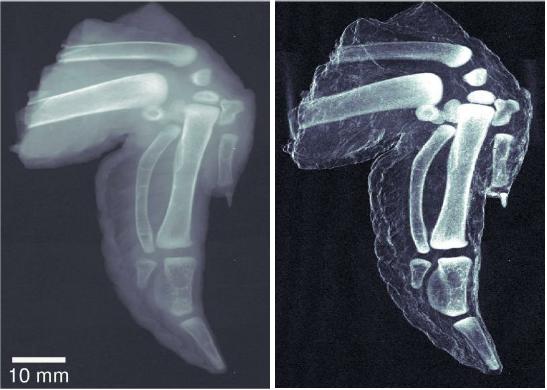
Dark-field images provide more detail than ordinary x-ray radiographs and could be used to identify explosives in hand luggage, diagnose the onset of breast cancer or Alzheimer’s disease and pinpoint hairline cracks or corrosion in functional structures.

The issue has been that the wavelengths needed for dark-field images required sophisticated optics that could only be produced at facilities like the Paul Scherrer Institute (PSI)’s 300m-diameter, $200 million synchrotron. Now researchers at PSI and Ecole Polytechnique Fédérale de Lausanne in Switzerland have developed a novel method allowing dark-field images to be produced using ordinary x-ray equipment already in place in hospitals and airports around the world.

The first evidence of a volcanic eruption from beneath Antarctica’s most rapidly changing ice sheet is reported this week in the journal Nature Geosciences. The volcano on the West Antarctic Ice Sheet erupted 2000 years ago (325BC) and remains active.

Using airborne ice-sounding radar, scientists from British Antarctic Survey (BAS) discovered a layer of ash produced by a ‘subglacial’ volcano. It extends across an area larger than Wales.

The volcano is located beneath the West Antarctic ice sheet in the Hudson Mountains at latitude 74.6°South, longitude 97°West. Volcanoes are an important component of the Antarctic region. They formed in diverse tectonic settings, mainly as a result of mantle plumes acting on the stationary Antarctic plate.

Using embryonic stem cells from mice, UT Southwestern Medical Center researchers have prompted the growth of healthy – and more importantly, functioning – muscle cells in mice afflicted with a human model of Duchenne muscular dystrophy.

The study represents the first time transplanted embryonic stem cells have been shown to restore function to defective muscles in a model of muscular dystrophy.

The researchers’ newly developed technique, which involves stringent sorting to preserve all stem cells destined to become muscle, avoids the risk of tumor formation while improving the overall muscle strength and coordination of the mice, the researchers found.

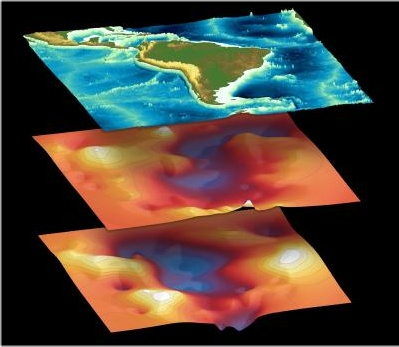
Scientific studies on climate change, energy and alternative fuels are among the 30 projects awarded more than 145 million processing hours on supercomputers at Oak Ridge National Laboratory through the Department of Energy's Innovative and Novel Computational Impact on Theory and Experiment (INCITE) program.

Through INCITE, researchers from industry, academia and government research facilities receive access to computing power at the National Center for Computational Sciences at ORNL for research on climate change, fusion energy, nanoscience, materials, chemistry, astrophysics, and other areas.

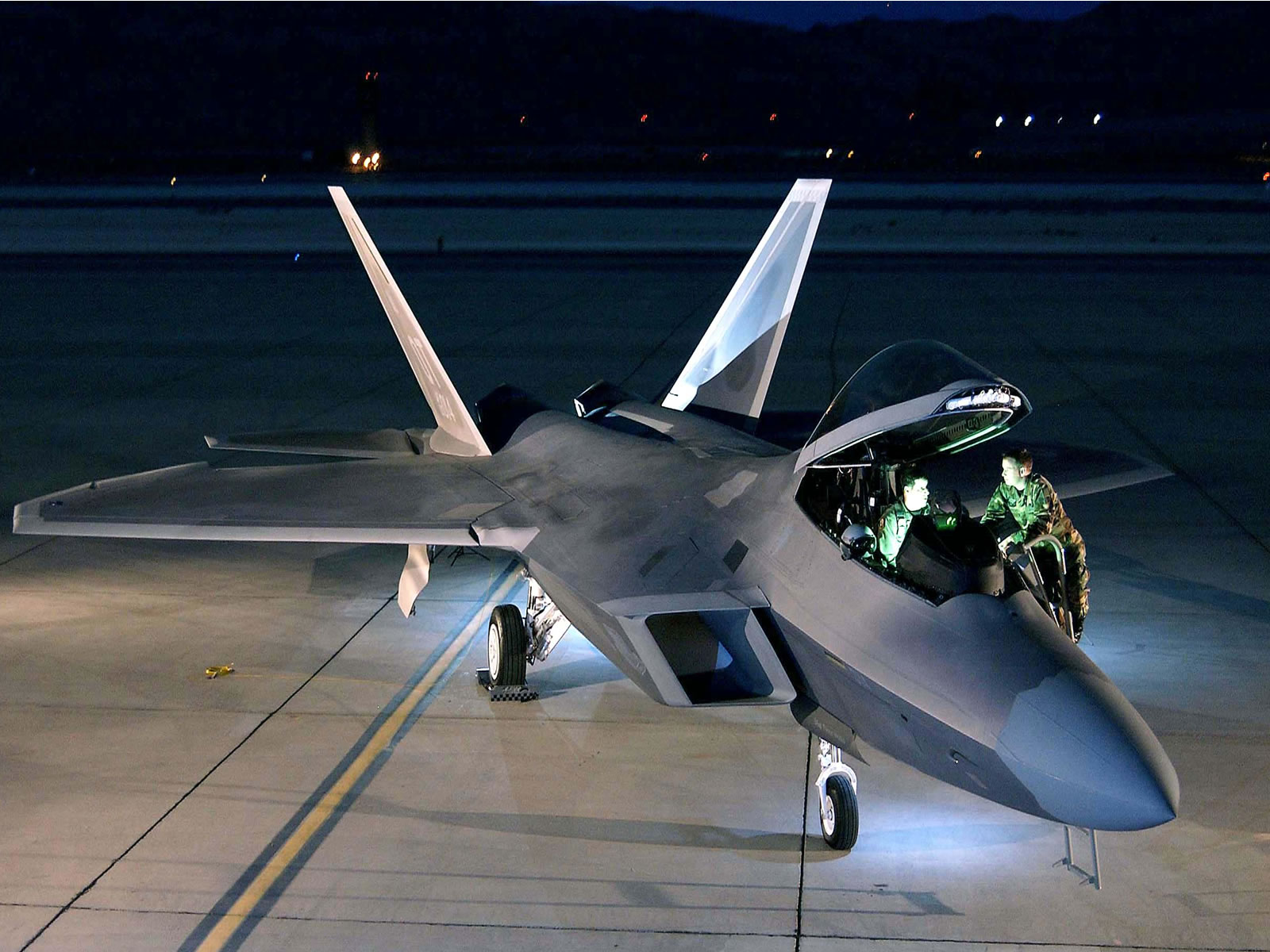
Raptor 03, the third F-22 manufactured by the team of Lockheed Martin, Boeing and Pratt & Whitney is now part of a new exhibit at The National Museum of the U.S. Air Force. One of nine F-22s built for engineering, manufacture and development testing, Raptor 03 will remain on display in the museum.

The F-22 was the winner of the Advanced Tactical Fighter (ATF) contract, a "stealth fighter" designed to replace the F-15 Strike Eagle and surpass the capabilities of Soviet-era Su-27 "Flanker"-class fighter aircraft.

Raptor 03 was the test fleet workhorse. It was used for loads testing, crosswind landing trials, arrester hook evaluations,and weapons bay environment studies.

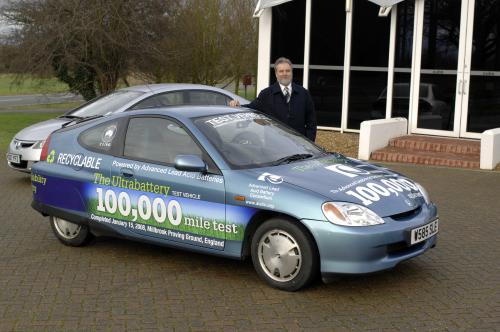
The odometer of a low emission hybrid electric test vehicle today reached 100,000 miles as the car circled a track in the UK using the power of an advanced CSIRO battery system.

The UltraBattery combines a supercapacitor and a lead acid battery in a single unit, creating a hybrid car battery that lasts longer, costs less and is more powerful than current technologies used in hybrid electric vehicles (HEVs).

“The UltraBattery is a leap forward for low emission transport and uptake of HEVs,” said David Lamb, who leads low emissions transport research with the Energy Transformed National Research Flagship. “Previous tests show the UltraBattery has a life cycle that is at least four times longer and produces 50 per cent more power than conventional battery systems.