Fake Banner
Choosing Your Bets: The Selection Bias

As some of the long-time readers of this blog know, in this column I have occasionally discussed...

Have A Master In Science, Want A Post-Doc Position Directly?

Do you have a master in Science, and want to start a Post-Doc position directly? You can have it...
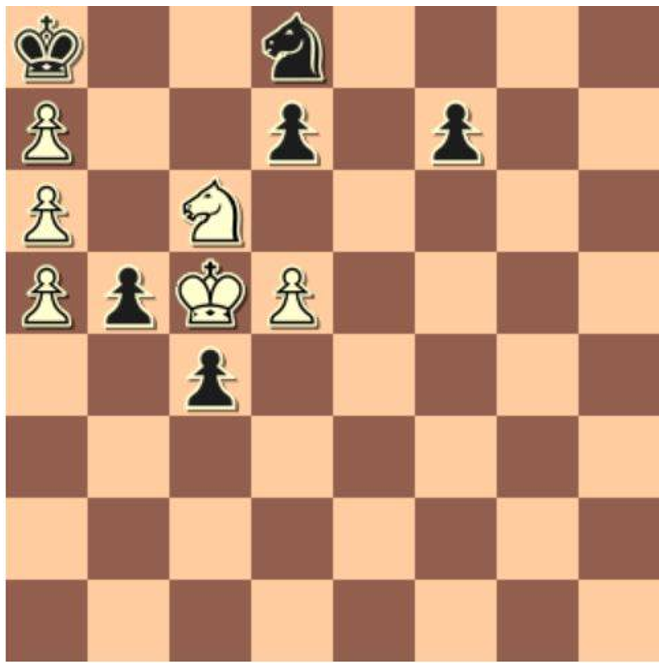
A Chess Study Requiring Backpropagation

The following position is a win for white. But how?It seems like white is able to grab a knight...
Co-Design Of Scientific Experiments

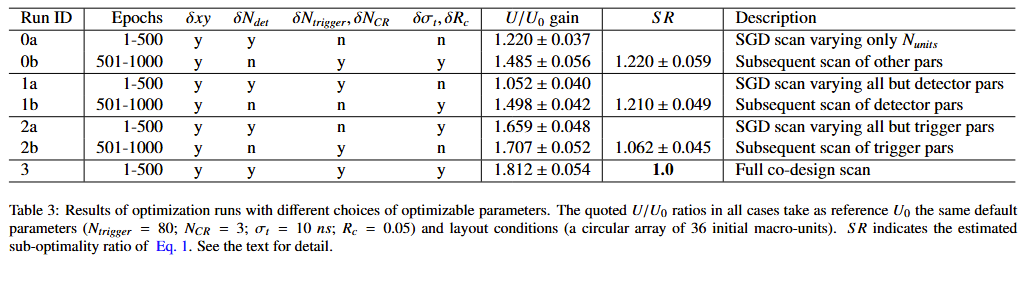
Next Monday, or Tuesday at the latest, you will find a new bulky paper in the arXiv. Titled "On...

User picture.
picture for Hank Campbellpicture for Heidi Hendersonpicture for Patrick Lockerbypicture for Bente Lilja Byepicture for Sascha Vongehrpicture for Johannes Koelman
Tommaso DorigoRSS Feed of this column.

Tommaso Dorigo is an experimental particle physicist, who works for the INFN at the University of Padova, and collaborates with the CMS and the SWGO experiments. He is the president of the Read More »

Blogroll
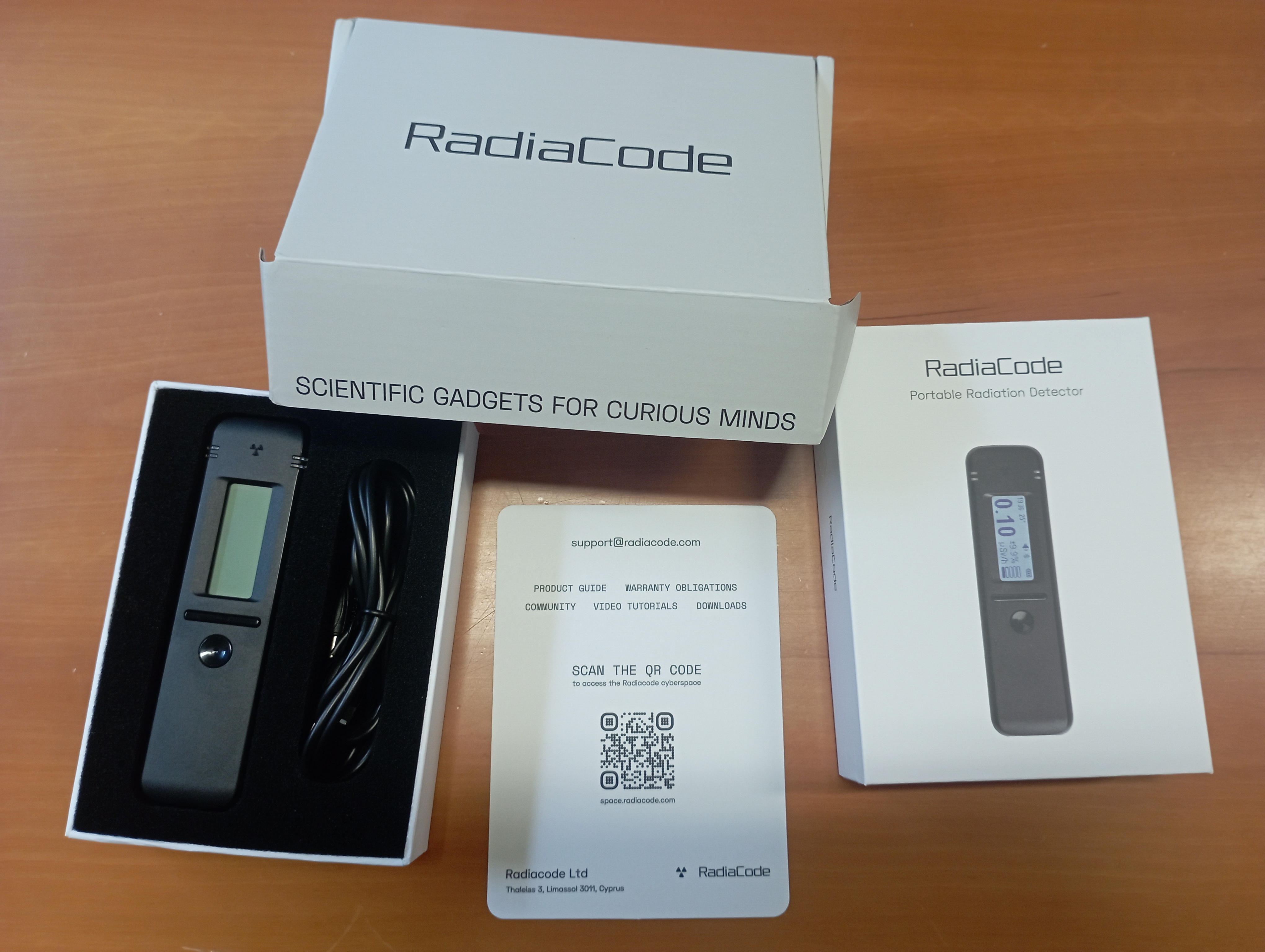
A few days ago I put my hands on a RadiaCode 103, a pocket radiation counter, dosimeter, and spectrometer that has recently appeared on the market. The company that produces it, RadiaCode, is located in Cyprus (see https://radiacode.com). The instrument is a portable device that pairs up with a smartphone or a PC for maximum functionality, but can well operate as a standalone unit to provide quite a bit more functionality than the standard monitoring and dosimeter capabilities of other instruments.
Here is the unit as it comes, packaged in a style similar to that of smartphones. The package contains the unit and a USB-C cable, plus a card with a QR-code link to the manuals and software.


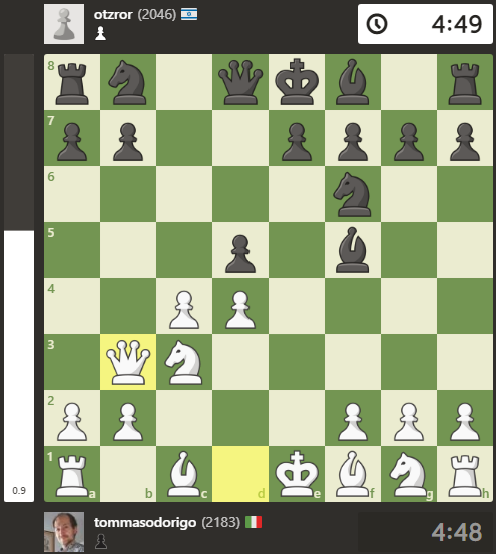
Time and again, I play a "good" blitz chess game. In blitz chess you have 5 minutes thinking for the totality of your game. This demands quick reasoning and a certain level of dexterity - with the mouse, if you are playing online as I usually do.
My blitz rating on the chess.com site hovers around 2150-2200 elo points, which puts me at the level of a strong candidate master or something like that, which is more or less how I would describe myself. But time is of course running at a slower, but more unforgiving pace in my life, and I know that my sport prowess is going to decline - hell, it has already. So it makes me happy when I see that I can still play a blitz game at a decent level. Today is one of those days.
Yesterday I was in Oslo, where I was invited tro serve as the leading opposer in the Ph.D. defense of a student of Alex Read, who is a particle physicist and a member of the ATLAS collaboration. Although I have served in similar committees several times in the past, this turned out to be a special experience for me for a couple of reasons.
Yesterday I gladly attended a symposium in honor of Giorgio Bellettini, who just turned 90. The italian physicist, who had a very big impact in particle physics in his long and illustrious career, is still very active -e.g. he makes all the hard questions at the conferences he attends, as he has always done. The symposium included recollections of Giorgio's career and achievements by colleagues who collaborated with him and/or shared a part of his path. Among them there were talks by Samuel Ting, Paul Grannis, Michelangelo Mangano, Hans Grasmann, Mario Greco.
I also was allowed to give a short recollection of a couple of episodes, that underline the exceptional disposition of Giorgio with students. Here is a quick-and-dirty English translation of my speech (it was in Italian).
... if you are a researcher in physics or astrophysics and you are working with machine learning, that is.

Between September 23 and 25 - just when summer is over - we will meet in Valencia, Spain, to discuss the latest developments in deep learning applications to optimization of experiments in fundamental science. This is the fourth workshop of the MODE Collaboration, which focuses on a new frontier of application of deep learning: co-design and high-level optimization, and the tools to pull it off.


By and large, particle physicists confronted with the need to awe and enthuse an audience of laypersons will have no hesitation in choosing to speak about the Higgs boson and its mysteries - undoubtedly a fascinating story that requires one to start with the 1960ies and the intuition of a handful of theoretical physicists, and then grows epic in a crescendo of colliders that sought and missed the Higgs boson, and then the LHC which finally found the elusive signal of production and decay of that particle.