Fake Banner
A Research Position In Neuromorphic Computing And Nanophotonics Open In Padova, Italy

Five days are left to apply to a 2-year research position at INFN-Padova, to work in the context...

Apply For The USERN Prize, Win Cash, And Get A Keynote Talk In Astana

Nowadays it has become exceedingly hard to distinguish legitimate academic endeavours from scam...

A Record Of Past Activities

Every now and then, for one reason or another, an academic will have to update one's own CV. This...

Surviving Queues: 2 - On The Road

[For the first part of this two-part post, see here]...

User picture.
picture for Hank Campbellpicture for Heidi Hendersonpicture for Patrick Lockerbypicture for Bente Lilja Byepicture for Sascha Vongehrpicture for Johannes Koelman
Tommaso DorigoRSS Feed of this column.

Tommaso Dorigo is an experimental particle physicist, who works for the INFN at the University of Padova, and collaborates with a number of exxperiments in physics and astrophysics, including the... Read More »

Blogroll
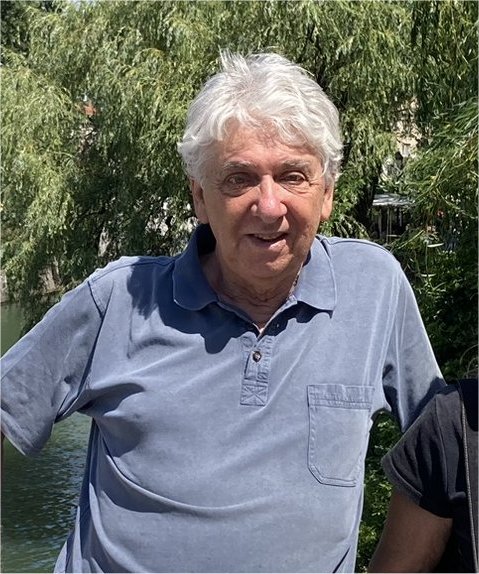
I was reached this evening by the news of the passing of a dear friend, Enrico Stomeo. Enrico was an architect by profession, but for me he was rather defined by his activity as an amateur astronomer - in fact, if I had to define what a serious amateur astronomer is, I would more or less consciously be describing him. 


[Above, a recent picture of Enrico]

The Associazione Astrofili Veneziani

Nobody likes to wait in line. Whether you are sitting in your car waiting to reach the toll booths, on a plane waiting to disembark along with the other passengers, or in a queue at the ticket office, you may experience a range of feelings ranging from perplexity (“What am I doing here?”) to impatience (“Why is this not moving forward?”), to annoyance (“What is that idiot in the front chatting about with the operator?”). 

As some of the long-time readers of this blog know, in this column I have occasionally discussed probability calculations in the context of gambling and betting. A long time ago I also famously won a $1000 bet on the LHC not discovering any new physics. Below I will mention a similar bet that ended up not being agreed upon by the parties, for the sake of discussing a subtle effect one has to worry about when placing bets: the selection bias. 

Do you have a master in Science, and want to start a Post-Doc position directly? You can have it, in Padova (Italy), to work with me on the PHINDER project, an EIC-funded Pathfinder grantee.
I am offering a two-year position for research in nanophotonics-powered neuromorphic computing for particle detector development at INFN, Sezione di Padova. The call is open and all the information is available at this link: https://jobs.dsi.infn.it/dettagli_job.php?id=4578
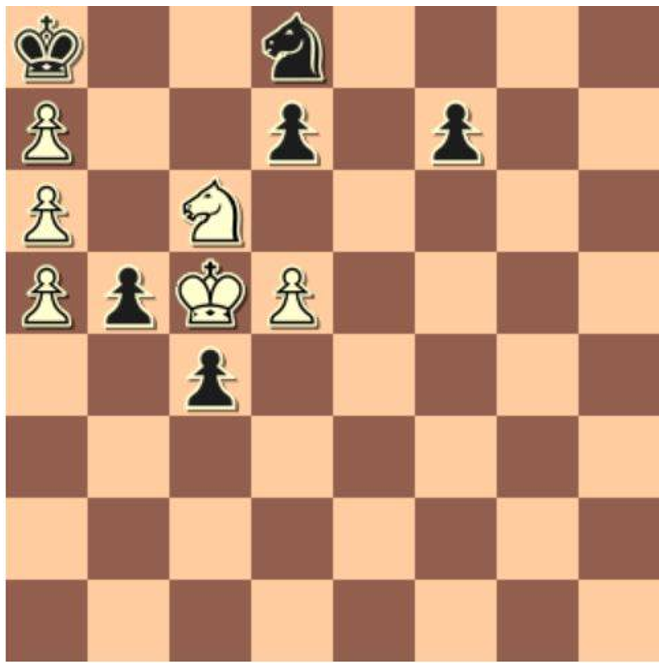
The following position is a win for white. But how?


It seems like white is able to grab a knight for free. However, that would be not a wise idea, as the c4 pawn would then be free to run down to become a queen. You can easily convince yourself that 1.Nxd8? c3! wins for black. White also has its own knight en prise in the starting position, so a move not involving a knight move will result in its demise. E.g., 1.Kb6 seems a desirable attacking move to make, but 1....dxc6 2.dxc6 Nxc6! again turns the tables. 
Next Monday, or Tuesday at the latest, you will find a new bulky paper in the arXiv. Titled "On the Co-Design of Scientific Experiments and Industrial Systems", the work is authored by over 80 colleagues. I directed them as co-chair of WG2 of EUCAIF (with Pietro Vischia) in assembling a view of the state of the art of the techniques and the issues connected with the simultaneous optimization of hardware and software of scientific experiments in fundamental physics. Complementing that is a parallel look at a few representative tasks in industrial settings.