Fake Banner
Travel With Two Infants

The other day I traveled with Kalliopi and our two newborns to Padova from Lulea. After six full...

A Nice Little Combination

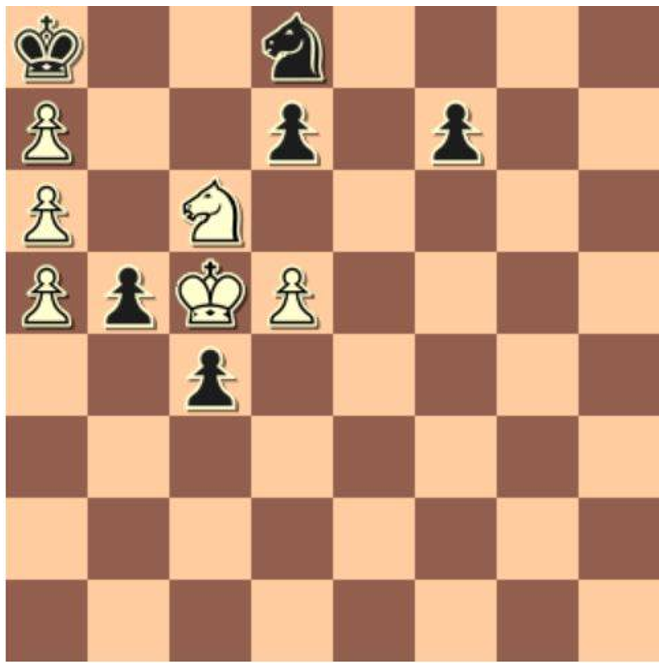
Although I have long retired from serious chess tournaments (they take too much time, a luxury...

The Strange Case Of The Monotonous Running Average

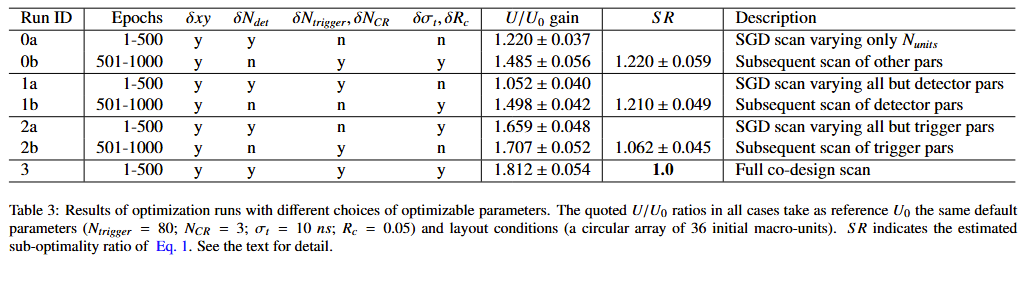
These days I am putting the finishing touches on a hybrid algorithm that optimizes a system (a...

Turning 60

Strange how time goes by. And strange I would say that, since I know time does not flow, it is...

User picture.
picture for Hank Campbellpicture for Patrick Lockerbypicture for Heidi Hendersonpicture for Bente Lilja Byepicture for Sascha Vongehrpicture for Johannes Koelman
Tommaso DorigoRSS Feed of this column.

Tommaso Dorigo is an experimental particle physicist, who works for the INFN at the University of Padova, and collaborates with the CMS and the SWGO experiments. He is the president of the Read More »

Blogroll
Spring is finally in, and with it the great expectations for a new run of the Large Hadron Collider, which will restart in a month or so with a 62.5% increase in center of mass energy of the proton-proton collisions it produces: 13 TeV. At 13 TeV, the production of a 2-TeV Z' boson, say, would not be so terribly rare, making a signal soon visible in the data that ATLAS and CMS are eager to collect.

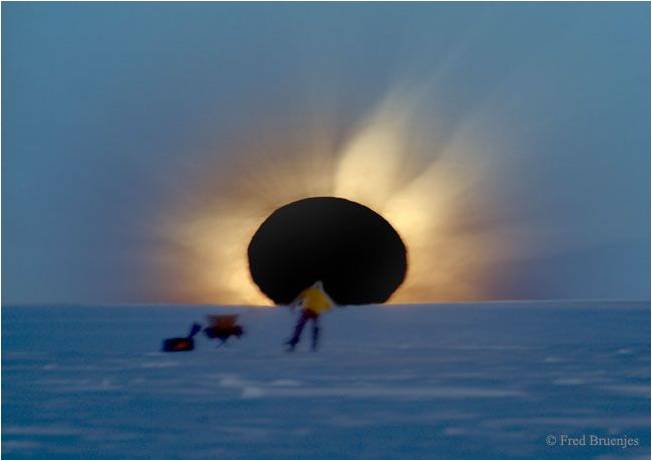
In the morning of March 20th Europeans will be treated with the amazing show of a total solar eclipse. The path of totality is unfortunately confined to the northern Atlantic ocean, and will miss Iceland and England, passing only over the Faroer islands - no wonder there's no hotel room available there since last September! Curiously, the totality will end on the north pole, which on March 20th has the sun exactly at the horizon. Hence the conditions for a great shot like the one below are perfect - I only hope somebody will be at the north pole with a camera...

(Image credit: Fred Bruenjes; apod.nasa.gov)

The top quark is the heaviest known elementary particle. It was discovered in 1995 by the CDF and DZERO experiments at the Fermilab Tevatron collider after a long hunt that had started almost two decades earlier: it took long because the top weighs as much as a whole silver atom, and producing this much matter in single particle-particle collisions is difficult: it requires collision energies that started to be available only in 1985, and the rarity of the production processes dictate collision rates that were delivered only in the early nineties.

The XVI edition of Neutrino Telescopes is over and it is the time for some summing up – which I feel completely unsuited to do, as I was just an observer there. As you know, my field is high-energy collider physics, and neutrino physics has become a very different thing since the discovery of neutral currents 42 years ago. Anyway, I decided I would collect here a few random thoughts on the status of the field, as seen from my very skewed viewpoint...

The Poster session of Neutrino Telescopes XVI will take place tonight in Venice, at the first floor of the beautiful Palazzo Franchetti. Poster submitters have produced excerpts for the conference blog, so you can also get a summary of the presented results. 
The blog offers sixteen excerpts:

At the XVI Neutrino Telescopes conference going on this week in Venice there was a nice presentation on the results of the Borexino experiment. The text below is a writeup of the highlights from the talk, given by Cristiano Galbiati from Princeton University.