Fake Banner
Choosing Your Bets: The Selection Bias

As some of the long-time readers of this blog know, in this column I have occasionally discussed...

Have A Master In Science, Want A Post-Doc Position Directly?

Do you have a master in Science, and want to start a Post-Doc position directly? You can have it...
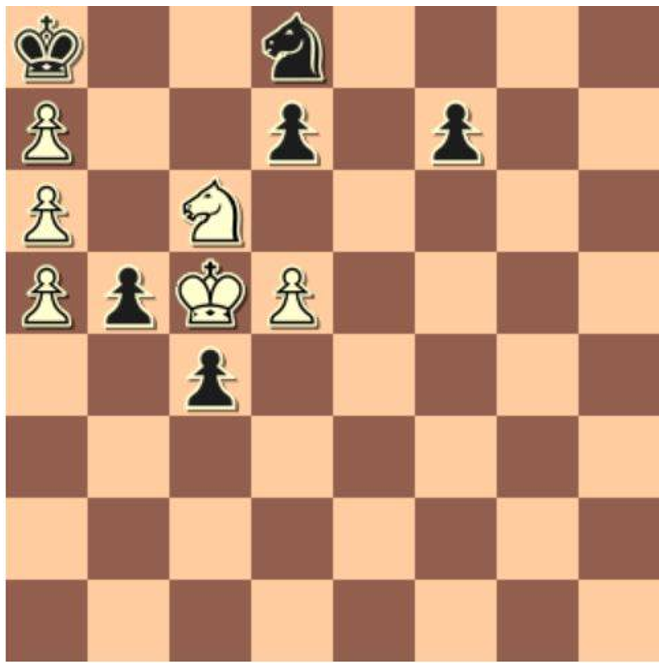
A Chess Study Requiring Backpropagation

The following position is a win for white. But how?It seems like white is able to grab a knight...
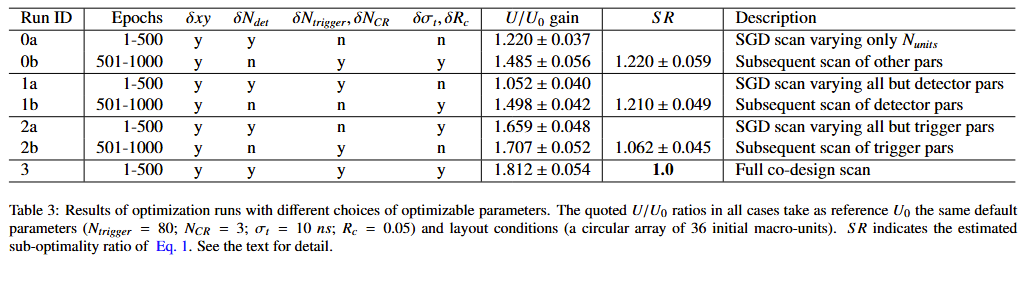
Co-Design Of Scientific Experiments

Next Monday, or Tuesday at the latest, you will find a new bulky paper in the arXiv. Titled "On...

User picture.
picture for Hank Campbellpicture for Heidi Hendersonpicture for Patrick Lockerbypicture for Bente Lilja Byepicture for Sascha Vongehrpicture for Johannes Koelman
Tommaso DorigoRSS Feed of this column.

Tommaso Dorigo is an experimental particle physicist, who works for the INFN at the University of Padova, and collaborates with the CMS and the SWGO experiments. He is the president of the Read More »

Blogroll
A preprint article by the IceCube collaboration captured my attention today in the Cornell Arxiv, and even more interesting was the main result of the analysis it reports, which can be shown as a "temperature plot" on an equilateral triangle. We will get to that, but let me first explain what is the experiment, what are the goals, and what it is that was measured.

The sixteenth edition of the internationally known Neutrino Telescopes conference will take place on March 2nd-6th 2015 in the usual venue of Palazzo Franchetti in Venice. This is a conference which gathers from around the world researchers who study neutrino physics and related topics. 
James D. Bjorken, also known as "BJ" by colleagues and physicists around the world, has been awarded the prestigious 2015 Wolf prize in Physics together with cosmologist Robert Kirshner. Bjorken deserves a lot of credit for his contribution to subnuclear physics: the official motivation is 

"For predicting scaling in deep inelastic scattering, leading to identification of nucleon's pointlike constituents "

Today I collected in my mailbox the hefty "Review of Particle Physics", the publication of the Particle Data Group which contains a summary of everything we know about subatomic particles. For the first time, the publisher is a Chinese journal: Chinese Physics C. This might be considered a detail, but it is a sign of times: China has been increasing its involvement in fundamental physics research in the last decade, and it may well become the leading country in this business in the future.
ATLAS sent today to the Cornell arxiv and to the journal JHEP their latest measurement of the top-antitop production asymmetry, and having five free minutes this afternoon I gave a look at the paper, as the measurement is of some interest. The analysis is done generally quite well, but I found out there is one things I do not particularly like in it... It does not affect the result in this case, but the used procedure is error-prone. 

But let's go in order. First I owe you a quick-and-dirty explanation of what is the top asymmetry and why you might care about it.
Me

Me

Jan 30 2015 | comment(s)

This blog - which, in different sites, has been online since 2005, hence for over 10 years now - enjoys a core of faithful readers, who over the years have learnt more detail on my personal life than they probably thought they'd need. But it also occasionally attracts larger crowds of web navigants with an interest in particle physics. They have all rights to not know who I am and whether I am a 20yo geek or a retired professor, male or female, etcetera.