Fake Banner
Travel With Two Infants

The other day I traveled with Kalliopi and our two newborns to Padova from Lulea. After six full...

A Nice Little Combination

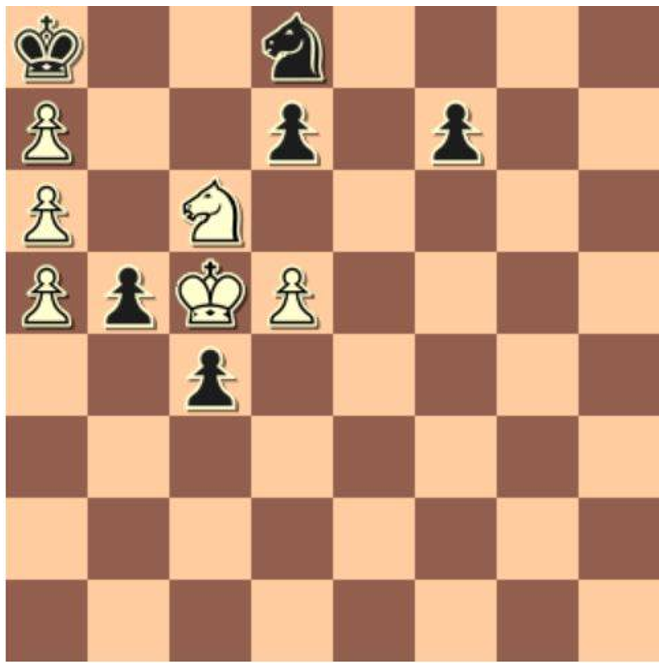
Although I have long retired from serious chess tournaments (they take too much time, a luxury...

The Strange Case Of The Monotonous Running Average

These days I am putting the finishing touches on a hybrid algorithm that optimizes a system (a...

Turning 60

Strange how time goes by. And strange I would say that, since I know time does not flow, it is...

User picture.
picture for Hank Campbellpicture for Patrick Lockerbypicture for Heidi Hendersonpicture for Bente Lilja Byepicture for Sascha Vongehrpicture for Johannes Koelman
Tommaso DorigoRSS Feed of this column.

Tommaso Dorigo is an experimental particle physicist, who works for the INFN at the University of Padova, and collaborates with the CMS and the SWGO experiments. He is the president of the Read More »

Blogroll
"Two recent results from other experiments add to the excitement of Run II. The results from Brookhaven's g-minus-two experiments with muons have a straightforward interpretation as signs of supersymmetry. The increasingly interesting results from BABAR at the Stanford Linear Accelerator Center add to the importance of B physics in Run II, and also suggest new physics. I will be shocked and disappointed if we don't have at least one major discovery."
I am spending a few days in Aix Les Bains, a pleasant lakeside resort in the French southwest, to follow the works of the second ECFA workshop, titled "High-Luminosity LHC". ECFA stands for "European Committee for Future Accelerators" but this particular workshop is indeed centred on the future of the LHC, despite the fact that there are at present at least half a dozen international efforts toward the design of more powerful hadron colliders, more precise linear electron-positron colliders, or still other solutions.
Yesterday the ATLAS collaboration published the results of a new search for dark matter particles produced in association with heavy quarks by proton-proton collisions at the CERN Large Hadron Collider. Not seeing a signal, ATLAS produced very tight upper limits on the cross section for interactions of the tentative dark matter particle with nucleons, which is the common quantity on which dark matter search results are reported. The cross section is in fact directly proportional to the rate at which one would expact to see the hypothetical particle scatter off ordinary matter, which is what one directly looks for in many of today's dark matte search experiments.
Do you remember the E-Cat ? That is an acronym for "energy catalyzer", the device invented by the Italian philosopher Andrea Rossi. The E-Cat is claimed to produce nuclear energy through the heating of a "secret" powder made up of nichel, hydrogen, and lithium plus some additives. A new chapter was added to the saga of the E-Cat this week, with the publication of a new study by an allegedly independent group of Italian and Swedish researchers.
"Fermilab has very actively tried to scoop us by press release, even though their uncertainties are under serious challenge and they knew our measurements even before they released theirs."

Michael Riordan, a member to the Mark II collaboration, in an interview by David Perlman on the San Francisco Chronicle, July 21st 1989
At the workshop I attended last week ("Publish, blog, tweet - furthering one's career in science") I discussed blogging for a researcher. One of the points I made was that through a blog a researcher may sometimes ask for the help of his or her readers, with usually great results.

Today I would like to put my own creed to the test, because I am searching for an article and I have no idea how to do it - usual searches with Google are insuccessful in this case. It is a newspaper article of 1989, which I need as it has relevance for a chapter of the book I have been writing.