Fake Banner
Travel With Two Infants

The other day I traveled with Kalliopi and our two newborns to Padova from Lulea. After six full...

A Nice Little Combination

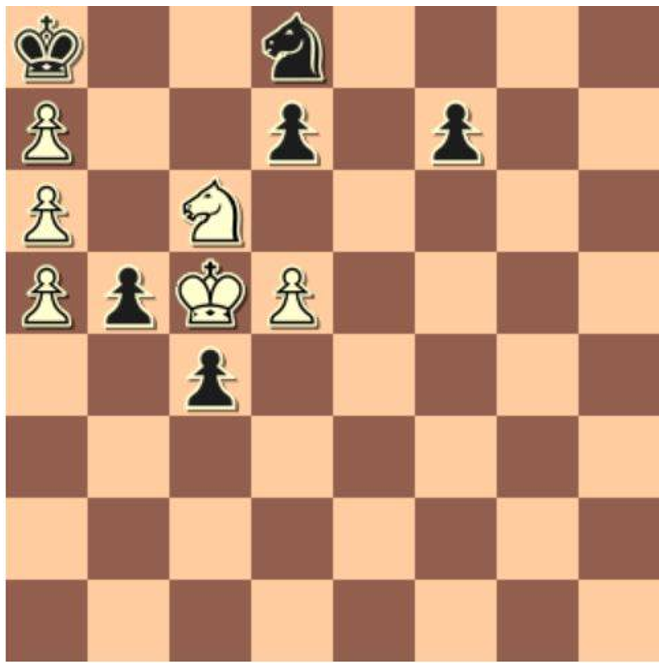
Although I have long retired from serious chess tournaments (they take too much time, a luxury...

The Strange Case Of The Monotonous Running Average

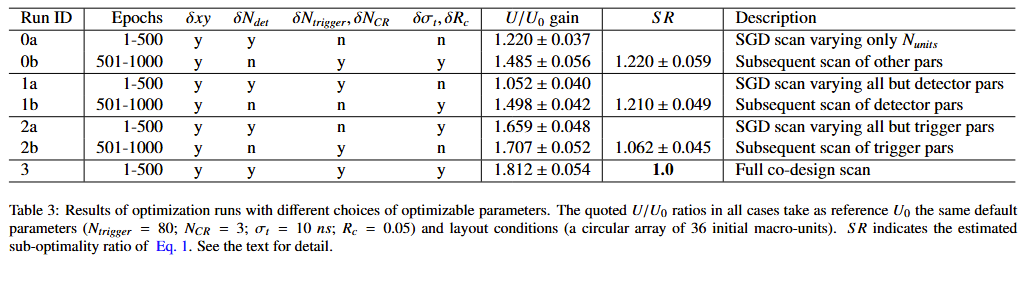
These days I am putting the finishing touches on a hybrid algorithm that optimizes a system (a...

Turning 60

Strange how time goes by. And strange I would say that, since I know time does not flow, it is...

User picture.
picture for Hank Campbellpicture for Patrick Lockerbypicture for Heidi Hendersonpicture for Bente Lilja Byepicture for Sascha Vongehrpicture for Johannes Koelman
Tommaso DorigoRSS Feed of this column.

Tommaso Dorigo is an experimental particle physicist, who works for the INFN at the University of Padova, and collaborates with the CMS and the SWGO experiments. He is the president of the Read More »

Blogroll
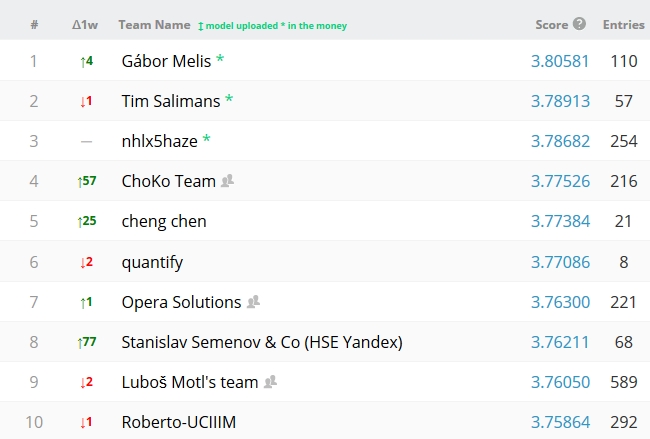
After four months of frenzy by over 1500 teams, the very successful Higgs Challenge launched by the ATLAS collaboration ended yesterday, and the "private leaderboard" with the final standings has been revealed. You can see the top 20 scorers below.


I just read with interest the new paper on the arxiv by my INFN-Padova colleague Massimo Passera and collaborators, titled "Limiting Two-Higgs Doublet Models", and I thought I would explain to you here why I consider it very interesting and what are its conclusions.
One year ago I had the pleasure to spend some time with George Zweig during a conference in Crete (ICNFP 2013). He is a wonderful storyteller and a great chap to hung around with, and I had great fun in the after-dinners on the terrace of the Orthodox Academy of Crete overlooking the Aegean sea, drinking raki and chatting about physics and other subjects.
"If you have seen the movie Particle Fever about the discovery of the Higgs boson, you have heard the theorists saying that the only choices today are between Super-symmetry and the Landscape. Don’t believe them. Super-symmetry says that every fermion has a boson partner and vice versa. That potentially introduces a huge number of new arbitrary constants which does not seem like much progress to me. However, in its simpler variants the number of new constants is small and a problem at high energy is solved. But, experiments at the LHC already seem to have ruled out the simplest variants.
Among the viable extensions of the standard model, an intriguing class of models involve the concept of a "hidden sector" of new particles only weakly coupled to the standard model one. These particles could be produced in the decay of heavy standard model particles, be invisible, but unstable, and thus soon decay back into standard model bodies, giving funny experimental signatures that our detectors could spot -if we looked for them carefully enough.
Until the second half of the nineties, when the LEP collider started to be upgraded to investigate higher centre-of-mass energies of electron-positron collisions than those until then produced at the Z mass, the Higgs boson was not the main focus of experiments exploring the high-energy frontier. The reason is that the expected cross section of that particle was prohibitively small for the comparatively low luminosities provided by the facilities available at the time. Of course, one could still look for anomalously high-rate production of final states possessing the characteristics of a Higgs boson decay; but those searches had a limited appeal.