Fake Banner
Travel With Two Infants

The other day I traveled with Kalliopi and our two newborns to Padova from Lulea. After six full...

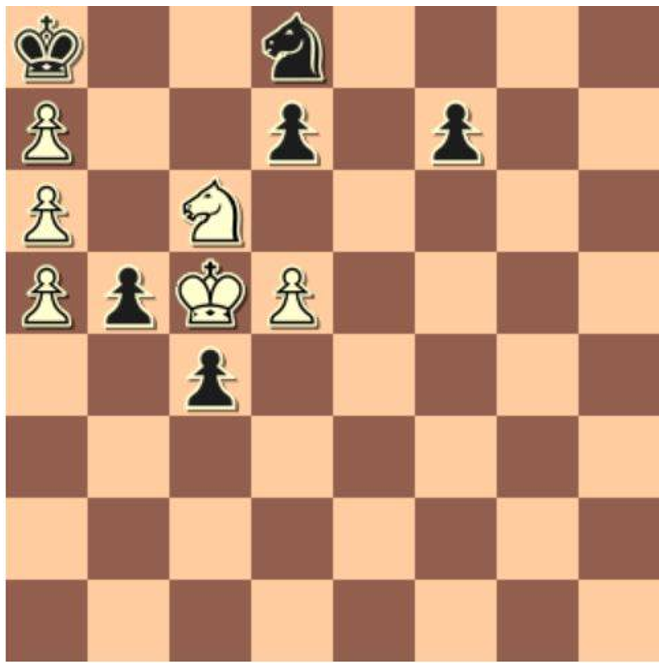
A Nice Little Combination

Although I have long retired from serious chess tournaments (they take too much time, a luxury...

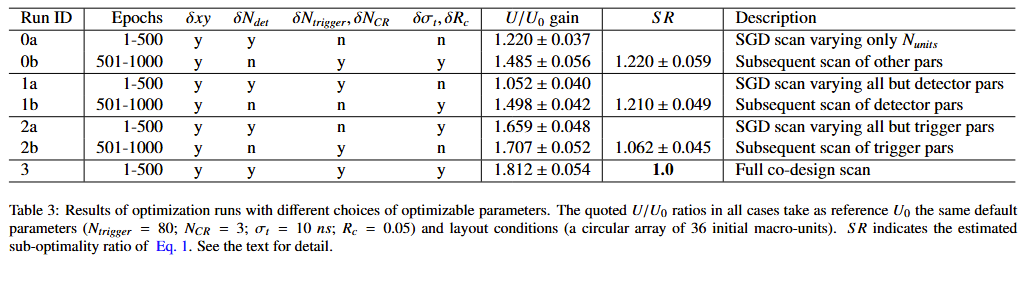
The Strange Case Of The Monotonous Running Average

These days I am putting the finishing touches on a hybrid algorithm that optimizes a system (a...

Turning 60

Strange how time goes by. And strange I would say that, since I know time does not flow, it is...

User picture.
picture for Hank Campbellpicture for Patrick Lockerbypicture for Heidi Hendersonpicture for Bente Lilja Byepicture for Sascha Vongehrpicture for Johannes Koelman
Tommaso DorigoRSS Feed of this column.

Tommaso Dorigo is an experimental particle physicist, who works for the INFN at the University of Padova, and collaborates with the CMS and the SWGO experiments. He is the president of the Read More »

Blogroll
I met George Zweig at a conference in Crete last Summer. He impressed me with the multidisciplinarity of his interests and his quite entertaining career. He has a degree in mathematics, and did quite a bit of experimental physics work before finally turning to theoretical physics; but he did not stay there for long...

But I do not want to summarize more of the interesting life of Zweig, since there is now an interview with George on the online newsletter of the physics department of CERN, which is quite detailed and fascinating, and deserves a read. Enjoy!
"The senior signs the paper, the post-doc thinks, and the grad student executes"

F.S., explaining how the typical nucleus of analysis group in HEP works.

In 1989 the CDF experiment was sitting on its first precious bounty of proton-antiproton collisions, delivered by the Tevatron collider at the unprecedented energy of 1.8 TeV. One of the first measurements that was produced was the measurement of the mass of the Z boson, which was at the time known with scarce precision by the analysis of a handful of candidates produced by the CERN SppS collider, at a third of the Tevatron energy. 
No, this is not an article about top models. Rather, the subject of discussion are models that predict the existence of heavy partners of the top quark.
"During the years 1962 to 1964 a debate developed about whether the Goldstone theorem could be evaded. Anderson pointed out that in a superconductor the Goldstone mode becomes a massive plasmon mode due to its electromagnetic interaction, and that this mode is just the longitudinal partner of transversely polarized electromagnetic modes, which also are massive (the Meissner effect!). Ths was the first description of what has become known as the Higgs mechanism.
Inspired by my friend Peter Woit's openness in discussing his work in progress (a thick textbook on the foundations of quantum mechanics), I feel compelled to come out here about my own project.