Fake Banner
Travel With Two Infants

The other day I traveled with Kalliopi and our two newborns to Padova from Lulea. After six full...

A Nice Little Combination

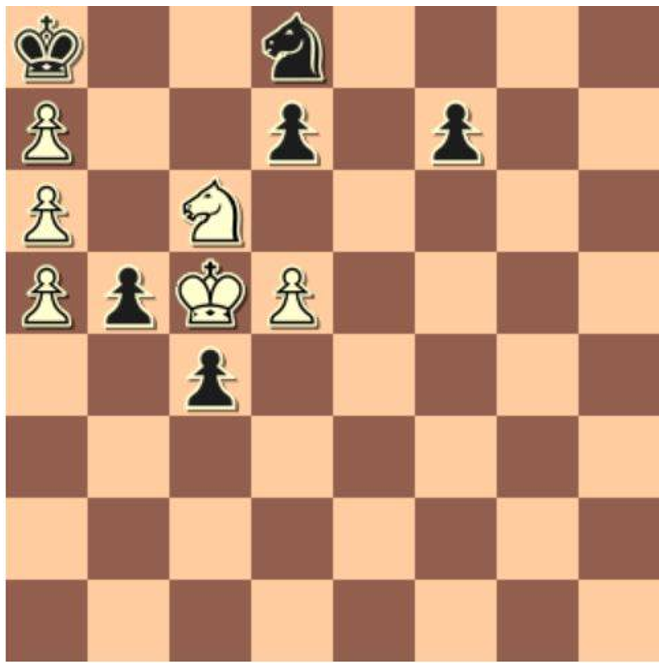
Although I have long retired from serious chess tournaments (they take too much time, a luxury...

The Strange Case Of The Monotonous Running Average

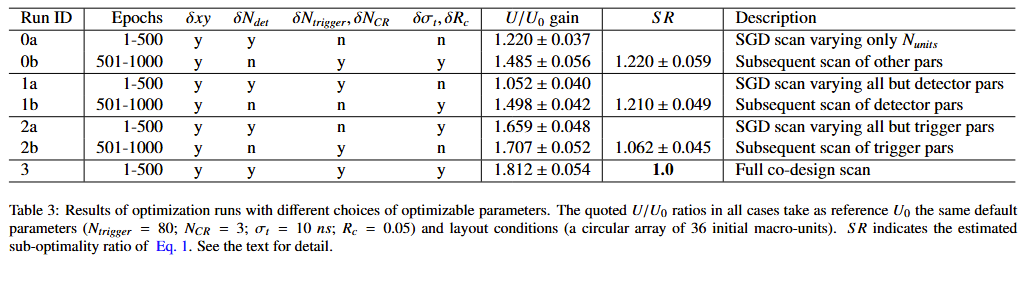
These days I am putting the finishing touches on a hybrid algorithm that optimizes a system (a...

Turning 60

Strange how time goes by. And strange I would say that, since I know time does not flow, it is...

User picture.
picture for Hank Campbellpicture for Patrick Lockerbypicture for Heidi Hendersonpicture for Bente Lilja Byepicture for Sascha Vongehrpicture for Johannes Koelman
Tommaso DorigoRSS Feed of this column.

Tommaso Dorigo is an experimental particle physicist, who works for the INFN at the University of Padova, and collaborates with the CMS and the SWGO experiments. He is the president of the Read More »

Blogroll
It  happens in 1995, toward the end of Run 1B of the Fermilab Tevatron, in the middle of a otherwise anonymous store. The CDF detector is taking good data, and the shift crew in the control room take care of the usual business - a look at the colourful monitors that plaster the walls, a check at trigger rates, the logging of a few standard warnings issued by the data acquisition system, and the occasional browsing of e-mails.
"This time we're shooting through a brick!"

Larry Nodulman (during a discussion on the reconstruction of electrons in the CDF II detector, just refurbished with a new set of silicon microstrip layers (SVX'), more powerful and capable of identifying the impact parameter of charged tracks with a dozen micron accuracy, but also heavier and bulkier than its predecessor, and thus providing more material for multiple scattering of particles.)
A 1.1 metric Ton satellite will re-enter the earth's atmosphere in the next 48 hours, fragmenting into smaller pieces as it falls. The exact location of the fall is unknown, so you better watch out... Or not.

I was discussing this event with my daughter this morning, and it ended up being an instructive discussion on random events of very low probability. If we are totally oblivious of the satellite orbit, and forget different likelihood of earth surface points for the re-entry (the very north and south latitude are much less likely), we can try and compute how likely it is that one of, say, 50 large fragments of the satellite will end up falling within a 100 m^2 area around us -which would be frightening enough.

These days I am trying to reconstruct some stories from my old experiment, CDF. The CDF experiment was conceived in 1979 and constructed in the early eighties at the Fermi laboratories in Batavia, near Chicago. CDF took the first proton-antiproton collisions in 1985, and it collected data in1987-88, 1992-96, and 2001-2011, thus becoming the longest-lasting particle physics experiment in the history of science.

"In God we trust, all others bring data"

William Edwards Deming
The results of the LUX experiment are out - and they are negative: no dark matter signal has been spotted by the extra sensitive detector. This is a normal day for you and me, but a gloomy day for those that counted on the neutralino to be the first supersymmetric particle to show up and redeem decades of claims.