Fake Banner
Choosing Your Bets: The Selection Bias

As some of the long-time readers of this blog know, in this column I have occasionally discussed...

Have A Master In Science, Want A Post-Doc Position Directly?

Do you have a master in Science, and want to start a Post-Doc position directly? You can have it...
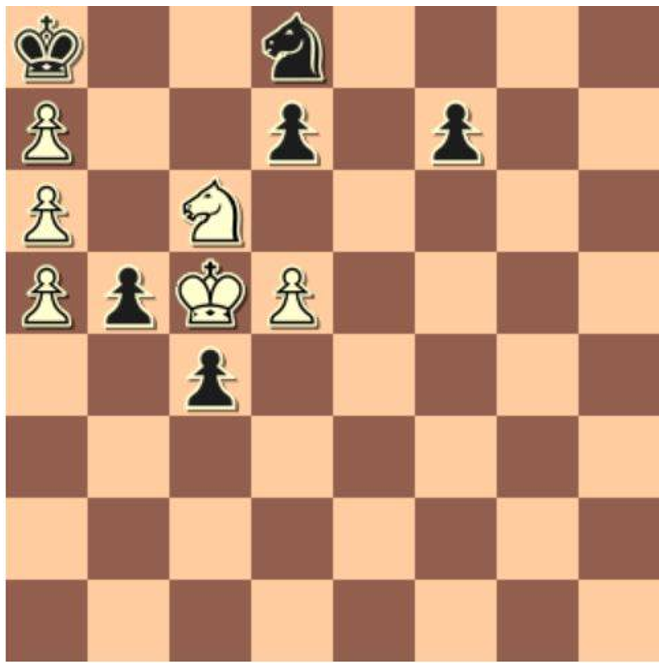
A Chess Study Requiring Backpropagation

The following position is a win for white. But how?It seems like white is able to grab a knight...
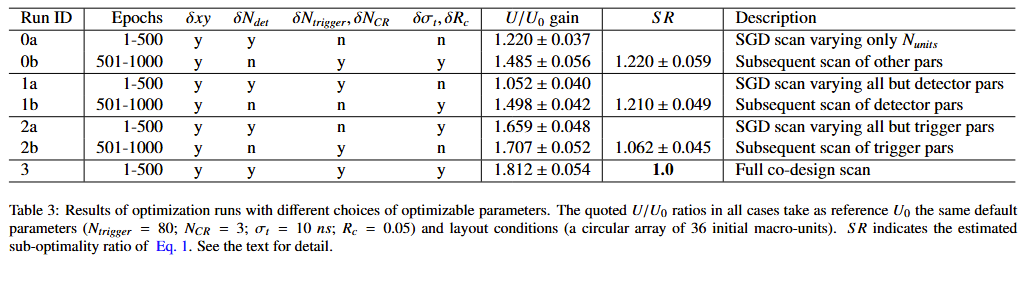
Co-Design Of Scientific Experiments

Next Monday, or Tuesday at the latest, you will find a new bulky paper in the arXiv. Titled "On...

User picture.
picture for Hank Campbellpicture for Heidi Hendersonpicture for Patrick Lockerbypicture for Bente Lilja Byepicture for Sascha Vongehrpicture for Johannes Koelman
Tommaso DorigoRSS Feed of this column.

Tommaso Dorigo is an experimental particle physicist, who works for the INFN at the University of Padova, and collaborates with the CMS and the SWGO experiments. He is the president of the Read More »

Blogroll
A 1.1 metric Ton satellite will re-enter the earth's atmosphere in the next 48 hours, fragmenting into smaller pieces as it falls. The exact location of the fall is unknown, so you better watch out... Or not.

I was discussing this event with my daughter this morning, and it ended up being an instructive discussion on random events of very low probability. If we are totally oblivious of the satellite orbit, and forget different likelihood of earth surface points for the re-entry (the very north and south latitude are much less likely), we can try and compute how likely it is that one of, say, 50 large fragments of the satellite will end up falling within a 100 m^2 area around us -which would be frightening enough.

These days I am trying to reconstruct some stories from my old experiment, CDF. The CDF experiment was conceived in 1979 and constructed in the early eighties at the Fermi laboratories in Batavia, near Chicago. CDF took the first proton-antiproton collisions in 1985, and it collected data in1987-88, 1992-96, and 2001-2011, thus becoming the longest-lasting particle physics experiment in the history of science.

"In God we trust, all others bring data"

William Edwards Deming
The results of the LUX experiment are out - and they are negative: no dark matter signal has been spotted by the extra sensitive detector. This is a normal day for you and me, but a gloomy day for those that counted on the neutralino to be the first supersymmetric particle to show up and redeem decades of claims.
Do you remember the dijet bump at 140 GeV that CDF published in March 2011 ? This was a surprising excess in the mass distribution of pairs of jets found in events containing a leptonic W boson decay.
Just a quick link today, to acknowledge an interesting report on the life of physics students in Greece and the present situation with Universities there. And of course, if you wish to practice your Greek, there are more articles there, translated for us by Yiannis Michaloliakos.