Just a small post to mention the recent activity in my Greek blog, where with the help of a very kind Greek student we are offering a selection of articles translated in Greek language.
Here are the latest additions:
A few days ago I
posted the results of a poll ran on 50 or so participants to a workshop on the Higgs boson in Madrid.
The poll consisted of six questions on the expectations one had on the possibility of new discoveries by present-day accelerators, as well as on the nature of the underlying theory of fundamental interactions, and on the nature of dark matter.
UPDATE: Just found out that Peter Woit anticipated me on this -
see his blog entry.
---
Just five years ago, on the eve of the start of the Large Hadron Collider, most particle physicists - experimentalists and theorists alike - would have been willing to bet their left testicle or ovary on the fact that new physics would very soon be discovered, most likely Supersymmetric particles (if a suitable payoff had been offered in exchange).
I have reported about the studies of resonances in the decays of the B+ meson by CDF, CMS, and LHCb a few times in the recent past. The situation, in a nutshell, was the following until yesterday: CDF found a new particle, the Y(4140), as a resonant (J/ψ φ) intermediate state produced when B+ mesons decay into a J/ψ, a φ, and a positive kaon; CDF also saw some evidence for a further excitation of the same two-body system; CMS confirmed the CDF claims, finding observation-level significance for both states; and LHCb did not confirm either of the two.
Furthermore Belle, a B-factory experiment studying electron-positron collisions, also found no evidence for the Y(4140) state.
The ATLAS Collaboration
published last week the results of a search for dark matter particles produced in association with a W or Z boson by the 8-TeV proton-proton collisions collected during the 2012 run of the Large Hadron Collider. The search uses techniques similar to ones I have described in recent articles here discussing results of the CMS experiments on different new physics signatures, and I thought it would be interesting to review it here.
Three weeks ago I gave a plenary talk at the
2nd International Conference on New Frontiers in Physics, which was held in Kolymbari, in the greek island of Crete. The talk focused on some of the most interesting new results by the CMS Collaboration, but being just 30' long it only contained a summary of these. The purpose of the talk was primarily that of advertising the many talks on specific physics topics -Top, Higgs, Exotica, QCD- which were given by some of my colleagues in the parallel sessions; however I was able to show and discuss some nice new measurements myself.


 Choosing Your Bets: The Selection Bias
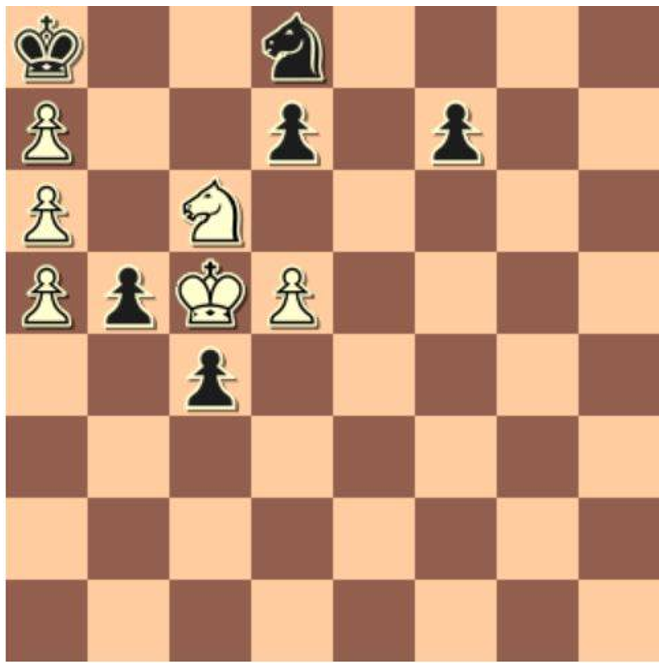 A Chess Study Requiring Backpropagation
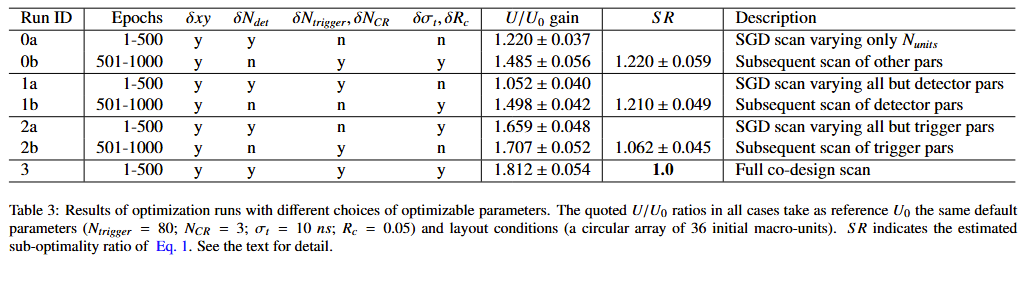 Co-Design Of Scientific Experiments