Fake Banner
Choosing Your Bets: The Selection Bias

As some of the long-time readers of this blog know, in this column I have occasionally discussed...

Have A Master In Science, Want A Post-Doc Position Directly?

Do you have a master in Science, and want to start a Post-Doc position directly? You can have it...
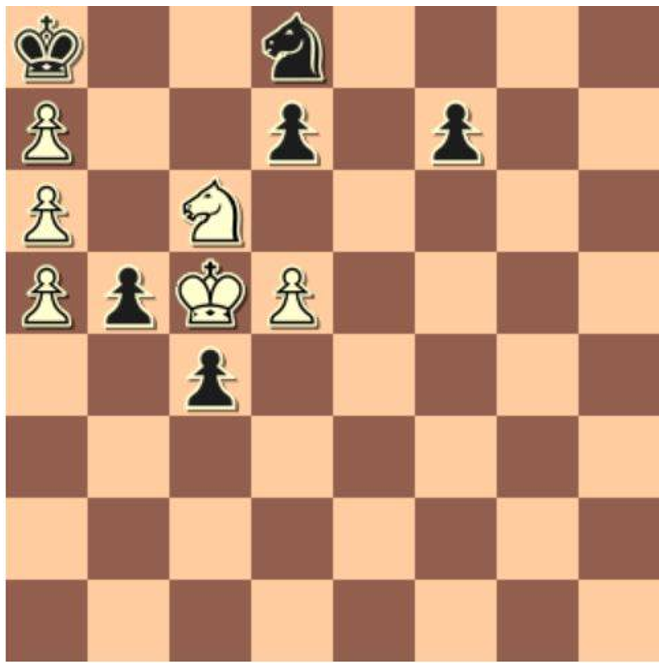
A Chess Study Requiring Backpropagation

The following position is a win for white. But how?It seems like white is able to grab a knight...
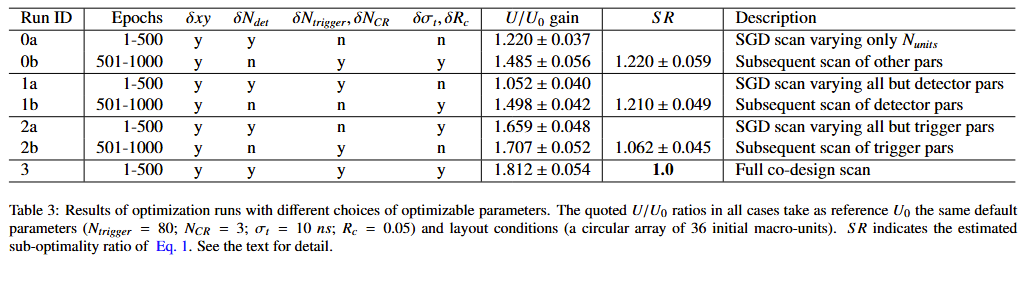
Co-Design Of Scientific Experiments

Next Monday, or Tuesday at the latest, you will find a new bulky paper in the arXiv. Titled "On...

User picture.
picture for Hank Campbellpicture for Heidi Hendersonpicture for Patrick Lockerbypicture for Bente Lilja Byepicture for Sascha Vongehrpicture for Johannes Koelman
Tommaso DorigoRSS Feed of this column.

Tommaso Dorigo is an experimental particle physicist, who works for the INFN at the University of Padova, and collaborates with the CMS and the SWGO experiments. He is the president of the Read More »

Blogroll
In the previous installment of this longish article, I have introduced some of the issues that may affect the correct interpretation of a statistically significant effect.

A pre-emptive warning to the reader: the article below is too long to publish as a single post. I have broken it out in four installments. After reading the text below you should continue with part II, part III, and part IV (which includes a summary).

Do you remember the X(3872) ? This is a hadron containing charm and anticharm quarks, which was observed to decay into a J/Psi meson, a positive, and a negative pion. When it was discovered, by the Belle experiment in 2003, the X caused a lot of interest among spectroscopists, because it is an "exotic" charmonium state: its nature is not totally clear, as it might be interpreted as a "molecule" of two charmed mesons loosely bound together. Or maybe a four-quark system ? Or just conventional charmonium, a bit at odds with the expected set of spin-parity states but otherwise just a honest meson ?

In the past few weeks the Tevatron and LHC experiments have updated their results on some of the most important Standard Model parameters. Of these, notably the top quark mass is one where the Tevatron is still doing slightly better than the LHC, due to the longer running time of the CDF and DZERO experiments, which allowed for a more precise calibration of the jet energy scale - the largest systematic uncertainty in this kind of business.

I have updated you on the matter tangentially in the previous two posts, where I discussed the overall compatibility of top and W boson masses with the Standard Model predictions, where the latter depend on the now well-known mass of the Higgs boson. Here instead I want to focus briefly on the top quark mass.

Two days ago I showed how the measurements produced in the course of the last decade have allowed us to "zoom into" the parameter space of the Standard Model, pinpointing the W boson, top quark, and Higgs boson masses to a very narrow 3-D volume of phase space.
The CDF and DZERO experiments recently produced a combination of their precision measurements of the W boson mass, and proceeded to include the LEP II results to obtain a "world average" of that very important parameter of the Standard Model.

The measurement is described in detail in a paper which explains the combination procedure (not trivial, since there are a number of systematic uncertainties that are partly correlated between the experiments). The Tevatron inputs are as follows:

CDF Run I (107/pb, 1.8 TeV): M_W = 80432+-79 MeV
CDF Run II (2.2/fb, 1.96 TeV): M_W = 80387+-19 MeV
DZERO Run I (95/pb, 1.8 TeV): M_W = 80478+-83 MeV