Fake Banner
Travel With Two Infants

The other day I traveled with Kalliopi and our two newborns to Padova from Lulea. After six full...

A Nice Little Combination

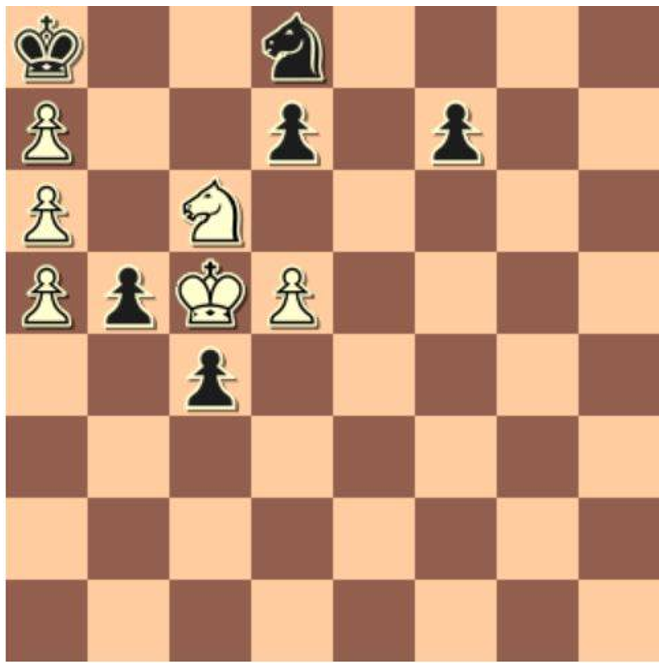
Although I have long retired from serious chess tournaments (they take too much time, a luxury...

The Strange Case Of The Monotonous Running Average

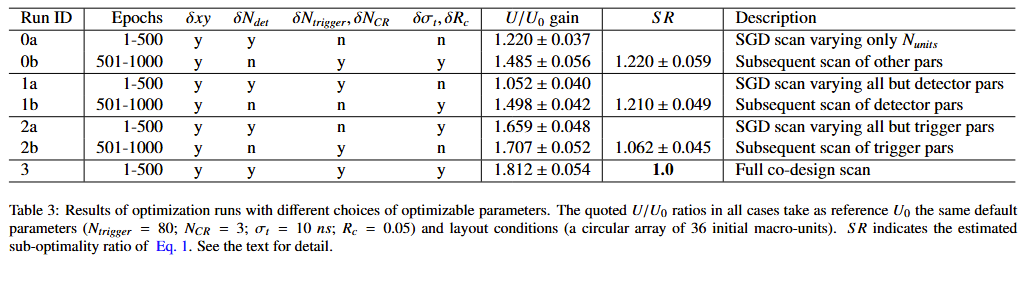
These days I am putting the finishing touches on a hybrid algorithm that optimizes a system (a...

Turning 60

Strange how time goes by. And strange I would say that, since I know time does not flow, it is...

User picture.
picture for Hank Campbellpicture for Patrick Lockerbypicture for Heidi Hendersonpicture for Bente Lilja Byepicture for Sascha Vongehrpicture for Johannes Koelman
Tommaso DorigoRSS Feed of this column.

Tommaso Dorigo is an experimental particle physicist, who works for the INFN at the University of Padova, and collaborates with the CMS and the SWGO experiments. He is the president of the Read More »

Blogroll
CMS is one of the two huge detectors built to study the high-energy collisions of protons produced by the Large Hadron Collider at CERN. As all previous collider detectors, CMS is a redundant multi-purpose collection of dozens sub-detector components, which use different physics mechanisms to detect everything that comes out of the collision point, from protons to muons to photons, neutrinos (using the energy imbalance in the calorimeters), neutral hadrons.

Today I spent the better part of the afternoon in the company of 150 high-school students at the Liceo Fermi in Padova, giving a seminar on particle physics in the context of a project called "Masterclasses" which has been active since 2005 and is a big success.

The project aims at students in the last years of their high school and attempts to involve them in the experiments undergoing at the CERN laboratories. Sets of lectures on particle physics and cosmology at the schools are followed by a "hands-on" session at the Physics Department, where students are taught and then tested in recognizing heavy particle decays from event displays.

Next Sunday Italians will vote to change the composition of the two houses of parliament: the "lower" Camera dei Deputati and "upper" Senato della Repubblica. And as often happens with Italian politics, things are complicated. So, despite this site is mostly visited for other reasons than trivialities about politics in foreign countries, I thought I would provide here my own short-sighted, biased panorama of the situation.

Every two years physicists and astrophysicists who work in the area of neutrino physics get together in the wonderful setting of Palazzo Franchetti, a historical palace on the Canal Grande in Venice, Italy, to discuss the latest results of experiments and theoretical ideas, and to plan for the future.
I quickly wrote a short paper, "Broken Symmetries, Massless Particles and Gauge Fields", which described how gauge theories may evade the Goldstone theorem, and submitted it to Physics Letters. It was received on 27 July and published 15 September. Before writing up the work on what is now known the Higgs model I spent a few days searching the literature to see whether it had been done before. I thought that Schwinger, in particular, might well have done something of the kind years earlier and I might have overlooked it. When I had satisfied myself that he hadn't, I wrote a second short paper, "Broken Symmetries and the Masses of Gauge Bosons", and submitted it too to Physics Letters. It was rejected.
Quite some time ago I discussed here the tentative Y(4140) resonance  claimed by the CDF collaboration in their Run II data. This was a peak which was found in B-decay data containing a J/Psi signal, a phi meson, and an additional kaon track, and it resulted from the  study of the mass difference of the J/Psi + phi signal and the J/Psi alone.

Confused ? You have all rights to be. I will explain everything in good order, but be sure that the matter was puzzling not only for laymen but also for insiders: because the find was mysterious, not predicted by existing models, and potentially controversial.

B Decays and the CDF Claim