Fake Banner
Travel With Two Infants

The other day I traveled with Kalliopi and our two newborns to Padova from Lulea. After six full...

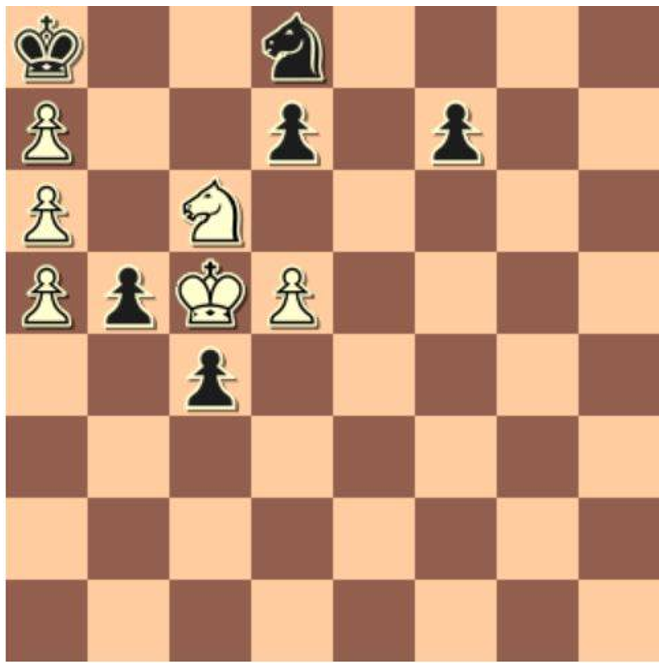
A Nice Little Combination

Although I have long retired from serious chess tournaments (they take too much time, a luxury...

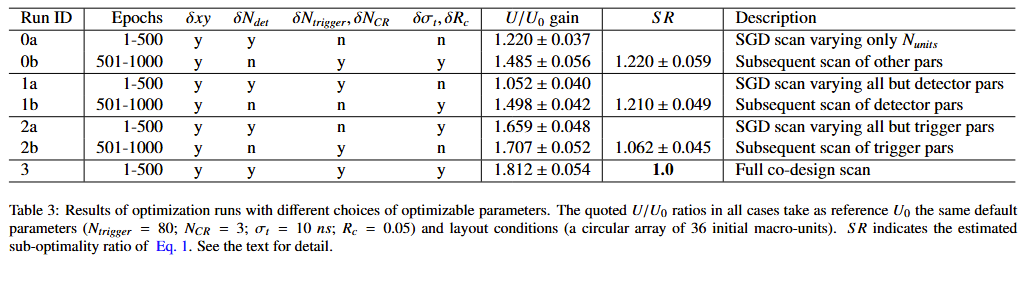
The Strange Case Of The Monotonous Running Average

These days I am putting the finishing touches on a hybrid algorithm that optimizes a system (a...

Turning 60

Strange how time goes by. And strange I would say that, since I know time does not flow, it is...

User picture.
picture for Hank Campbellpicture for Patrick Lockerbypicture for Heidi Hendersonpicture for Bente Lilja Byepicture for Sascha Vongehrpicture for Johannes Koelman
Tommaso DorigoRSS Feed of this column.

Tommaso Dorigo is an experimental particle physicist, who works for the INFN at the University of Padova, and collaborates with the CMS and the SWGO experiments. He is the president of the Read More »

Blogroll
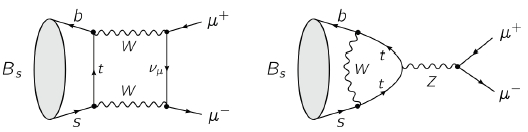
The CERN average of searches for rare B decays to muon pairs has been shown yesterday in a talk given by Mitesh Patel at the "Physics at the LHC" conference, which is being held in Vancouver (BC) this week. And the results are not very encouraging for supporters of Supersymmetry: the data is compatible with a Standard Model signal, but there is almost no space left for additional contributions due to the exchange of virtual SUSY particles in the loops producing the decays.
The winner picture of the Venus transit must be the one below, whose original version can be found here. Thanks Bente Lilya Bye for posting the link on her Facebook page!


The picture was taken by Hinode, a joint JAXA-NASA mission to study the Sun's magnetism in and around sunspots.
Well, so as predicted Venus passed over the disk of our Sun yesterday (this morning, if you live in Europe), and it produced quite a show, as many pictures and videos available around testify. To make the view more pleasing, our Sun was showing a discrete amount of solar spots, betraying the fact that we are approaching Solar Max (there is a 11-year cycle of solar activity, which manifests itself visually with black spots appearing on the disk, and on the Earth with auroras and electromagnetic disturbances).

In case you want a quick link to a nice slideshow showing Venus crossing the Sun's disk in a set of some thirty images, please visit this flicker site.
The LHC collider has been producing proton-proton collisions at a centre-of-mass energy of 8 TeV for two months now, and the integrated luminosity collected by the CMS experiment has surpassed the mark of 4 inverse femtobarns (see figure below). That's already about 80% of the total bounty of 2011!
For the second and last time this century, the planet Venus will pass over the visible disk of our Sun for observers located in the Americas (in the evening of June 5th) and western Europe (in the morning of June 6th). The event has a noteworthy scientific value -particularly for exoplanetary searches-, but it is also quite spectacular to observe, if you have some modest equipment (but you should be able to spot it with your naked eye, provided you only look through a thick-smoked glass; never look at the Sun directly!). The added value is that probably none of us will be around the next time this event occurs, in 2117.
"The decay widths have higher-order perturbative QCD corrections, and these are particularly important for the  decay which dominates over a wide range of (light) Higgs masses. The main effect is to cause the quark mass to run from its "constituent quark" value at  to a lower value at ."