Fake Banner
Choosing Your Bets: The Selection Bias

As some of the long-time readers of this blog know, in this column I have occasionally discussed...

Have A Master In Science, Want A Post-Doc Position Directly?

Do you have a master in Science, and want to start a Post-Doc position directly? You can have it...
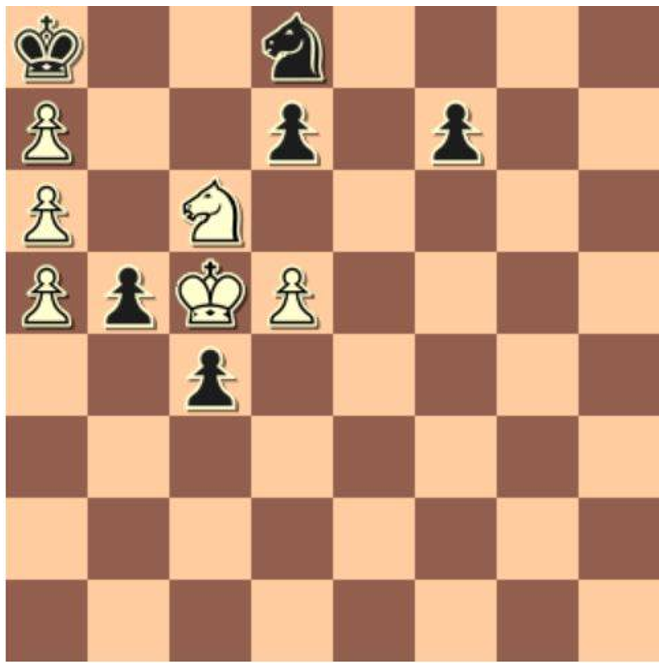
A Chess Study Requiring Backpropagation

The following position is a win for white. But how?It seems like white is able to grab a knight...
Co-Design Of Scientific Experiments

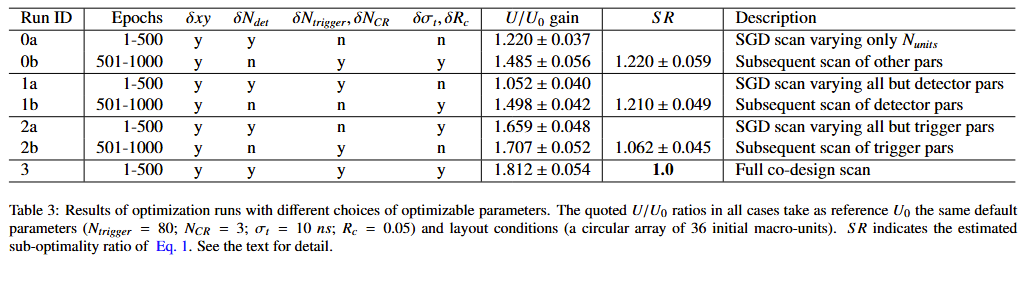
Next Monday, or Tuesday at the latest, you will find a new bulky paper in the arXiv. Titled "On...

User picture.
picture for Hank Campbellpicture for Heidi Hendersonpicture for Patrick Lockerbypicture for Bente Lilja Byepicture for Sascha Vongehrpicture for Johannes Koelman
Tommaso DorigoRSS Feed of this column.

Tommaso Dorigo is an experimental particle physicist, who works for the INFN at the University of Padova, and collaborates with the CMS and the SWGO experiments. He is the president of the Read More »

Blogroll
After a more careful reading of the paper, the listening to a seminar on the result, and some discussions, I can share with you a few more details on the Opera measurement.
The Arxiv apparently messed up and the new OPERA article on the neutrino speed measurement cannot be accessed there yet. However, you can get your copy at this link. You will be prompted for the username and password, and you are invited to use "neuvel" for both. Enjoy!
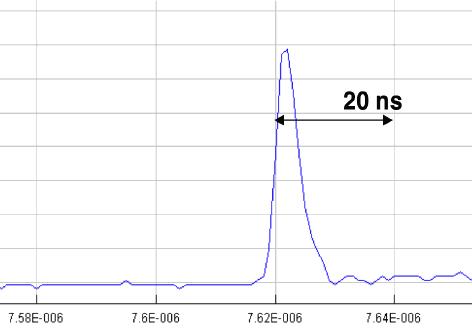
UPDATE: some technical considerations on the measurement are available in a followup post I wrote after attending a seminar on the new result today. In particular, one startling consideration emerges - if the reading of the 20 MHz Opera clock were off by just one tick, the result would be compatible with v=c.

UPDATE: you can download the new Opera paper at this link. You will need to use the username and password "neuvel".
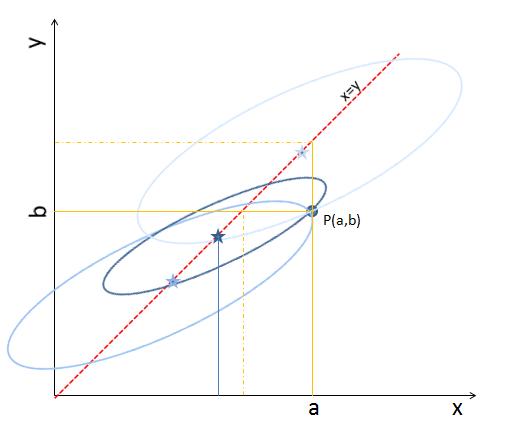
It's been a while since my last "guess the plot" posting. The simple explanation is that I did not happen to run into any fancy graph in the last month or so. Now, today I have one for you to guess, but I must add that I believe it is rather easy to understand what it represents. Less obvious is to completely understand the math behind it, and the implications of the construction.
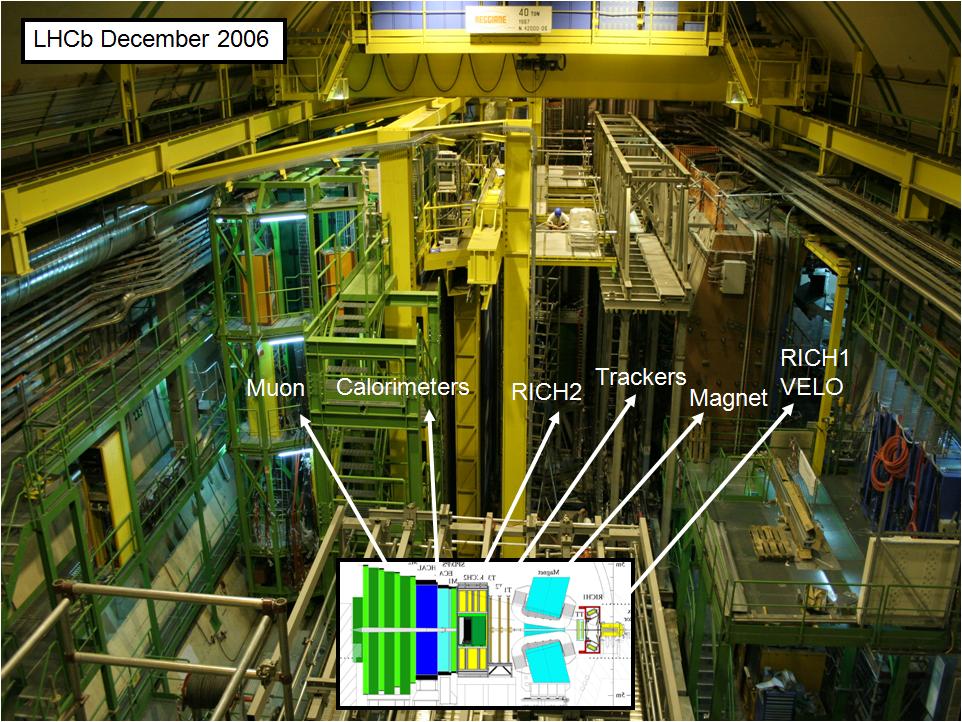
Today I wish to briefly discuss a recent important measurement produced by the LHCb collaboration, a measurement of CP violation in the decay of charmed mesons. Before I do, I think I need to explain some details of the LHCb experimental arrangement, because it is different from what most readers here are familiar with.

And, update: rather than putting it at the end, I prefer to link Resonaances' post on the same subject here this time - he wrote about the matter yesterday and did a much better job than I do below. Sorry for noticing it after posting mine!

Some pedestrian kinematics
"If we were not ignorant there would be no probability, there could only be certainty. But our ignorance cannot be absolute, for then there would be no longer any probability at all. Thus the problems of probability may be classed according to the greater or less depth of our ignorance. "

Henry Poincaré