Fake Banner
Travel With Two Infants

The other day I traveled with Kalliopi and our two newborns to Padova from Lulea. After six full...

A Nice Little Combination

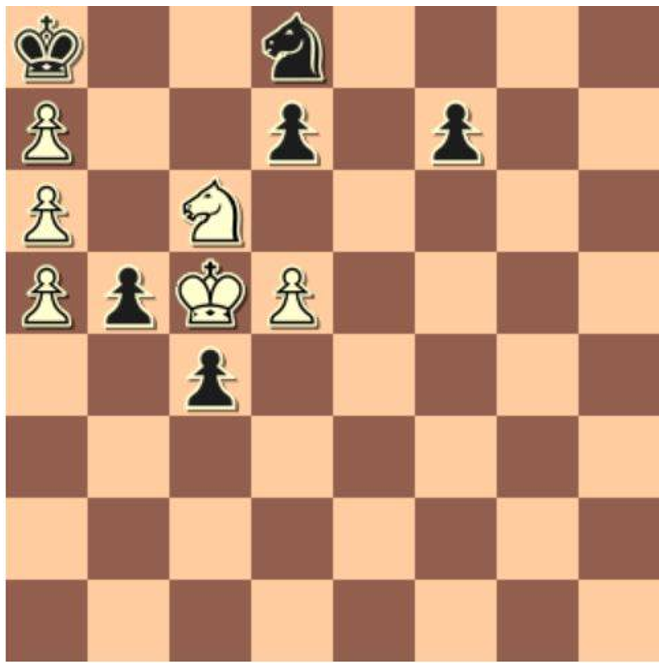
Although I have long retired from serious chess tournaments (they take too much time, a luxury...

The Strange Case Of The Monotonous Running Average

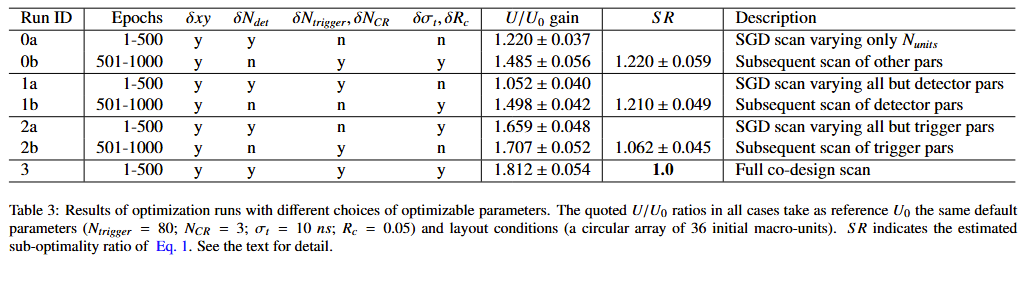
These days I am putting the finishing touches on a hybrid algorithm that optimizes a system (a...

Turning 60

Strange how time goes by. And strange I would say that, since I know time does not flow, it is...

User picture.
picture for Hank Campbellpicture for Patrick Lockerbypicture for Heidi Hendersonpicture for Bente Lilja Byepicture for Sascha Vongehrpicture for Johannes Koelman
Tommaso DorigoRSS Feed of this column.

Tommaso Dorigo is an experimental particle physicist, who works for the INFN at the University of Padova, and collaborates with the CMS and the SWGO experiments. He is the president of the Read More »

Blogroll
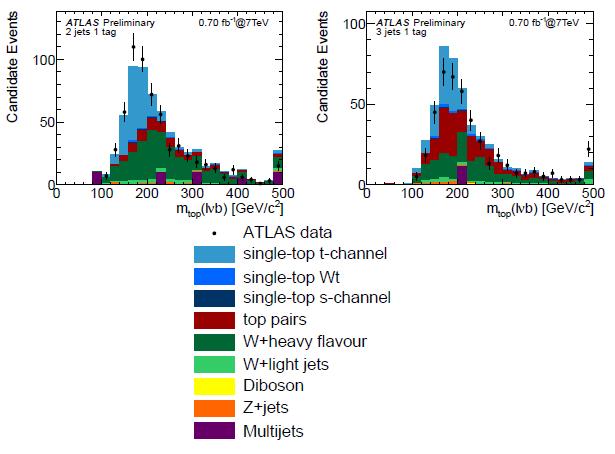
A well-known HEP rule says that yesterday's searched new processes will be tomorrow's annoying irreducible backgrounds; but since I am an optimist, I always see the glass half-full and feel compelled to add that today they are pleasing high-statistics signals. Take single top quark production: the Tevatron experimentalists (you can include me in the lot) banged their head for a decade trying to measure it; they finally succeeded, but the signal always remained a small excess of events in the tail of a highly-refined multi-variable discriminator.
[Introduction: I published the text below last Monday, when the news of this controversial new measurement had spread in the corridors of physics departments, as well as in the threads of popular HEP blogs. I felt I was not doing anything wrong, since all I was reporting were facts, with a cautious opinion on my part. I was however forced to take it down only a few hours afterwards, due to a kind of pressure I could not ignore, my own job being at stake. I understand that the experiment who did this measurement was not too happy to see the news in print before they wanted to, but then again the fault is theirs. And in retrospect, what damage did I cause with the post below ?
The Collider Detector at Fermilab, CDF for insiders, is the longest lasting physics experiment ever (yes, I know about the pitch drop and no, I do not consider that a physics experiment). Designed in 1979, it was assembled in the early eighties, and operated since 1985 to 2011. Now, in two weeks it will stop data taking, and soon will be decommissioned.
In two weeks I will be talking at TEDx Flanders, in the magnificent theatre of the Flemish Opera of Antwerp, Belgium. I can't wait, of course, and I have prepared a presentation which is hopefully going to be digestible, but I would hope enjoyable, for the thousand total outsiders who will listen to it in-between a couple dozen other extremely interesting performances and talks. The program is indeed quite diverse and exciting, and the event will last the full day of Saturday, Sept. 24th.
Walter Bonatti died yesterday at 81 years of age. One of Italy's greatest "old style" climbers, Bonatti is especially famous for the first ascent to the K2, the extremely hard to climb, 8611-meter-tall mountain in the Karakorum.
I enjoyed a lot reading a "discussion" prepared by Maury Goodman on the value of "confidence level", discovery thresholds, and what physicists believe or not. If you are a HEP physicist and you want to widen your horizons on the value of statistical claims in experimental results, you are bound to read it. But you might find it thought-provoking and enlightening even if you are a layman, provided you can use three neurons in a row.

A few random excerpts should convince you to read the whole piece:

Manjib:  No reasonable high energy physics will believe a two sigma effect.