Fake Banner
Travel With Two Infants

The other day I traveled with Kalliopi and our two newborns to Padova from Lulea. After six full...

A Nice Little Combination

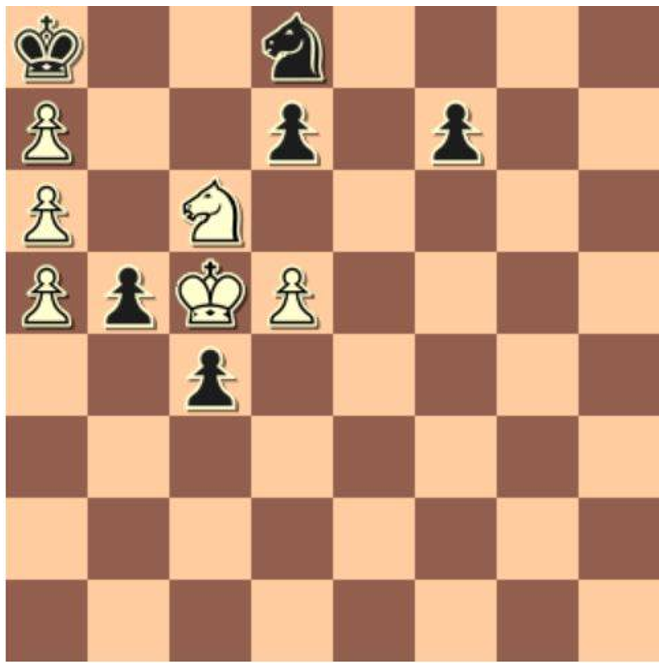
Although I have long retired from serious chess tournaments (they take too much time, a luxury...

The Strange Case Of The Monotonous Running Average

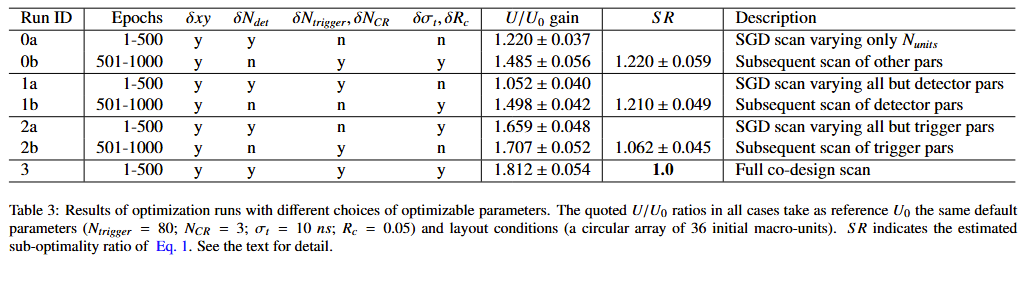
These days I am putting the finishing touches on a hybrid algorithm that optimizes a system (a...

Turning 60

Strange how time goes by. And strange I would say that, since I know time does not flow, it is...

User picture.
picture for Hank Campbellpicture for Patrick Lockerbypicture for Heidi Hendersonpicture for Bente Lilja Byepicture for Sascha Vongehrpicture for Johannes Koelman
Tommaso DorigoRSS Feed of this column.

Tommaso Dorigo is an experimental particle physicist, who works for the INFN at the University of Padova, and collaborates with the CMS and the SWGO experiments. He is the president of the Read More »

Blogroll
The diffusion of advanced graphical tools that we have witnessed in the course of the last two decades has caused a corresponding evolution in the way physicists display their data. True, there still exist pockets of resistence here and there; but these are usually due to old farts who are unwilling to learn the new tricks. To them the old cynical sentence by Max Planck unfortunately applies, and it can be paraphrased as follows:

"A new data display tool does not triumph by convincing its opponents and making them use it, but rather because its opponents eventually die, and a new generation grows up that is familiar with it."
A hadron collider is a really nice toy to play with. Sometimes when I look at all those scientists busying themselves with the design, the construction, and the operation of the Large Hadron Collider and its experiments, as well as the analysis of the produced data, all I see are kids who play with their toys - bigger toys, as big as possible in fact, because their craving is always growing and cannot be satiated.

I of course see myself that way, too. To me my job is a game -well, I see my life that way too!  But I am divagating into philosophical observations which deserve another place to be discussed. Instead, here I want to show you why I think these detectors are marvelous toys. Give a look at the graph below, courtesy ATLAS.

Note: I have discussed today's topic in one of my best articles here some time ago, and I also gave even more technical insight in another piece. I decided to revisit the topic once more under the stimulus of a online HEP magazine, which is going to feature a text of mine soon. They do not care if I use the same text here too, so you get to read it here first.
Despite the hopes of most and the preconceptions of many, news from the Lepton-Photon conference in Mumbay, India, report that the Standard Model is as alive and strong as it has ever been. Indeed, the recent searches for Supersymmetry by ATLAS and CMS, now analyzing datasets that by all standards must be considered "a heck of a lot of data", have returned negative results and have placed lower limits on sparticle masses at values much larger than those previously investigated (by experiments at the Tevatron and LEP II).
If you work in experimental high-energy physics you soon acquire a particular sensitivity to the economical display of relevant information. Producing figures that convey the most meaning with the minimum effort is sort of an art, and it is a necessary consequence that HEP experimentalists -the smart ones- end up converging on the definition of graphs which are better than all others in this respect.
"In a world of string theory, I can be the Pope [...]. I just need to modify dilatonic Einstein-Gauss-Bonnet theory with low-energy heterotic string theory and it's all quite easy."

H. Campbell