In my
latest instantiation of the "Guess the plot" series I offered a clipped part of a graph showing branching fractions of the Higgs boson. One of the readers made a comment which I was proud to read, since it showed that interested readers of this blog with no specialized education in particle physics can get to know quite a lot about the matter. I answered there more extensively than I do on average, and then I thought that the answer could be of some use to others to whom the thread had fallen out of the horizon. So I am recycling it here.
Like it or not, the Tevatron is going to shut down for good next month. This machine has provided us with tremendous new investigation power in the high-energy frontier of particle physics, and has led the research of hadronic collisions for over two decades. But all good things come to an end.
For this instance of my "Guess the plot" series I wish to go back to the basics. So I picked a graph which allows me to illustrate a general concept, something about particle physics (but we could say physics in general, and actually extending to other exact sciences) which is a source of endless awe for me: the fact that some functions exist, in the infinite-dimensional space of all real functions of a real variable, which describe some specific feature of our world.
Apologizing with those of you who feel they have had too little particle physics this week, I am reporting today after a longish pause on a new search performed by the CMS experiment, one which has some interesting features, at least to me.
Warning: this post contains no physics whatsoever, although some of you might still be interested in reading it...

Relaxing in the hideaway of Elafonisos (see picture on the left) I am led to take a detached look at my work activities, and to try and determine whether I am doing some mistake here and there.
Blogging will be non-existent for three days, and please do not expect me to answer your comments in the various threads -I am going to be on a ship carrying me to Greece, and, God bless it, there is no Internet!


 Choosing Your Bets: The Selection Bias
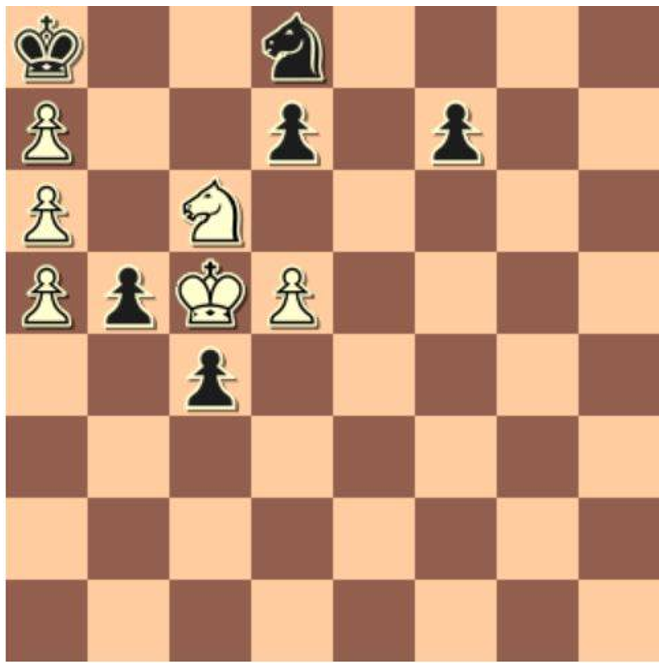 A Chess Study Requiring Backpropagation
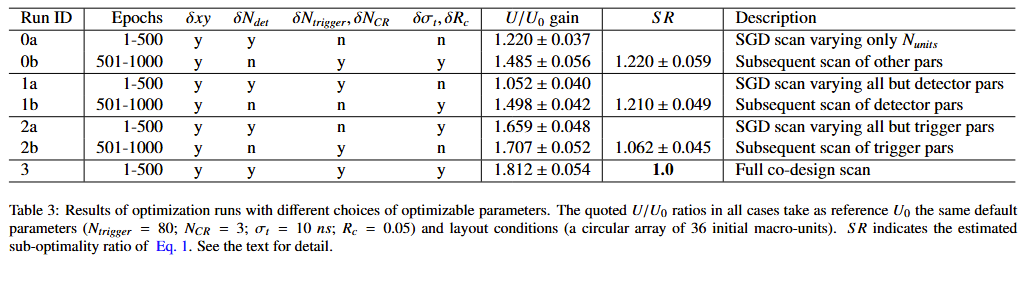 Co-Design Of Scientific Experiments