Embarassingly overdue, the slides of my talk on "Heavy Flavour and Quarkonia Production in 7 TeV pp Collisions", meant for the 2011 Les Houches meeting on "Recent Advances in QCD" to be held next week near Chamonix, France, are slowly coming together. Since these days I seem to be straggling my feet on the blog as well, I decided to kill two birds with one stone. So here you are going to get a short overview of recent measurements of b-quark production by CMS.
While providing the results for experts and beginners alike, I will try to make this discussion as simple as possible (but not simpler), something that lately I tend to forget. I do not like my blog posts to be too technical, but maybe I am getting old and my popularization powers are weakening. Let's see.
"I had the most remarkable experience this evening. While coming in here, I saw licence plate ANZ 912. Calculate for me, please, the odds that of all the licence plates in the state of Washington I should happen to see ANZ 912."
R.Feynman
Now that the two articles I have worked on in the past two months are finalized, I think I can disclose where and when they will be published. In the March 2011 issue of
Physics World you will find two back-to-back feature articles on the LHC in 2011. Author, yours truly.
Today I turn 45 years of age.
Overall, physically I do not feel much different from, say, 15 years ago. I consider myself lucky, since I am generally in good health. Never have I had to sleep in a hospital bed, not a single night. I will spare you a list of all the minor health problems I had in my life, but the list would be very short anyway.
Yet I know this is bound to change. 45 years of age is roughly the time when some of our physical faculties start to decline at a faster rate than in the previous 20 years. One of the sharpest changes which occurs at this age in most individuals is the loss of focusing ability at short distance: presbyopia, a loss of elasticity of the crystalline. I am just now starting to detect the first signs of that condition.
A recent
paper in the arxiv describes the observation, in 7 TeV proton-proton collisions produced by the LHC collider in the core of the LHCb detector, of a new decay mode of the particle called "B-sub-s", a meson which is a bound state of a anti-bottom-quark and an s quark.
"The only use I know of a confidence interval is to have confidence in it"
L. J. Savage, in "The foundations of statistical inference", Methuen, London (1962).


 Choosing Your Bets: The Selection Bias
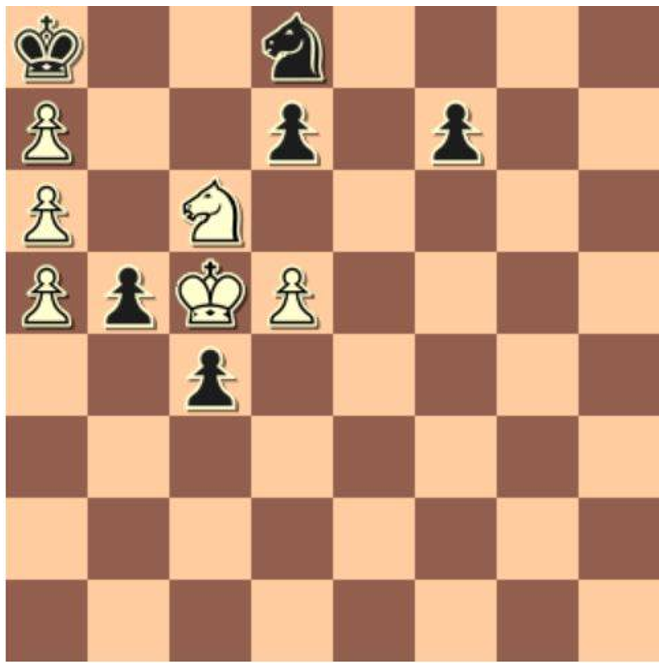 A Chess Study Requiring Backpropagation
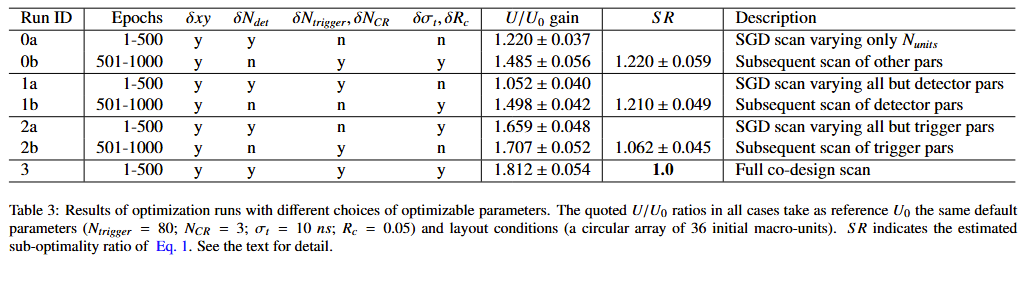 Co-Design Of Scientific Experiments