Fake Banner
Travel With Two Infants

The other day I traveled with Kalliopi and our two newborns to Padova from Lulea. After six full...

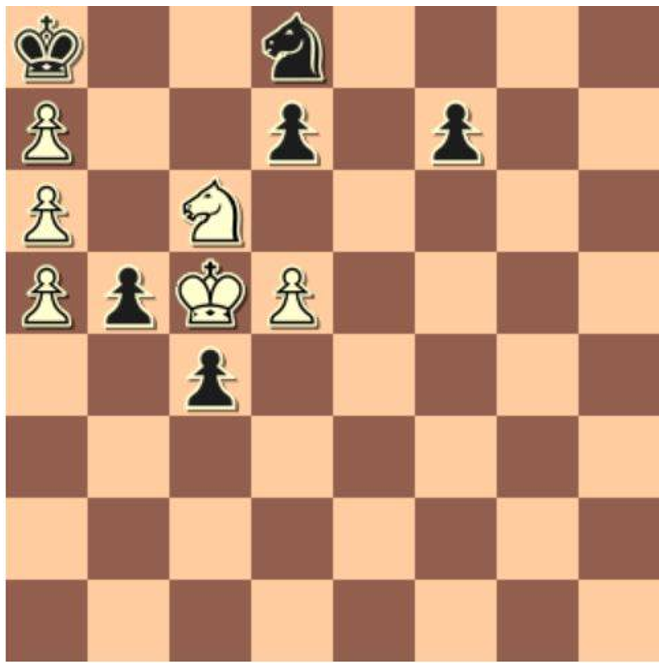
A Nice Little Combination

Although I have long retired from serious chess tournaments (they take too much time, a luxury...

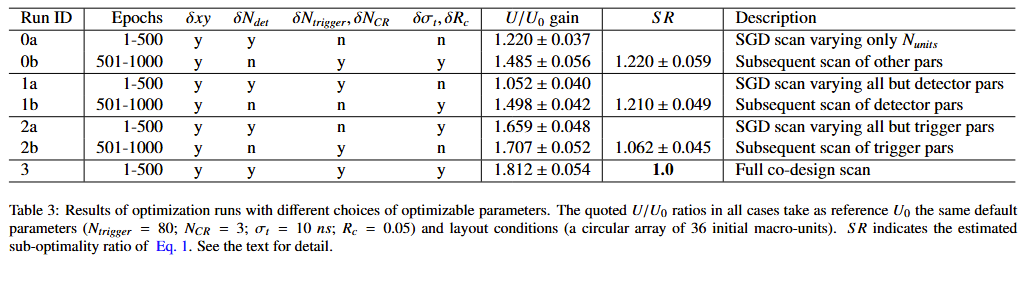
The Strange Case Of The Monotonous Running Average

These days I am putting the finishing touches on a hybrid algorithm that optimizes a system (a...

Turning 60

Strange how time goes by. And strange I would say that, since I know time does not flow, it is...

User picture.
picture for Hank Campbellpicture for Patrick Lockerbypicture for Heidi Hendersonpicture for Bente Lilja Byepicture for Sascha Vongehrpicture for Johannes Koelman
Tommaso DorigoRSS Feed of this column.

Tommaso Dorigo is an experimental particle physicist, who works for the INFN at the University of Padova, and collaborates with the CMS and the SWGO experiments. He is the president of the Read More »

Blogroll
I am spending a few pleasant days in Split for the conference "LHC Days". I will be representing the D0 and CDF collaborations here in a talk on top physics at the Tevatron; in the meantime, I am pleased to witness that talks are of high quality. This morning the most interesting to listen to (at least to me) was the one by Guido Altarelli, a distinguished theorist from the University of Roma III. Altarelli has given crucial contributions to the advancement of our understanding of Quantum Chromo-Dynamics in the seventies, and it is always a pleasure to listen to him (a previous report of a talk he gave in Perugia two years ago is here).
I will be attending next week to a conference in Split (Croatia). The conference is titled "LHC Days", and has the purpose of bringing together experimental physicists working at the main CERN experiments with theorists and experimentalists from all over the world, to discuss the current status and the future perspectives of research in particle physics, focusing of course on the Large Hadron Collider at CERN.
Georges Charpak, a French physicist and 1992 Nobel Prize winner, died yesterday.

Of Polish origin, Charpak gave crucial contributions to experimental physics, in particular for his invention of the multiwire proportional chamber in 1968.

Back then, the signal of passage of charged particles was recorded by bubble chamber images and images triggered by spark chambers - where the charge deposition would create a discharge in a very high electric field.
With the fresh news of the election of Pierluigi Campana as spokesperson of the LHCb experiment, the Italian participation to the LHC experiments at the CERN laboratories is close to a grand slam: three of the four experiments along the ring are led by Italian physicists. Campana joins Guido Tonelli (CMS), Fabiola Gianotti (ATLAS), and Jurgen Schukraft (ALICE).

Italians have consistently led CERN experiments, so the election of Campana is no surprise to most of us: still, it speaks volumes about the professionality of Italians in high-energy physics and the recognition that they are given by their colleagues abroad.
The Large Hadron Collider is increasing gradually the number of proton bunches that circulate in the machine. Yesterday's fill saw 104 colliding proton bunches,  producing the record instantaneous luminosity of 3.5 x 10^31 collisions per square centimeter per second. This is no surprise, of course: luminosity is essentially the product of the number of particles crossing each other per second divided by the cross section of the beams, so if you increase the particles and manage to keep the beam transverse size constant, luminosity must go up.
"At that time, although recognized for the very high quality and reliability of its accelerator engineering, CERN unfortunately did not have a similar reputation in its physics, and it was still recovering from disasters such as the "split A2" affair. CERN always seemed to be second best behind the leading U.S. laboratories, with their vastly more experienced physicists. And during the 1960s it had been repeatedly beaten into the ground, for example, over the discoveries of the Omega- hypheron, the two types of neutrinos, and CP violation in K0 decay. All these things could and should have been found first at CERN, with its far greater technical resources, but the Americans had vastly more experience and know-how."

Donald Perkins