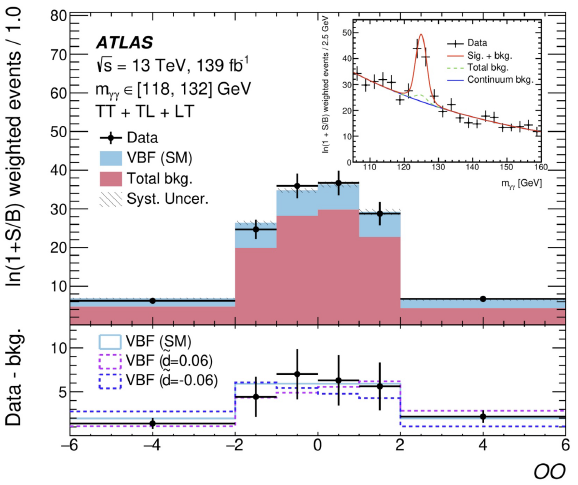
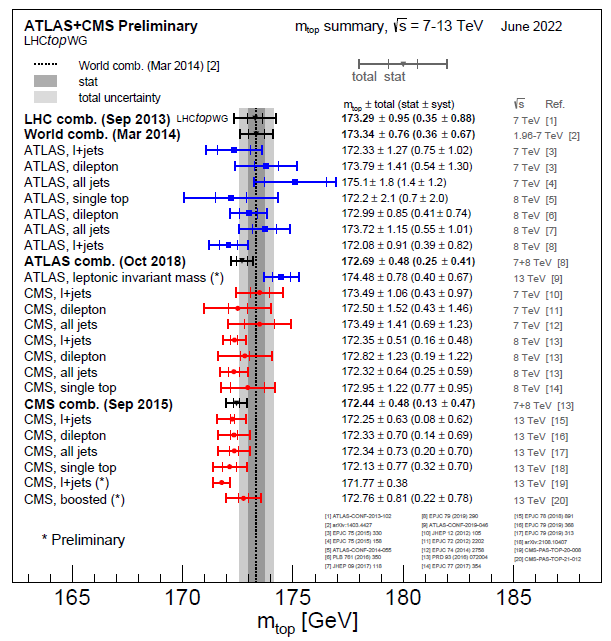
Bill Murray gave a nice summary of recent results from the ATLAS collaboration at the ICNFP conference this morning, and I will nit-pick a few graphs from his presentation to show the level of detail of investigations in subnuclear processes that the Large Hadron Collider (LHC) is providing these days, as seen from the lens of one of its two main microscopes, the wondrous ATLAS detector.
The LHC is taking data. What, again?
I arrived to Kolymbari, a nice seaside resort on the western coast of the Greek island of Crete, late yesterday night, and am now already immersed in the morning session of the XI edition of the International Conference on New Frontiers in Physics. This event, which takes place at the Orthodox Academy of Crete in Kolymbari since 2012, takes a rather broad view on advances in both experimental results and theory of fundamental physics.
In over 15 years of blogging, in this and previous sites, I have mostly stayed away from the topic of climate change, the environmental catastrophe we are creating with our "perennial growth" myths and our disdain of our planet and the other species that inhabit it, and the continuous slaughter of over a billion animals every year for our unnecessarily opulent lunch tables.
Today I am back from
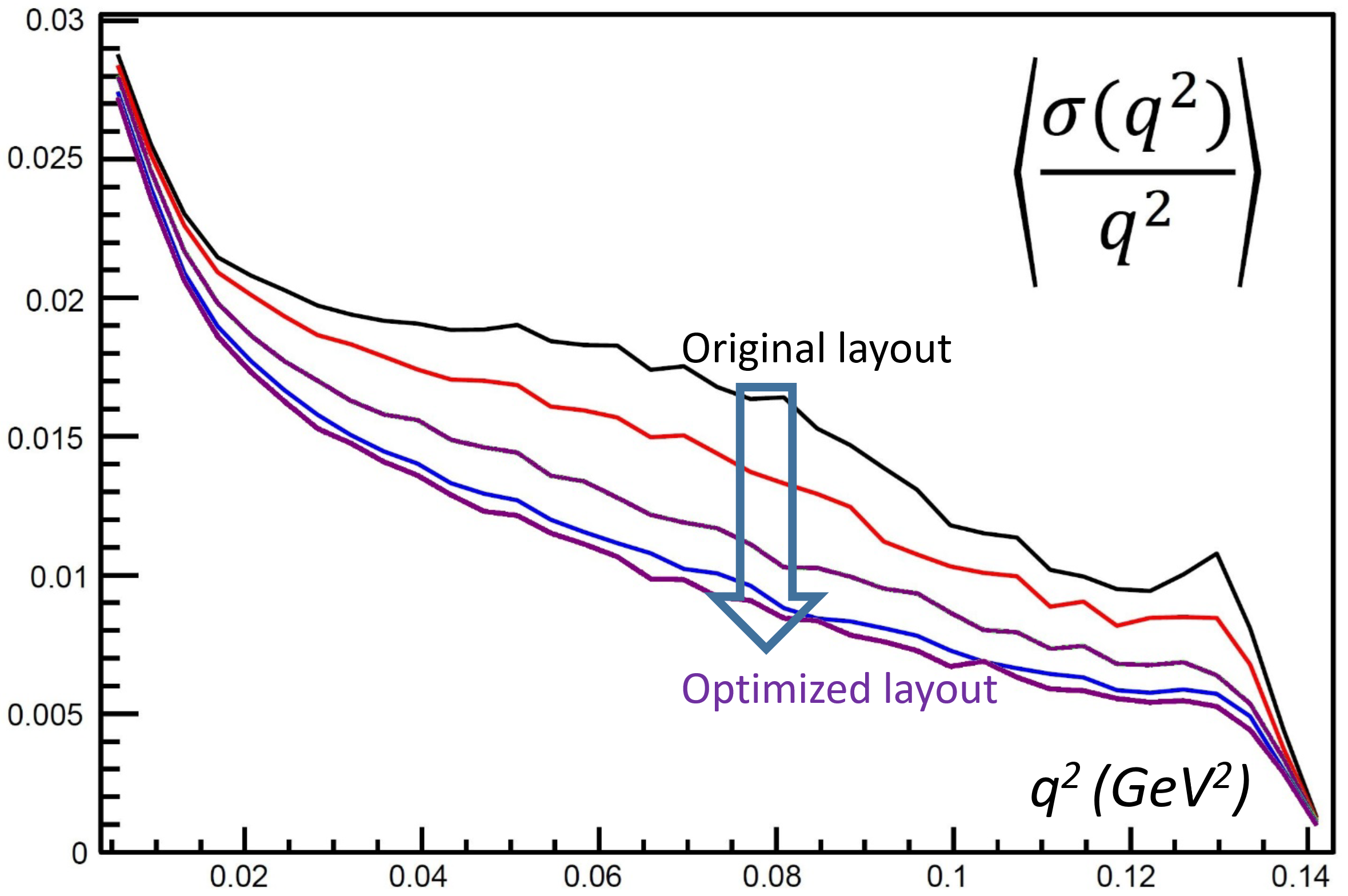
one of the most interesting workshops I ever attended to, and I wish to share some thoughts I had on possible ways to enhance our research of new ideas for future particle detectors with you. Those ideas come from discussions with other participants to the workshop, or just from re-digesting things I have been pondering over for a while.
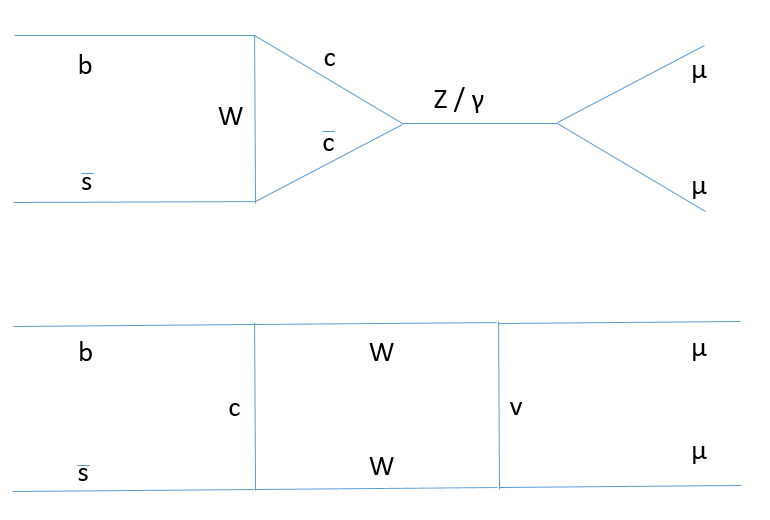
To appreciate what B mesons are, and what is the magic of their behaviour, which is the topic of this article, I need to give you a three-paragraph introduction below.
At the smallest distance scales, matter is made of quarks and leptons, which we consider as point-like objects endowed with different properties and interactions. Most of the matter around us is in fact made up of three-quark systems: protons and neutrons, organized in tightly packed nuclei kept together by the strong force; with electrons (which are the lightest charged leptons) orbiting around them thanks to the electromagnetic force attracting them to the protons.
Physicists from the CMS experiment at CERN's Large Hadron Collider have used the total data sample of 13 TeV proton-proton collisions collected in the past few years to search for resonant decays of heavy hadrons into pairs of J/Psi mesons, and they found three of them.
One of the three new resonances is likely to be the same as a particle already identified for the first time by the competitor LHCb experiment, while the other two are new finds. LHCb is also a LHC detector, but it is one optimized for heavy hadron spectroscopy; while CMS is a "general purpose" detector built with the primary goal of finding the Higgs boson (a 2012 success) and searching for new phenomena at the highest-energy frontier.


 Choosing Your Bets: The Selection Bias
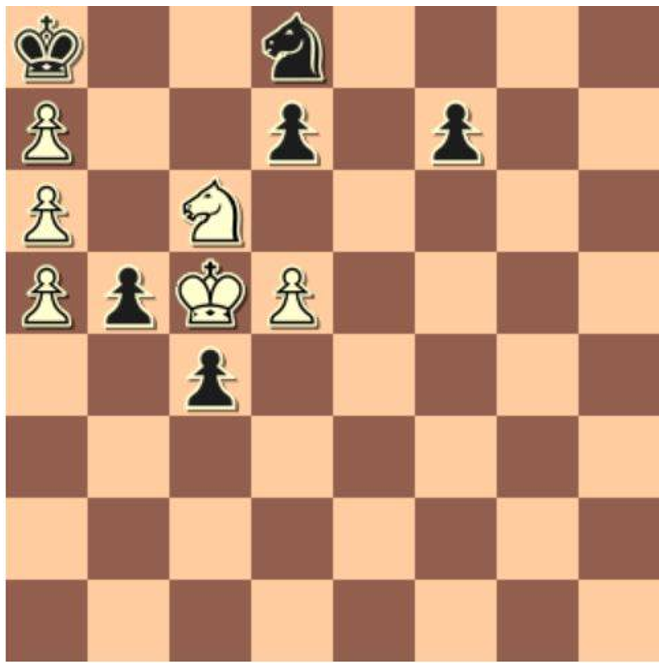 A Chess Study Requiring Backpropagation
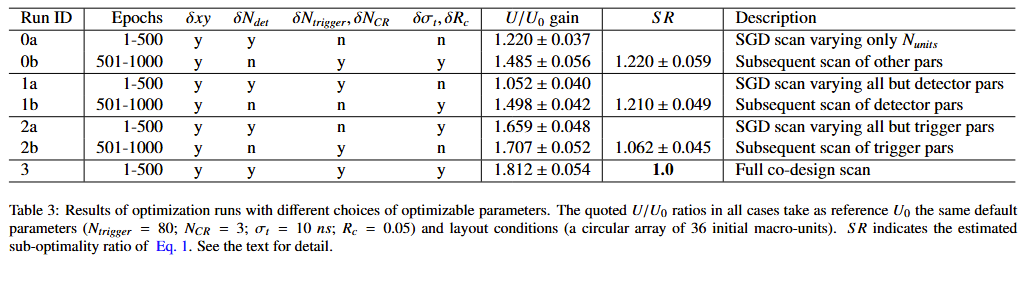 Co-Design Of Scientific Experiments