Fake Banner
Travel With Two Infants

The other day I traveled with Kalliopi and our two newborns to Padova from Lulea. After six full...

A Nice Little Combination

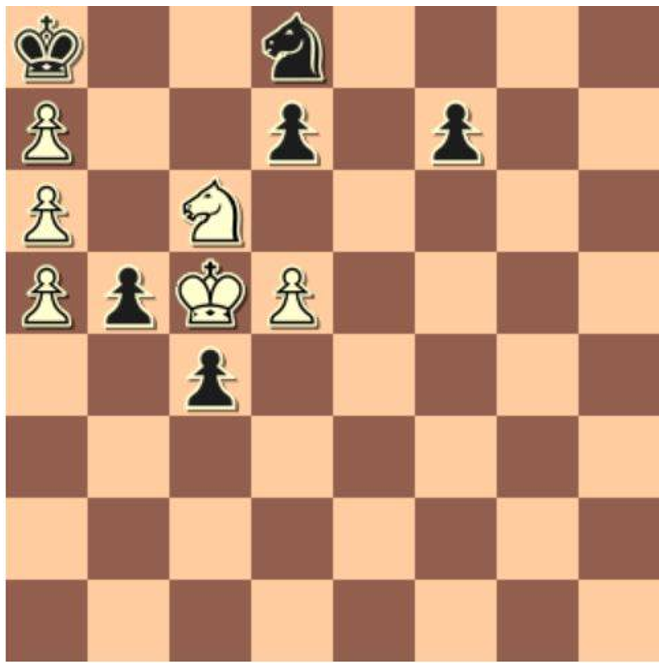
Although I have long retired from serious chess tournaments (they take too much time, a luxury...

The Strange Case Of The Monotonous Running Average

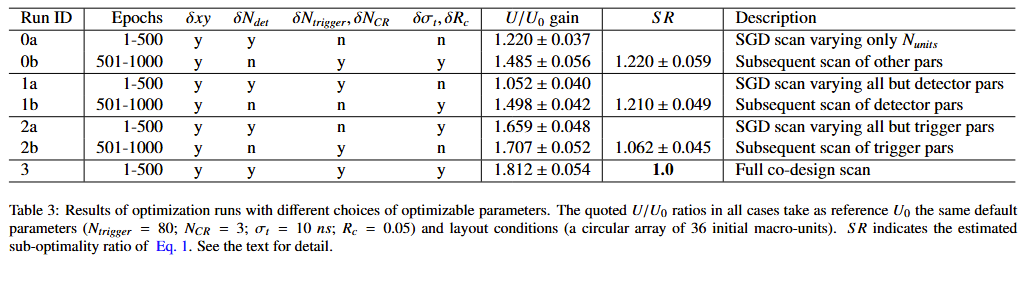
These days I am putting the finishing touches on a hybrid algorithm that optimizes a system (a...

Turning 60

Strange how time goes by. And strange I would say that, since I know time does not flow, it is...

User picture.
picture for Hank Campbellpicture for Patrick Lockerbypicture for Heidi Hendersonpicture for Bente Lilja Byepicture for Sascha Vongehrpicture for Johannes Koelman
Tommaso DorigoRSS Feed of this column.

Tommaso Dorigo is an experimental particle physicist, who works for the INFN at the University of Padova, and collaborates with the CMS and the SWGO experiments. He is the president of the Read More »

Blogroll
My friend Peppe Liberti, a physicist and blogger from southern Italy, sent me today a amusing list of essential biographies of scientists. I wish to share them with you here, after I explain what this is about.

The rules of the game are quite simple: find an amusing way to summarize as succintly as possible (usually not exceeding two lines of text) the life and works of a well-known scientist.

Here is Peppe's bid: five really good ones.


  • Ludwig Boltzmann was one that sought an equilibrium. He died in an irreversible manner.


  • Georg Cantor tried to order the infinities. Ended in a closed set.


Researchers who blog are a rare and endangered species.

As far as rarity is concerned, it is easy to understand why that is so. Scientific research is a round-the-clock occupation, not your regular nine-to-five job. If a researcher has spare time, he or she is expected to invest it in doing more research: for Science is a mission, not a job! Because of that, finding the time to do outreach in a blog, broadcasting recent scientific results, or just expressing one's views is a demanding challenge, especially when one also has a family to attend to.
"Every great man nowadays has his disciples, but it is always Judas who writes the biography."

Oscar Wilde
Analogies are a powerful way to explain complicated scientific concepts. I use them as much as I can whenever I describe particle physics in this blog or when I give a outreach talk in a school. However, good ones are not always easy to find. One usually needs examples from everyday life, which are simple to describe and which do not possess distracting features.

Today I wish to try my luck with you, to see if you come up with an analogy which is better than the one I could find to explain a feature of weak interactions. I must say I am not dissatisfied with my own find, but it is always good to subject oneselves to external judgement.
This is to inform you of the new luminosity record set today by the Tevatron collider at Fermilab. The machine has been working excellently, improving its performance as the machinists found ways to obtain higher stacks of antiprotons, reducing inefficiencies in the transport of the beams from one accelerator to the other in the injection process, or finding better beam tunes. A painstaking work that brought increasing returns, it seems.
I read with interest and excitement a very lightweight preprint on the Cornell preprint arxiv this afternoon. Although I usually skip reading papers on subjects I know little about (Cosmology), the title startled me enough to plunge into it:

"Solution to the Dark Energy Problem".

Single author, Paul Howard Frampton. Hmmm. A thought crossed my mind at the very start. Was this the work of a crackpot, sneaked into the arxiv while nobody was looking ?