Fake Banner
Choosing Your Bets: The Selection Bias

As some of the long-time readers of this blog know, in this column I have occasionally discussed...

Have A Master In Science, Want A Post-Doc Position Directly?

Do you have a master in Science, and want to start a Post-Doc position directly? You can have it...
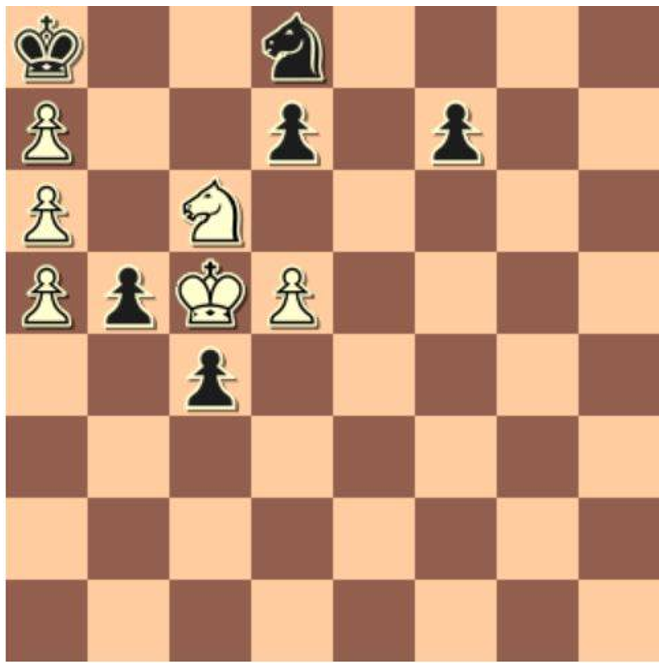
A Chess Study Requiring Backpropagation

The following position is a win for white. But how?It seems like white is able to grab a knight...
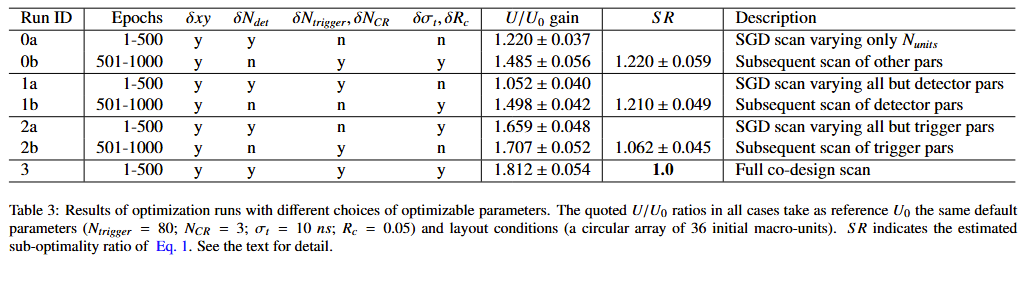
Co-Design Of Scientific Experiments

Next Monday, or Tuesday at the latest, you will find a new bulky paper in the arXiv. Titled "On...

User picture.
picture for Hank Campbellpicture for Heidi Hendersonpicture for Patrick Lockerbypicture for Bente Lilja Byepicture for Sascha Vongehrpicture for Johannes Koelman
Tommaso DorigoRSS Feed of this column.

Tommaso Dorigo is an experimental particle physicist, who works for the INFN at the University of Padova, and collaborates with the CMS and the SWGO experiments. He is the president of the Read More »

Blogroll
"An illustration of the confusion about the tau is provided by two editions of a popular book on particle physics by Nigel calder entitled The Key to the Universe. In the first edition Calder wrote:

Martin Perl and his colleagues detected peculiar events occurring in SPEAR. From the scene of collision an electron and a heavy electron (the well-known muon) carrying opposite electric charges were ejected at the same moment without any other detectable particles coming out. No conventional process, involving conventional particles, could account for such events.
Everyday use of a mathematical concept

The concept of probability is not alien to even the least mathematically versed among us: even those who do not remember the basic math they had in primary schools use it currently in their daily reasoning. I find the liberal use of the word "probability" (and derivates) in common language interesting, for two reasons. One, because the word has in fact a very definite mathematical connotation. And two, because the word is often used to discuss the knowledge of a system's evolution in time without a clear notion of which, among either of two strikingly different sources, is the cause of our partial or total ignorance.
Well, it is now official, so I thought I would let my blog know about it too: I am honored to announce that I was chosen to serve in the CMS Statistics Committee. Along with eight highly distinguished colleagues, I will work for at least the next two years in a group that will take care of ensuring the accuracy of all results that our 2500-strong collaboration will produce.

CMS is one of the two high-energy physics experiments designed to study the proton-proton collisions delivered by the LHC, the Large Hadron Collider at CERN in Geneva, Switzerland. The machine is expected to start data-taking in November this year.
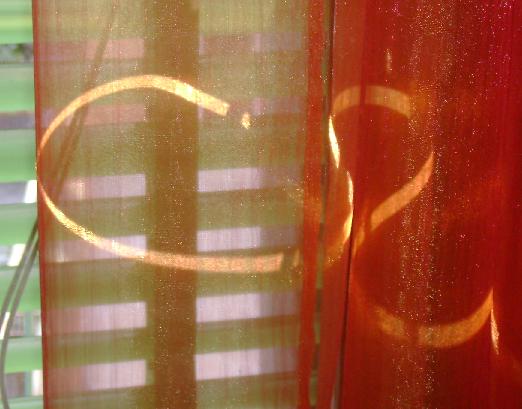
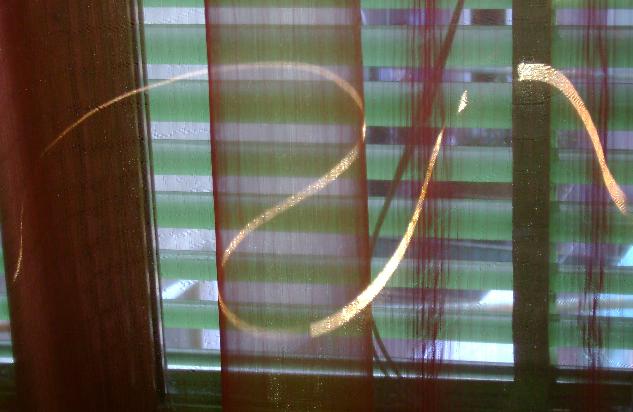
Mathematical functions are all around us. We may not realize it but they are there! Check it out on the pictures below.

A blade of light, selected by the venetian blinds of my living room window, draws a curved, complicated, multiple-valued function on the semi-transparent orange curtains. Maybe the curve below is even more fascinating:
If  Airlines were armies, United and Lufthansa would be invincible. Their meals betray it -you know, the stronger an army, the worse the food it distributes. I am just out of a flight from Chicago to Frankfurt, and not only all my bones are complaining, but my stomach is sending me serious SOS signals: of course, since after close examination of the provided chicken dinner, I bailed out.
Do you really care about the human race ? I do, and probably I do more than you do. Well, not more than you, maybe -I do not know you personally!-; but I know where you come from: the class of human beings presently alive. And I think that most of the people on this planet just believe they care about mankind, but they actually care just about themselves.