Ever since experimental physics was a thing, the worth of scientists could be appraised by how carefully they designed their experiments, making sure that their devices could answer as precisely as possible the questions that crowded their mind. Indeed, the success of their research depended on making the right choices on what apparatus to build, with what materials, what precise geometry, and how to operate it for best results.
 (Above: Ramsay and Pierre Curie in their lab)
The late Martin Gardner held for many years a fantastic feature in the popular Scientific American magazine. It was called "Mathematical Games", and it was worth the whole magazine by itself, although SciAm always featured many interesting articles about scientific advancements. Upon picking the magazine up at a newsstand, "Mathematical Games" was the first article I would read as a teenager eager to learn about the endless tricks Gardner taught there, in his wonderful tale-telling style.
Chess is a wonderful game, one that contains in itself a universe of situations, choices to make, strategic concepts, tactical ideas. Through its study we realize how difficult it is to take the correct decision in a maze of opportunities, even when everything is under the sun and nothing is hidden from our view. By losing game after game with stronger opponents we get to learn the hard way -but still, within an imaginary world- that our actions have consequences. Even more: we understand that if we are sometimes powerless to choose correctly even when we have all the information available to us, we cannot possibly believe we can do that in the real world, when we have to deal with incomplete, faulty, or missing data.
Like the vast majority of readers of this column, I very strongly condemn the Russian invasion of Ukraine and the ensuing atrocities. War is never an answer to international controversies. And I would like to add: I am in favor of all sanctions that financially hit the aggressor, including cutting Russia from use of international banking circuits and similar impactful actions.
That said, I will say here what I think about this ongoing rush to find ways to hurt a country whose citizens are largely innocent of their leader's crimes. I think most of these creative initiatives are counter-productive, reaching the nonsensical, the irrational, and the plain nuts.
Over the course of the past two decades we have witnessed the rise of deep learning as a paradigm-changing technology. Deep learning allows algorithms to dramatically improve their performance on multivariate analysis tasks. Deep neural networks, in particular, are very flexible models capable of effective generalization of available data, with unbeatable results in their predictions. Indeed, from the outside, nowadays it looks as if the game changer in predictive analysis was the construction of large neural network architectures. But it was not.
The behaviour of matter at quantum level includes a number of surprising effects, which we are lucky enough to be able to study and observe in different physical systems. Some of these effects are due to the radically different properties of particles endowed with integer amounts of spin (which we call bosons), and particles endowed with half-integer amounts of spin (which we call fermions).


 Choosing Your Bets: The Selection Bias
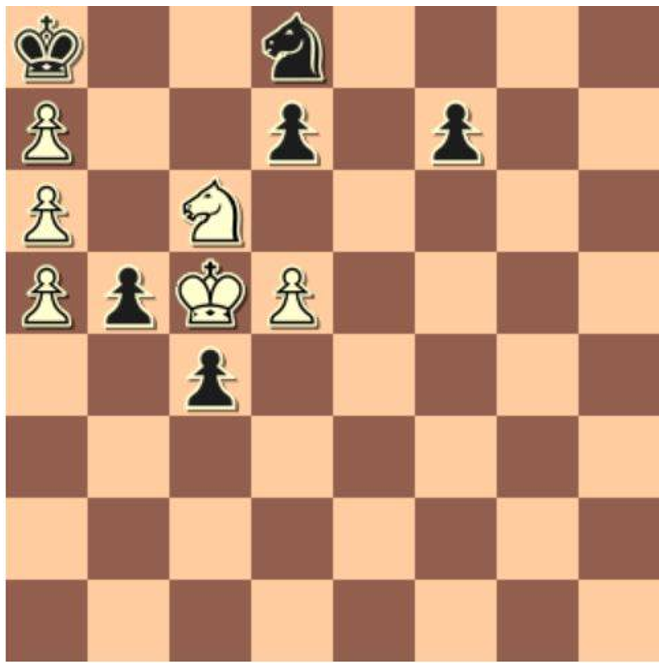 A Chess Study Requiring Backpropagation
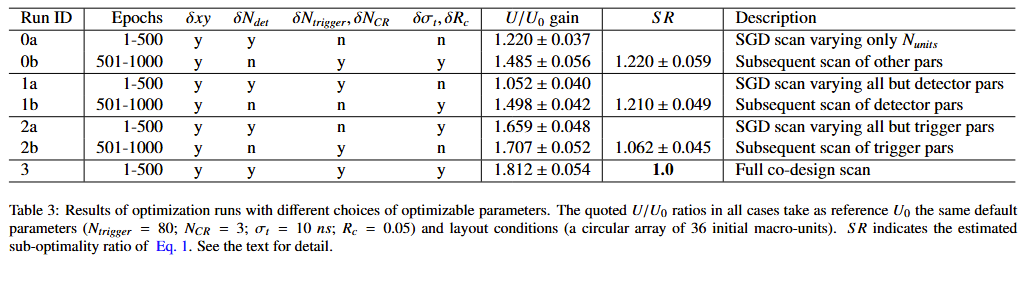 Co-Design Of Scientific Experiments