From August 30th to September 2nd I will attend the 29th edition of "Physics in Collision" in Kobe, Japan, to hear a few interesting talks and to present a poster on behalf of CMS, about the search for the Standard Model Higgs boson.
Posters are what they sound like -big, illustrated sheets of paper. Many conferences have a "poster session" in which authors of the posters stand in front of their creation and discuss the details with colleagues and answer questions about the contents. Before the poster session, each poster is usually presented by the author with a short oral memo -five minutes each at PIC.
Sometimes playing online chess gives me some satisfactions. I only play 5-minute chess, but five minutes (times two, five for each player) are a looong time, during which adrenalin flows free in my veins. Chess is a drug: these 5-minute games are addictive, exhilarating, and damaging to one's ego at times. But when things go the right way, it really feels good.
Today I was paired with a Mongolian international master, IM Myagmarsuren, by the automatic pairing system of 5-minute blitz games on the ICC. Here is the game, with minimal commentary.
Shatar-Tonno, ICC July 10th, 2009, 5' blitz
1. Nf3 d5 2. g3 Bf5 3. d4 c6 4. c4 e6 5. Nc3 Nf6 6. b3 Bd6 7. Bg2 Nbd7 8. c5
Bc7 9. Nh4 Bg4 10. f3 Bh5
The
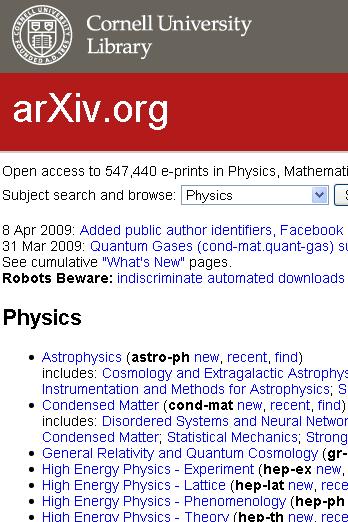
Arxiv is an online repository of scientific papers in physics, astronomy, maths, cosmology, computer science, and a few other topics, where papers due to be published on scientific journals are submitted by the authors, and become quickly accessible for free to anybody before the peer-review process ran by the journals is over and they get printed there.
Unfortunately I was right: at least in predicting that the INFN exam dubbed "R5" would not go deserted. The R5 exam, which in exchange for a stressful pair of written tests (which I am trying to get a hold of, to report on it here) guaranteed nothing that the participants did not have beforehand -a certification of readiness for a temporary position within INFN, which the institute cannot however offer, being short of cash-, saw the participation of 178 candidates among the about 350 who had submitted their application a couple of months ago. Barely more than half: this is a victory, since the participation is sufficient to grant value to the results.
"The INFN directorate may have invented the Identity operator in the space of qualifying exams"
Guido Volpi (commenting on FB on the very offensive R5 exam held today by INFN post-docs).


 Choosing Your Bets: The Selection Bias
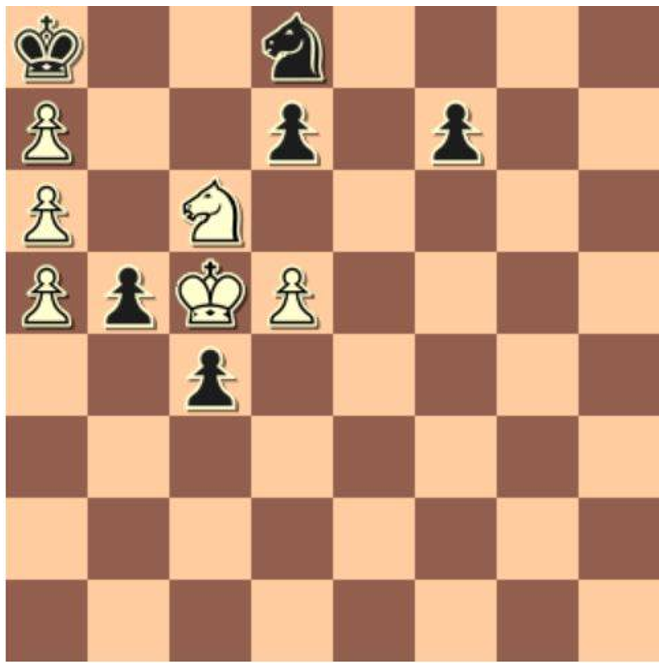 A Chess Study Requiring Backpropagation
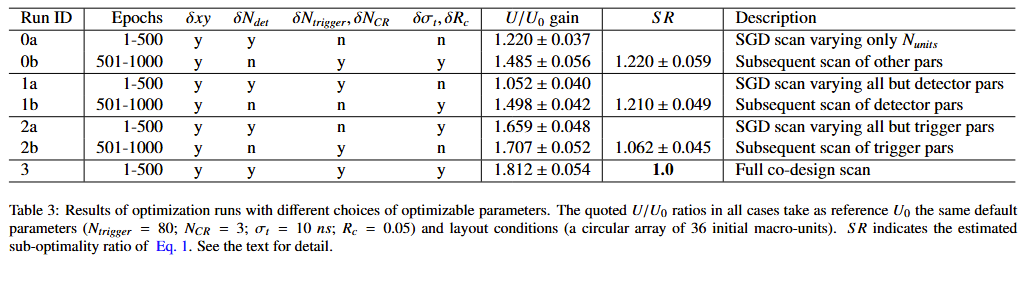 Co-Design Of Scientific Experiments








 Patrick Draper is a graduate student in physics at the University of Chicago and Argonne National Lab. He is a native of Illinois and lives in Hyde Park, Chicago with his wife Karen and parrot Felix, to whom he is grateful for their love, patience, and correcting his sign errors. He is a supporter of the international effort to put a muon collider on Mars, and is waiting for NASA to return his phone calls.

