Fake Banner
Travel With Two Infants

The other day I traveled with Kalliopi and our two newborns to Padova from Lulea. After six full...

A Nice Little Combination

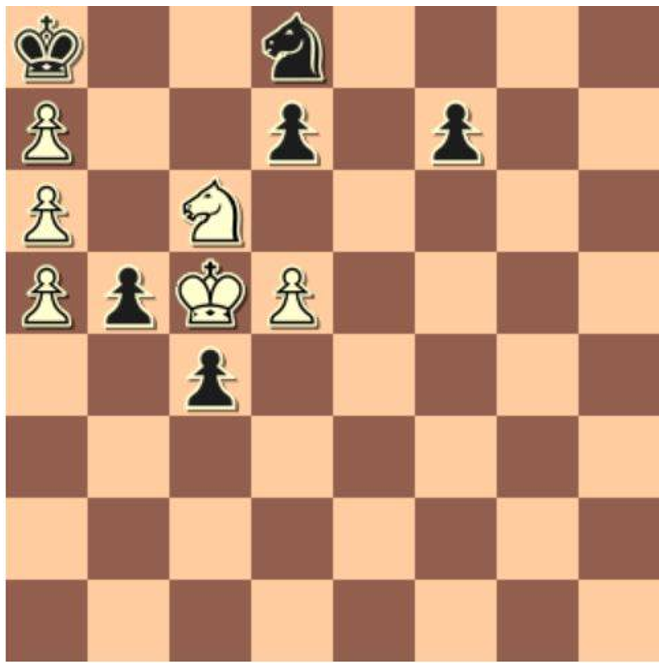
Although I have long retired from serious chess tournaments (they take too much time, a luxury...

The Strange Case Of The Monotonous Running Average

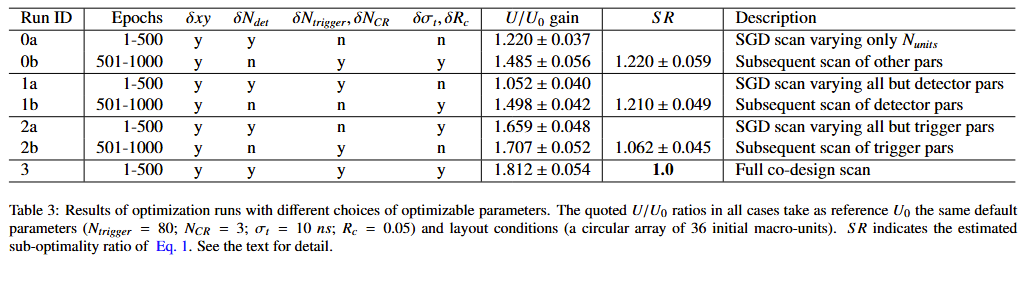
These days I am putting the finishing touches on a hybrid algorithm that optimizes a system (a...

Turning 60

Strange how time goes by. And strange I would say that, since I know time does not flow, it is...

User picture.
picture for Hank Campbellpicture for Patrick Lockerbypicture for Heidi Hendersonpicture for Bente Lilja Byepicture for Sascha Vongehrpicture for Johannes Koelman
Tommaso DorigoRSS Feed of this column.

Tommaso Dorigo is an experimental particle physicist, who works for the INFN at the University of Padova, and collaborates with the CMS and the SWGO experiments. He is the president of the Read More »

Blogroll
The text below is the fourth part of what could have become "Chapter 13" of the book "Anomaly! Collider Physics and the Quest for New Phenomena at Fermilab", which I published in 2016. For part 1 see here; for part 2 see here; for part 3 see here.
The offer of Ph.D. positions in Physics at the University of Padova has opened just a few days ago, and I wish to advertise it here, giving some background on the matter for those of you who are interested in the call or know somebody who could be.

The Ph.D. in Italy In Italy, Ph. D.s last three years (the duration can be extended but this is not recommended). Courses start with the first academic semester, so the calls typically open in the spring, and admission tests are run in the summer. The system is not too different from that of other countries, but there are peculiarities of which you might want to be aware.
The text below is the third part of what could have become "Chapter 13" of the book "Anomaly! Collider Physics and the Quest for New Phenomena at Fermilab", which I published in 2016. For part 1 see here; for part 2 see here.

Giromini joins Run 2
The text below is the second part of what could have become "Chapter 13" of the book "Anomaly! Collider Physics and the Quest for New Phenomena at Fermilab", which I published in 2016. For part 1 see here.

Collaboration membership from CDF to CDF II
When I wrote the final version of the book "Anomaly! Collider physics and the quest for new phenomena at Fermilab", four years ago, I had to get rid of a lot of material which would not fit within the strict page limit requested by my prospective publisher. The discarded material was not yet at book quality level - I had intended to interview more colleagues and collect more material to finalize those extra chapters - so I never bothered to do anything with them, and they rested until now in a subdirectory of my book project folder.
You may be wondering, upon reading the above title of this post, what I am after today: the top quark has been around for 25 years now, and there is no long-standing controversy on who discovered it -almost. Well, I will come to that in due time, but to explain quickly what I mean for those of you in a hurry, I am referring to how the top discovery is cited in the very important Wikipedia pages about that subatomic particle, as well as those of the relevant experiments that claimed its observation in 1995.

Quarks