The text below is the third part of what could have become "Chapter 13" of the book
"Anomaly! Collider Physics and the Quest for New Phenomena at Fermilab", which I published in 2016. For part 1
see here; for part 2
see here.
Giromini joins Run 2
When I wrote the final version of the book
"Anomaly! Collider physics and the quest for new phenomena at Fermilab", four years ago, I had to get rid of a lot of material which would not fit within the strict page limit requested by my prospective publisher. The discarded material was not yet at book quality level - I had intended to interview more colleagues and collect more material to finalize those extra chapters - so I never bothered to do anything with them, and they rested until now in a subdirectory of my book project folder.
You may be wondering, upon reading the above title of this post, what I am after today: the top quark has been around for 25 years now, and there is no long-standing controversy on who discovered it -almost. Well, I will come to that in due time, but to explain quickly what I mean for those of you in a hurry, I am referring to how the top discovery is cited in the very important Wikipedia pages about that subatomic particle, as well as those of the relevant experiments that claimed its observation in 1995.
Quarks
I was very saddened the other day upon learning from a colleague that Teresa Rodrigo Anoro passed away. Teresa was a professor at IFCA, University of Cantabria in Santander, Spain, where she held the position since 1995. At the IFCA she led a strong team of experimental particle physicists who collaborate to the CMS experiment at the CERN LHC. Her premature loss leaves a very large void at her institution in particular, as well as in the development of Spanish particle physics in general, where she had a big role.
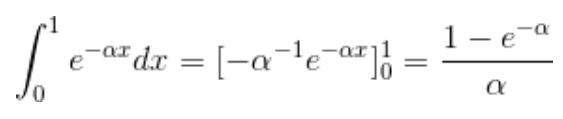
These days I have been writing a chapter of a book on machine learning for physics, and in so doing I have found myself pondering on how to best explain, in very simple terms, the nocuous effect that model uncertainty may have on the result of a classification task. So I decided to create a toy example with the purpose of introducing the discussion.
The example is meant to have two attractive properties: be analytically solvable in closed form - meaning that one may compute with paper and pencil all the relevant results - and be described by simple-to-interpret graphs. Below I will describe what I came up with, but first let me explain what are the points I wish to focus on.


 Choosing Your Bets: The Selection Bias
 A Chess Study Requiring Backpropagation
 Co-Design Of Scientific Experiments