Living in an organized society means we usually abide by unwritten rules of conduct, in addition to avoiding breaking state laws. We can then rely on order to prevail over chaos, kindness to overpower selfishness, and the common good to be an achievable goal. But the way each of us interprets their own script in this comedy we call life shows a significantly wide range of behaviours. The extrema of the spectrum are populated at one end by individuals who always try to game the system for their own benefit, without any consideration for the damage they cause to others; and at the other end by kind souls who enjoy giving rather than taking, and to raise a smile rather than gaining a dime.
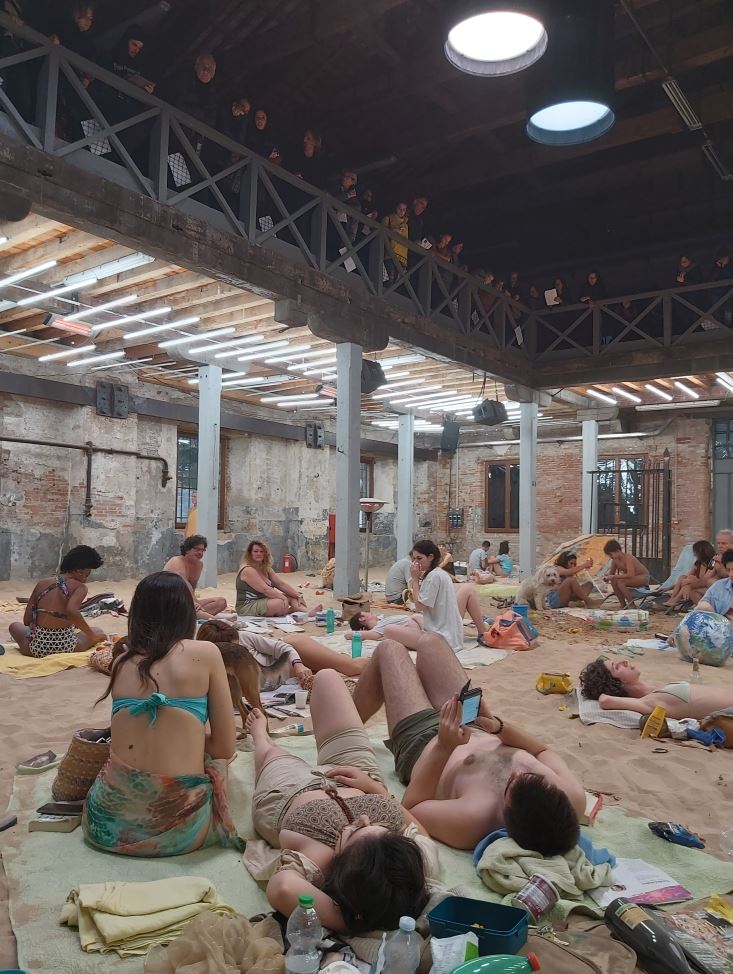
Every two years the Biennale, a contemporary art exhibition, opens in Venice from May to November. This is one of the most important events of its kind, and it attract millions of visitors to a garden that contains a few dozen different pavillions, each hosting artwork from a different country. Over fifty more such independent museums are scattered around the city center and are free entry - these are even more fun to visit than the main exposition at the "Giardini della Biennale", as they allow visitors to visit the spaces themselves, often old houses or palaces that are otherwise unaccessible.
If you have a minute to spend watching something really cool, why not having a look at the completion of the installment of GEM detectors in the CMS experiment at the CERN Large Hadron Collider, ***RIGHT NOW*** (6PM CEST Oct 24th) ?
The most recent preprint in the ArXiv this evening is an
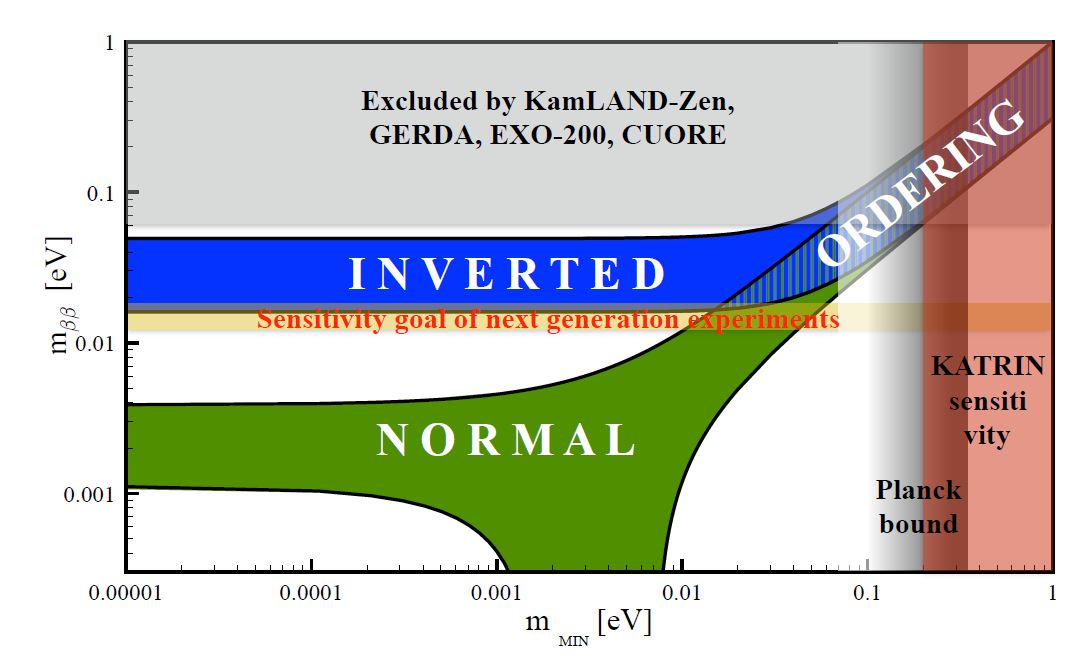
APPEC report on the neutrinoless double beta decay. This is the thick result of a survey of the state of the art in the search for a very (very) rare subnuclear process, which can shed light on the nature of the mass hierarchy of neutrinos. Oh, and, APPEC stands for "AstroParticle Physics European Consortium", in case you wondered.
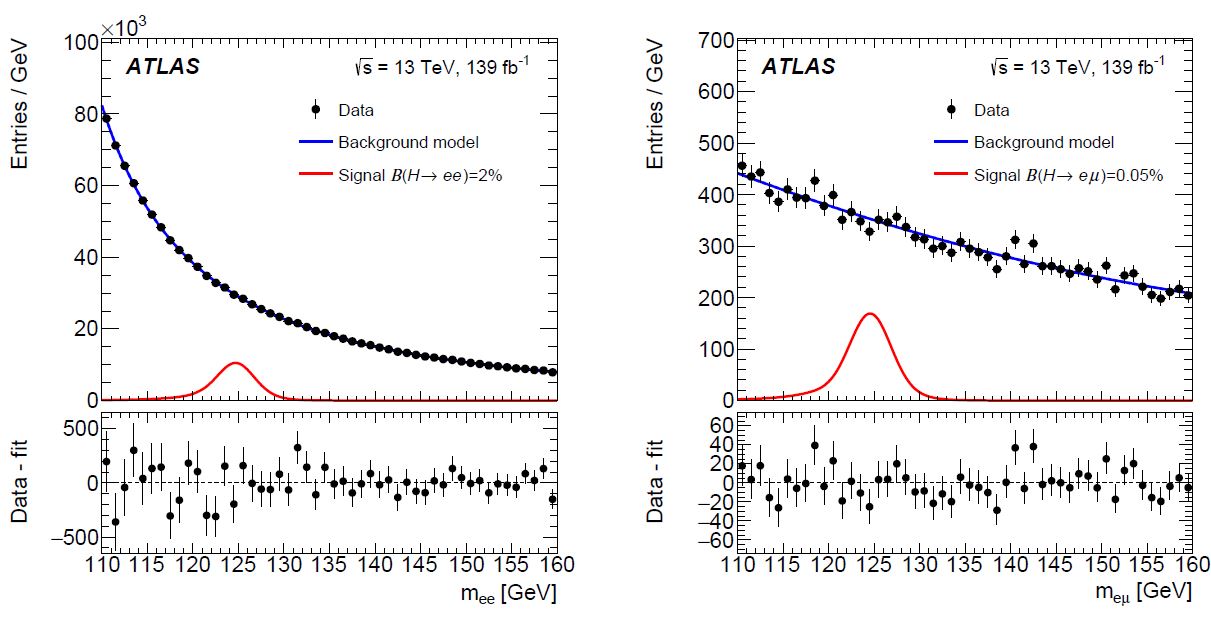
This week's Plot relates to the search of rare decays of the Higgs boson, through the analysis of the large amounts of proton-proton collision data produced by the Large Hadron Collider (LHC), CERN's marvelous 27km particle accelerator. The ATLAS collaboration, which is one of the four main scientific equipes looking at LHC collisions, produced an improved bound on the rate at which Higgs bosons may decay to electron-positron pairs (which they are expected to do, although very rarely, in the Standard Model, SM) and to electron-muon pairs (which are forbidden in the SM).
A few weeks ago, in
an article where I discussed some new ideas for fundamental physics research, I briefly touched on an incident in which Paul Frampton, a well-known theoretical physicist, got involved in 2011. The paragraph in question read:


 Choosing Your Bets: The Selection Bias
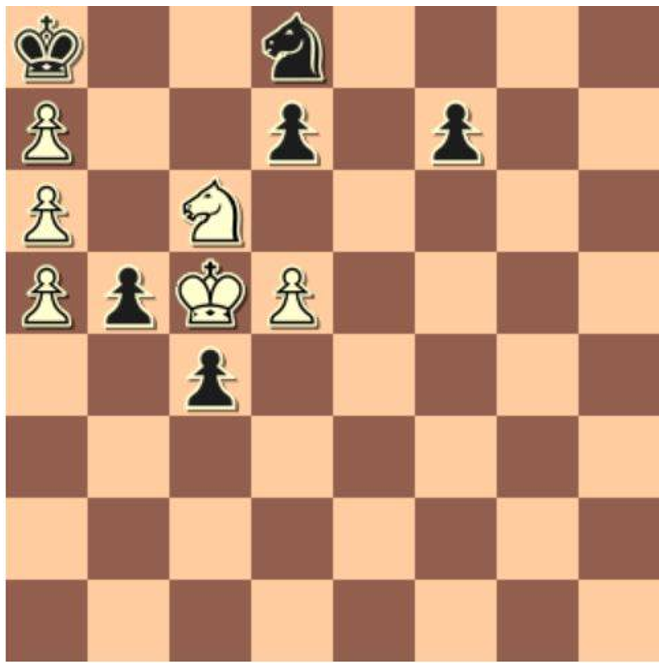 A Chess Study Requiring Backpropagation
 Co-Design Of Scientific Experiments