Fake Banner
Travel With Two Infants

The other day I traveled with Kalliopi and our two newborns to Padova from Lulea. After six full...

A Nice Little Combination

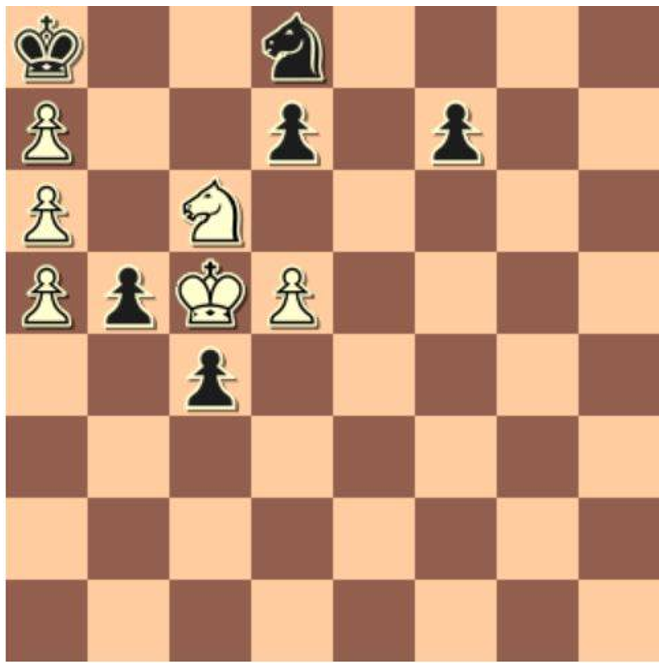
Although I have long retired from serious chess tournaments (they take too much time, a luxury...

The Strange Case Of The Monotonous Running Average

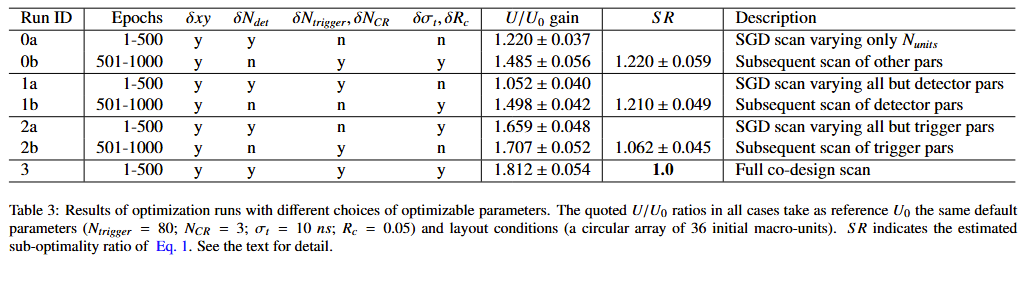
These days I am putting the finishing touches on a hybrid algorithm that optimizes a system (a...

Turning 60

Strange how time goes by. And strange I would say that, since I know time does not flow, it is...

User picture.
picture for Hank Campbellpicture for Patrick Lockerbypicture for Heidi Hendersonpicture for Bente Lilja Byepicture for Sascha Vongehrpicture for Johannes Koelman
Tommaso DorigoRSS Feed of this column.

Tommaso Dorigo is an experimental particle physicist, who works for the INFN at the University of Padova, and collaborates with the CMS and the SWGO experiments. He is the president of the Read More »

Blogroll
Today's news is that five months after Alessandro Strumia's controversial talk at a conference on "Theory and Gender", CERN decided to terminate the Italian theorist's status of "guest professor", effectively cutting its ties with him. The decision certainly affects the ability of Strumia to further his research in particle phenomenology, which centered on models of physics beyond the Standard Model, and is rather unprecedented. 
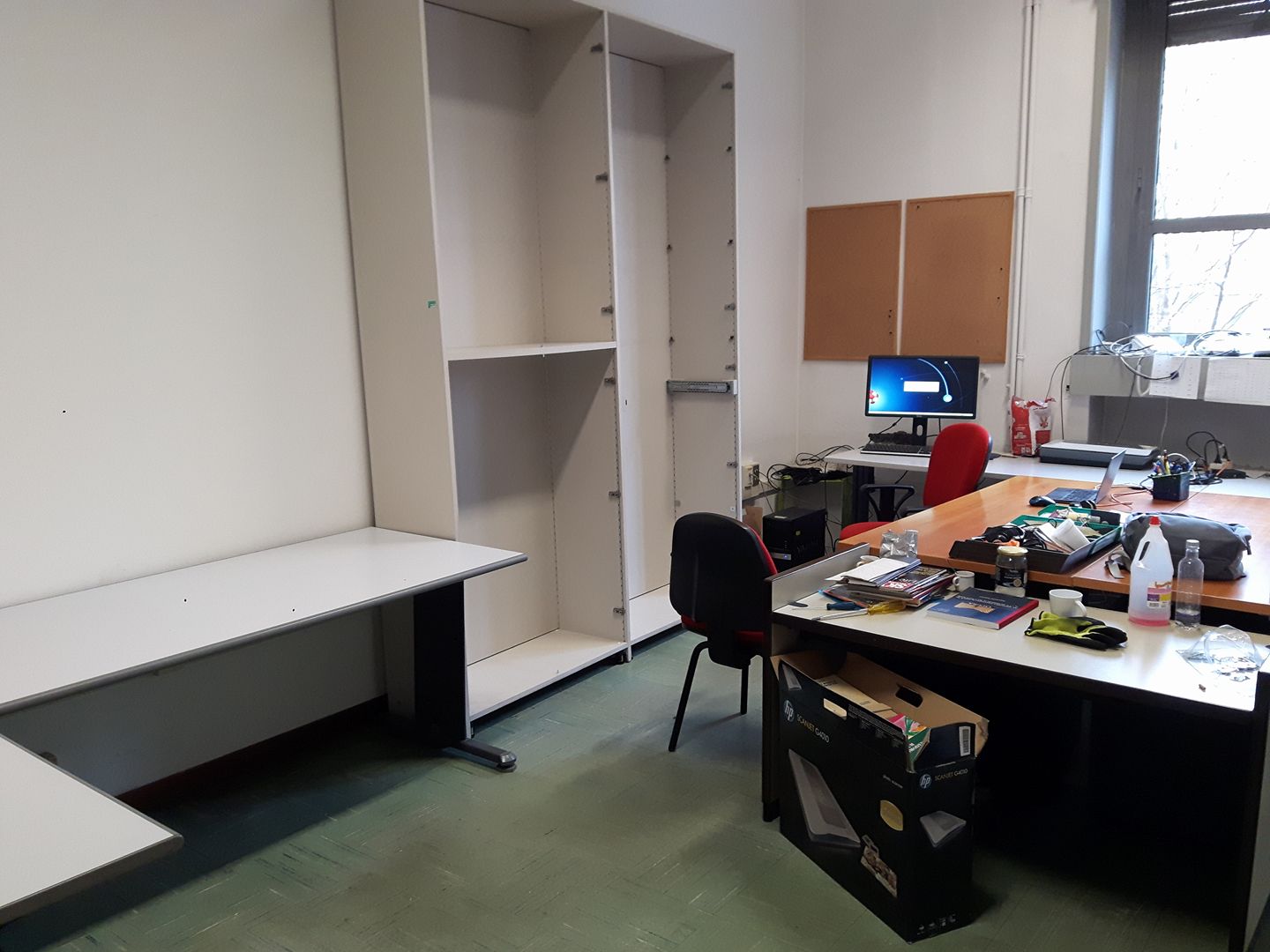
New Office

New Office

Feb 27 2019 | comment(s)

As the regulars here already know, I am an employee of the INFN. This is the "Istituto Nazionale di Fisica Nucleare", which translates as "National institute for nuclear physics", a slight misnomer of historical origin, as the institute today actually centers its activities on SUB-nuclear physics - i.e. study of elementary particles (but nuclei are still one of the targets!). 
The ATLAS and CMS collaborations released yesterday a joint document where they discuss the combination of their measurements of the rate of production of single top quarks in proton-proton collisions delivered by the LHC collider. The exercise is not an idle one, as the physics behind the production processes is interesting, and its study as well as the precise comparison of experimental results and theory predictions improves our ability to predict other reactions, wherein we might find deviations from the currently accepted theory, the Standard Model.
I am very happy to report today that the CMS experiment just confirmed to be an excellent spectrometer - as good as they get, I would say - by discovering two new excited B hadrons. The field of heavy meson spectroscopy proves once again to be rich with new gems ready to be unearthed, as we collect more data and dig deeper. For such discoveries to be made, collecting as many proton-proton collisions as possible is in fact the decisive factor, along with following up good ideas and preserving our will to not leave any stone unturned.

A school and symposium in Data Science in (Astro)-Particle Physics and Cosmology will be held on March 25 to 27 in Braga (Portugal). I am going to lecture on Machine Learning there, while prof. Glen Cowan will provide lectures in Statistics. I have provided a summary of the contents of my lectures in the previous post in this blog. The registrations to attend the school are now open, and I am distributing an announcement here.

On March 25 to 27 will be held the school titled "Data Science in (astro)particle physics and cosmology", in Braga (Portugal). The lecturers are prof. Glen Cowan (RHUL), who will cover Statistics, and myself, who will cover topics in Machine Learning. I thought I would mention this here, as for me it is a novelty - in the past years I have often given lectures in advanced statistics topics at various Ph.D. schools around the world, but I never focused explicitly and solely on ML.