Fake Banner
Conferences Good And Bad, In A Profit-Driven Society

Nowadays researchers and scholars of all ages and specialization find themselves struggling with...

USERN: 10 Years Of Non-Profit Action Supporting Science Education And Research

The 10th congress of the USERN organization was held on November 8-10 in Campinas, Brazil. Some...

Baby Steps In The Reinforcement Learning World

I am moving some baby steps in the direction of Reinforcement Learning (RL) these days. In machine...

Restoring The Value Of Truth

Truth is under attack. It has always been, of course, because truth has always been a mortal enemy...

User picture.
picture for Hank Campbellpicture for Patrick Lockerbypicture for Heidi Hendersonpicture for Bente Lilja Byepicture for Sascha Vongehrpicture for Johannes Koelman
Tommaso DorigoRSS Feed of this column.

Tommaso Dorigo is an experimental particle physicist, who works for the INFN at the University of Padova, and collaborates with the CMS and the SWGO experiments. He is the president of the Read More »

Blogroll
At the IV Workshop in Valencia a student from my group, Emanuele Coradin, presented the results of a novel algorithm for the identification of charged particles in a silicon tracker. The novelty is due to the use of neuromorphic computing, which works by encoding detector hits in the time of arrival of current impulses at neurons, and by letting neurons "learn" the true patterns of hits produced by charged particles from the noise due to random hits.

Last week I got to the part of my course in Subnuclear Physics for Statisticians (yes, there is such a course at the Department of Statistical Sciences in Padova, and I have been giving it since its inception 6 years ago!) where I discuss CP violation in the system of neutral K mesons. In one of the most surprising experiments of modern physics, the group of Cronin and Fitch proved in 1964 that the combination of the two symmetries operations called "charge conjugation" C and "parity inversion" P could in some cases modify the properties of physical systems. 

USERN (Universal Scientific Education and Research Network, https://usern.org) is a non-profit, non-governmental organization that supports interdisciplinary science across borders. Founded in 2015 by a distinguished Iranian Immunologist, Prof. Nima Rezaei, USERN has grown to acquire a membership of 26,000 members in 140 countries, from 22 scientific disciplines. From November 2022 I am its President.
Nowadays we study the Universe using a number of probes and techniques. Over the course of the past 100 years we moved from barely using optical telescopes, that give us access to the flux of visible photons from galaxies, supernovae, and other objects of interest, to exploiting photons of any energy - gamma rays, x rays, ultraviolet and infrared radiation, microwaves; and then also using charged cosmic radiation (including protons and light nuclei, electrons and positrons), neutrinos, and lastly, gravitational waves. 
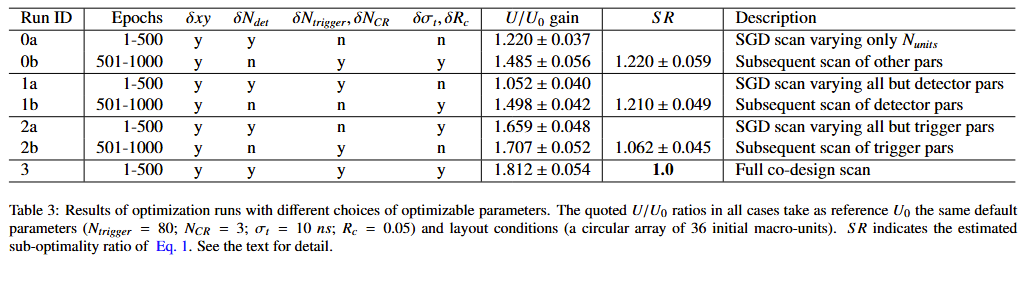
Earlier this year I mentioned here that I would be writing an article on how the utility function of experiments in fundamental science could be specified, as an enabling step toward the formalization of a co-design optimization problem. Now, as the deadline for submission approaches and the clock keeps ticking, I am returning to this topic and am mulling over the matter, so I thought it would be appropriate to dump here a few thoughts on the matter.
Co-design
I recently got engaged in a conversation with a famous retired mathematician / cosmologist about the phenomenology of Higgs bosons in the Standard Model of particle physics, and very soon we ended up discussing a graph produced by the CMS collaboration at the CERN Large Hadron Collider, which details the result of searches of Higgs boson pairs in proton-proton collisions data. 
The conversation -and in particular the trouble I had in making sense of the graph with my interlocutor- clarified to me that the way we present those graphs, which summarize our results and should speak by themselves, is confusing to say the least. Indeed, one needs to be briefed extensively before one can fully understand what the various elements of the graphs mean.