Fake Banner
Travel With Two Infants

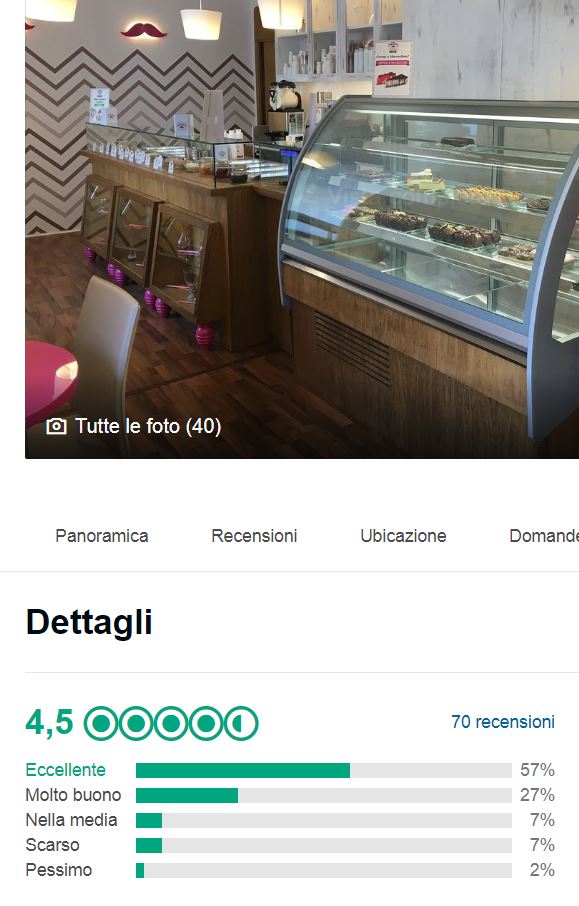
The other day I traveled with Kalliopi and our two newborns to Padova from Lulea. After six full...

A Nice Little Combination

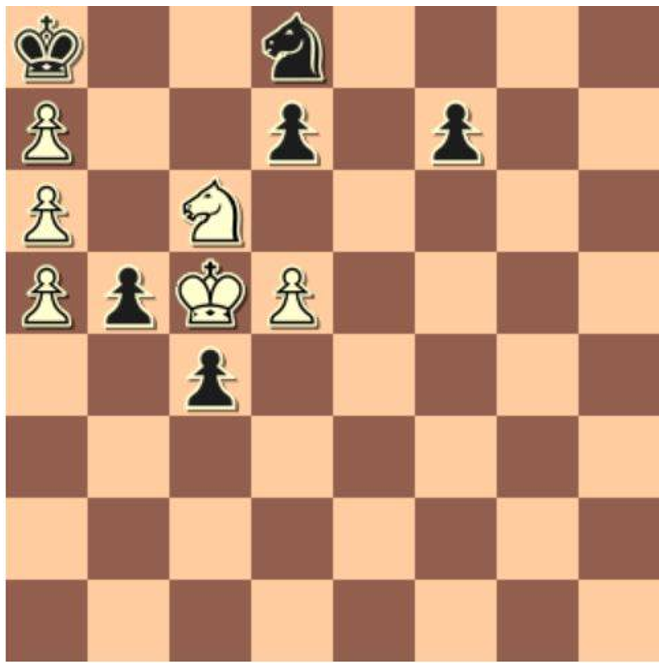
Although I have long retired from serious chess tournaments (they take too much time, a luxury...

The Strange Case Of The Monotonous Running Average

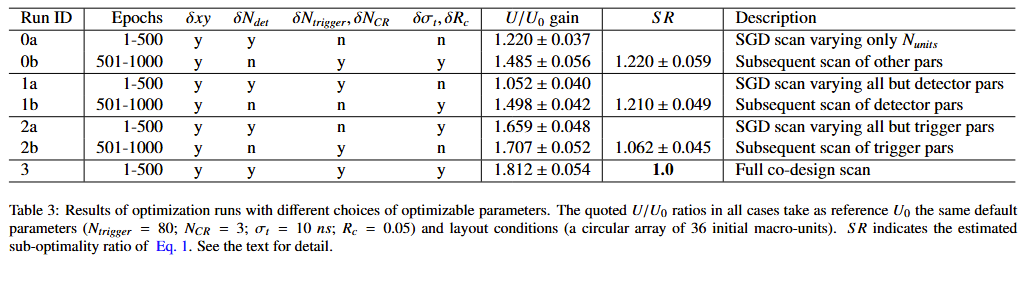
These days I am putting the finishing touches on a hybrid algorithm that optimizes a system (a...

Turning 60

Strange how time goes by. And strange I would say that, since I know time does not flow, it is...

User picture.
picture for Hank Campbellpicture for Patrick Lockerbypicture for Heidi Hendersonpicture for Bente Lilja Byepicture for Sascha Vongehrpicture for Johannes Koelman
Tommaso DorigoRSS Feed of this column.

Tommaso Dorigo is an experimental particle physicist, who works for the INFN at the University of Padova, and collaborates with the CMS and the SWGO experiments. He is the president of the Read More »

Blogroll
Version 2 of a thick textbook on particle and astroparticle physics is out, and you should have a look at it (well, at least if you're seriously interested in the topic!). The book, titled "Introduction to Particle and Astroparticle Physics" (not a very imaginative title, admittedly, but at least a faithful one) has a more descriptive subtitle: "Multimessenger Astronomy and its Particle Physics Foundations". It is authored by Alessandro de Angelis and Mario Pimenta, two acknowledged experts of the field. 
Do you know the works of Tim Blais, the guy behind "A Capella Science"? I sincerely hope you do, but otherwise this post is for you. Tim has a youtube page where he publishes his amazing works.

Tim sings modified lyrics of famous songs, and mixes them with multiple tracks of his own voice imitating each of the instruments of the underlying orchestra, or other choral voices. Until here you could well say there's nothing new under the Sun, except that Tim has been capable, through amazing mixing and editing skills as well as awesome vocal gift, of producing quite entertaining videos. But there is more.


I am very happy to host here today an article by my INFN colleague Alessandro de Angelis, a well-known and authoritative italian astrophysicist. Alessandro has recently published a beautiful new book on this subject, which I invite you to have a look at (see link at the bottom of the article) - T.Dorigo .
On Chance

On Chance

Jul 31 2018 | comment(s)

What is chance? Or better, does the word "chance" really have an absolute meaning? I believe this is not an idle question. We tend to use that word to describe phenomena which we cannot trace back to an explanatory cause by a cause-effect relation. But words are important: labeling an event as due to chance has a direct impact on our perception of reality, as the statement that something "happened by chance" constitutes a final verdict, which labels the event as something not liable to be scrutinized in more depth.
There is very little I love more than the world wide web. No, seriously, I mean it.

Internet has changed my life more than any other "thing" around, and it has provided me with an enormous wealth - information, knowledge, simplification of otherwise difficult tasks, ease of access to data, solution to problems, connection with people all over the world, possibility to broadcast and publish. And entertainment, online gaming, music, videos, free porn, free movies, paid movies. I could go on, of course.
[Eleni Petrakou, Ph.D., is a physicist and an independent researcher, besides being a longtime follower of this blog. She now has a newsletter of her own; it is high S/N stuff - check it out here. After a past collaboration with the CMS experiment, she has recently become intrigued with the dynamics of the Sun, and she developed a model to try and predict the solar cycle, a 11-year variation of the activity of sunspots and solar flares whose origin is still debated. I asked her to describe the matter for this blog, and the text below is the result - TD]


DESCRIBING THE SOLAR CYCLE