Fake Banner
Travel With Two Infants

The other day I traveled with Kalliopi and our two newborns to Padova from Lulea. After six full...

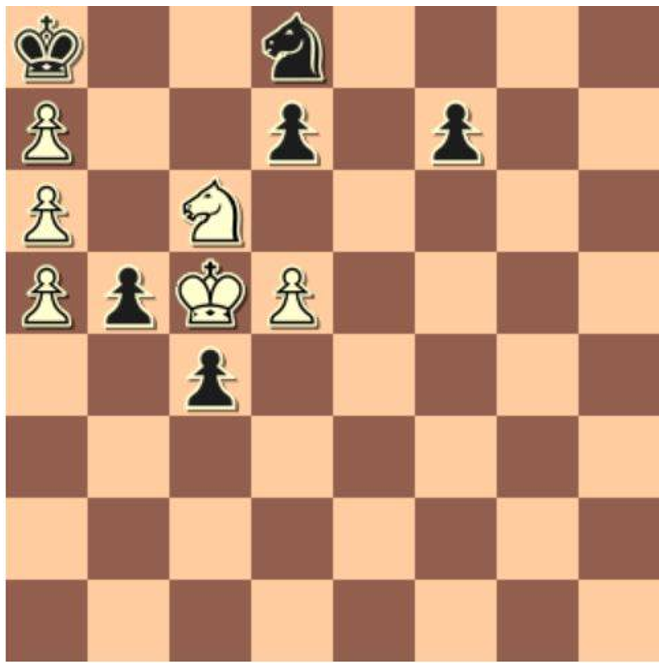
A Nice Little Combination

Although I have long retired from serious chess tournaments (they take too much time, a luxury...

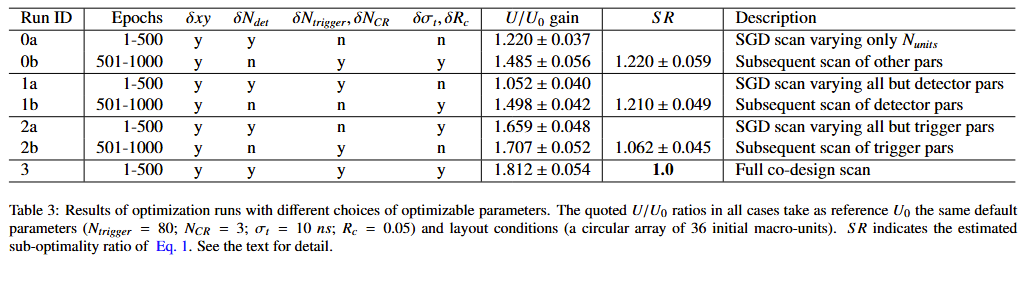
The Strange Case Of The Monotonous Running Average

These days I am putting the finishing touches on a hybrid algorithm that optimizes a system (a...

Turning 60

Strange how time goes by. And strange I would say that, since I know time does not flow, it is...

User picture.
picture for Hank Campbellpicture for Patrick Lockerbypicture for Heidi Hendersonpicture for Bente Lilja Byepicture for Sascha Vongehrpicture for Johannes Koelman
Tommaso DorigoRSS Feed of this column.

Tommaso Dorigo is an experimental particle physicist, who works for the INFN at the University of Padova, and collaborates with the CMS and the SWGO experiments. He is the president of the Read More »

Blogroll
Neutrinos, the most mysterious and fascinating of all elementary particles, continue to puzzle physicists. 20 years after the experimental verification of a long-debated effect whereby the three neutrino species can "oscillate", changing their nature by turning one into the other as they propagate in vacuum and in matter, the jury is still out to decide what really is the matter with them. And a new result by the MiniBoone collaboration is stirring waters once more.
Living in Padova has its merits. I moved here since January 1st and am enjoying every bit of it. I used to live in Venice, my home town, and commute with Padova during weekdays, but a number of factors led me to decide on this move (not last the fact that I could afford to buy a spacious place close to my office in Padova, while in Venice I was confined to a rented apartment).
A paper by B. Fornal and B. Grinstein published last week in Physical Review Letters is drawing a lot of interest to one of the most well-known pieces of subnuclear physics since the days of Enrico Fermi: beta decay.
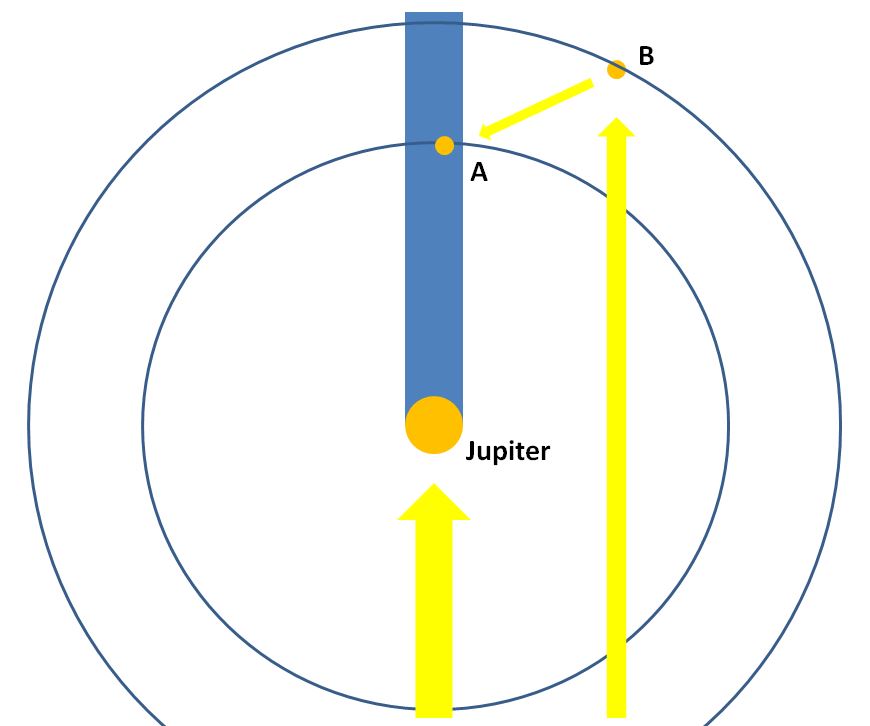
Visual observation of the planets of our solar system has always been an appealing pastime for amateur astronomers, but the digital era has taken away a little bit of glamour to this activity. Until 30 years ago you could spot with your eye more detail than was at reach of normal photography even for large telescopes, so amateur astronomers could contribute to planetary science by producing detailed drawings of the surface of Jupiter, Saturn, Venus, and Mars. 
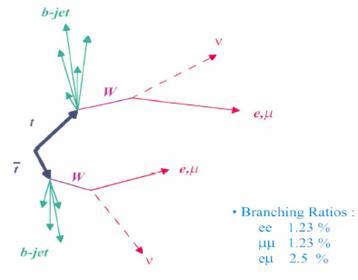
Frank D. Smith (Tony Smith for his friends) has been following this blog since the beginning. He is an independent researcher who is very interested in phenomena connected with the top quark and the Higgs boson. He has a theory of his own and he has been trying to check whether LHC data is compatible or not with it. His ideas are reported here as a guest post, as a tribute to his faithfulness to this site. Of course the views expressed below are his own, as I retain a healthy dose of scepticism to any bit of new physics apparent in today's data... Also, I will comment in the thread below to inform the reader of what my ideas are on his interpretation of public LHC results.
Playing chess games flawlessly is a super-human endeavour, which even machines are still having a hard time achieving. However, the occasional flawless game does arise in human practice, albeit rarely. Usually it is a grandmaster who pulls it off. The absence of sub-optimal moves can be ascertained by extensive computer analysis these days, so the quality of the moves is not in question.