Fake Banner
Travel With Two Infants

The other day I traveled with Kalliopi and our two newborns to Padova from Lulea. After six full...

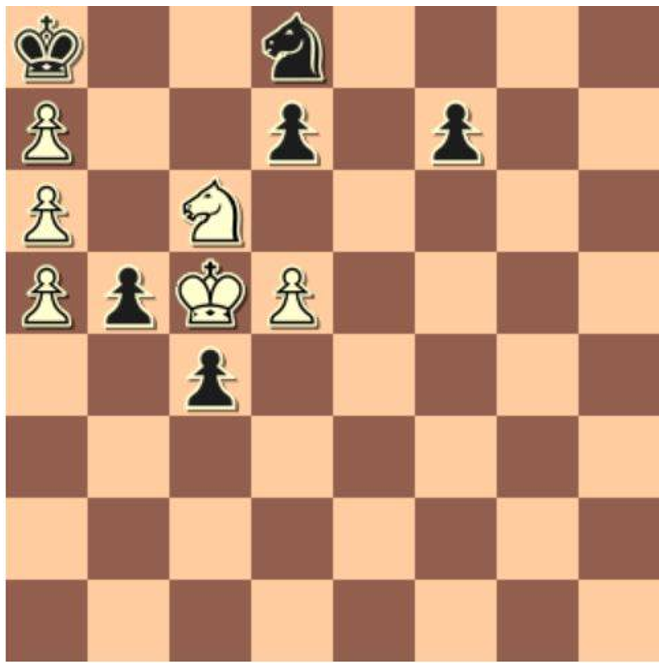
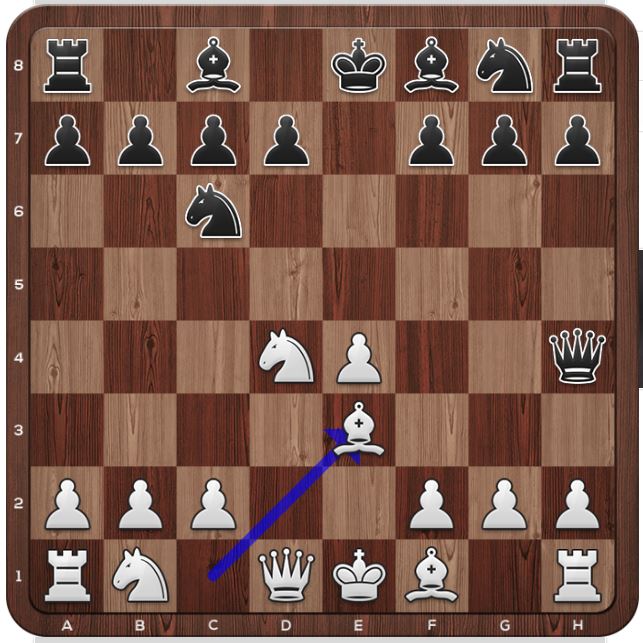
A Nice Little Combination

Although I have long retired from serious chess tournaments (they take too much time, a luxury...

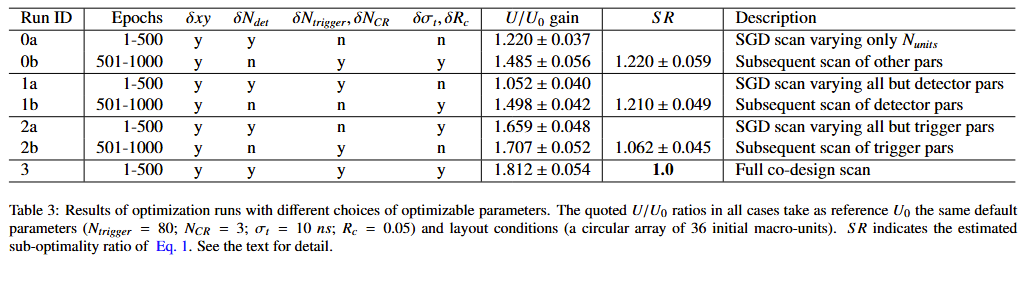
The Strange Case Of The Monotonous Running Average

These days I am putting the finishing touches on a hybrid algorithm that optimizes a system (a...

Turning 60

Strange how time goes by. And strange I would say that, since I know time does not flow, it is...

User picture.
picture for Hank Campbellpicture for Patrick Lockerbypicture for Heidi Hendersonpicture for Bente Lilja Byepicture for Sascha Vongehrpicture for Johannes Koelman
Tommaso DorigoRSS Feed of this column.

Tommaso Dorigo is an experimental particle physicist, who works for the INFN at the University of Padova, and collaborates with the CMS and the SWGO experiments. He is the president of the Read More »

Blogroll
Academics direly need objective, meaningful metrics to judge the impact their publications have on their field of expertise. Nowadays any regular Joe will be able to show many authored papers in their CV, and it will be impossible to objectively assess the relative merits of each and every one of them, if you are trying to rank Joe in a list of candidates for tenure, or just a research job at a University. 
CERN has equipped itself with an inter-experimental working group on Machine Learning since a couple of years. Besides organizing monthly meetings and other activities fostering the dissemination of knowledge and active research on the topic, the group holds a yearly meeting at CERN where along with interesting presentations on advances and summaries, there are tutorials to teach participants the use of the fast-growing arsenal of tools that any machine-learning enthusiast these days should master.
These days the use of machine learning is exploding, as problems which can be solved more effectively with it are ubiquitous, and the construction of deep neural networks or similar advanced tools is at reach of sixth graders.  So it is not surprising to see theoretical physicists joining the fun. If you think that the work of a particle theorist is too abstract to benefit from ML applications, you better think again. 

While spending a few vacation days on a trip around central Italy I made a stop in a place in the Appennini mountains, to visit some incredible caves. The caves of Frasassi were discovered in September 1971 by a few young speleologists, who had been tipped off by locals about the existence, atop a mountain near their village, of a hole in the ground, which emitted a strong draft wind - the unmistakable sign of underground hollows.

Yesterday's seminar at CERN by Giuseppe Ruggiero unveiled the preliminary results of a search for the rare decay of charged kaon into a pion and a neutrino-antineutrino pair, performed by the CERN NA62 experiment. The result in truth had been already shown a couple of weeks before at the Moriond conference, so it's no news - or if you prefer, it's two nu's - as indeed (spoiler alert) one such event was observed, with two neutrinos inferred from it.
I am very glad to observe that Adam Falkowsky has resumed his blogging activities (for how long, that's early to say). He published the other day a blog entry titled "Where were we", in which he offers his view of the present status of things in HEP and the directions he foresees for the field.
I was about to leave a comment there, but since I am a very discontinuous blog reader (you either write or read, in this business -no time for both things together) I feared I would then miss any reply or ensuing discussion. Not that I mean to say anything controversial or flippant; on the contrary, I mostly agree with Adam's assessment of the situation. With some distinguos.