Fake Banner
Travel With Two Infants

The other day I traveled with Kalliopi and our two newborns to Padova from Lulea. After six full...

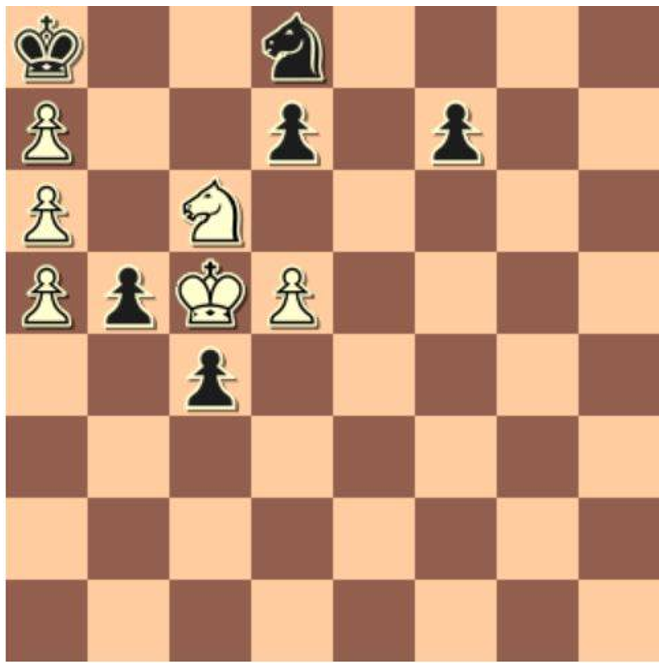
A Nice Little Combination

Although I have long retired from serious chess tournaments (they take too much time, a luxury...

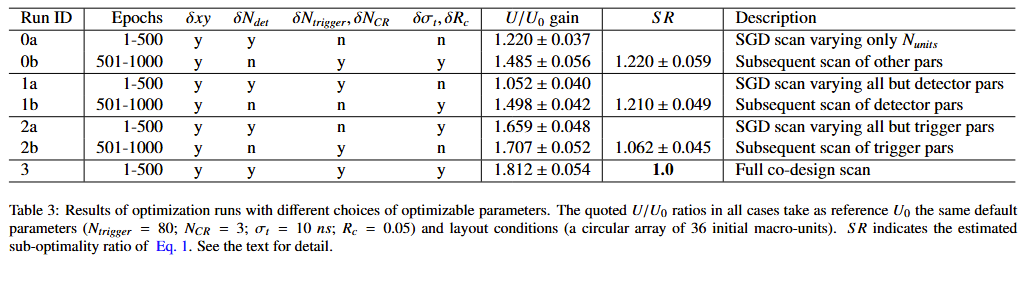
The Strange Case Of The Monotonous Running Average

These days I am putting the finishing touches on a hybrid algorithm that optimizes a system (a...

Turning 60

Strange how time goes by. And strange I would say that, since I know time does not flow, it is...

User picture.
picture for Hank Campbellpicture for Patrick Lockerbypicture for Heidi Hendersonpicture for Bente Lilja Byepicture for Sascha Vongehrpicture for Johannes Koelman
Tommaso DorigoRSS Feed of this column.

Tommaso Dorigo is an experimental particle physicist, who works for the INFN at the University of Padova, and collaborates with the CMS and the SWGO experiments. He is the president of the Read More »

Blogroll
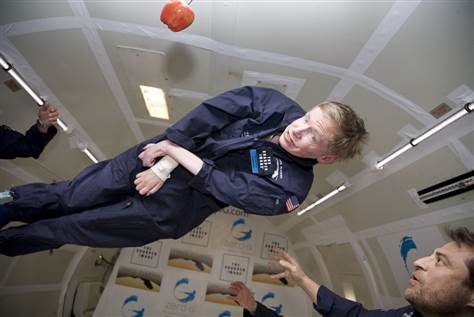
I do not keep crocodiles[*] in my drawer, so this short piece will have to do today.... Stephen Hawking, the world-renowned British cosmologist, passed away yesterday, and with him we lost not only a bright thinker and all-round scientist, but also a person who inspired two or three generations of students and researchers, thanks of his will to live and take part in active research in spite of the difficulties he had to face, which he always managed to take with irony. Confined on a wheelchair by ALS, and incapable of even speaking without electronic assistance, he always displayed uncommon sharpness and wit.
Large amounts of ink (well, electrons) have been spilt over the web in the past few months to discuss the #MeToo movement. It seems this blog will eventually join the crowd, although a bit belatedly, and with a slightly different viewing angle. 
After keeping silent on the matter, I am stimulated to discuss it after a BuzzFeed article exposed several cases of alleged sexual harassment and related inappropriate behavior by world-class cosmologist-cum-science-pop-guy-cum-skeptic Lawrence Krauss. Plus, yesterday was international women's day, and I never miss a chance to miss a deadline.

Yesterday over 50 million Italian citizens were called to voted to elect the new government, after a rather tense period of political campaign. And today the results are out, yielding a quite confusing picture, at least for what concerns the chances of forming a coalition with a majority in both chambers.


Statistical hypothesis testing is quite boring if you apply it to cases where you know the answer, or where the data speak loud and clear about one hypothesis being true or false. Life at the interface between testability and untestability is much more fun.
This is just a short note - a record-keeping, if you like - to report that my long review on "Collider Searches for Diboson Resonances" has now appeared on the online Elsevier site of the journal "Progress of Particle and Nuclear Physics". 
I had previously pointed to the preprint version of the same article on this blog, with the aim of getting feedback from experts in the field, and I am happy that this has indeed happened: I was able to integrate some corrections from Robert Shrock, a theorist at SUNY, as well as some integrations to the references list by a couple of other colleagues.
Dark Matter (DM), the mysterious substance that vastly dominates the total mass of our universe, is certainly one of the most surprising and tough puzzles of contemporary science. We do not know what DM is, but on the other hand we have a large body of evidence that there must be "something" in the universe that causes a host of effects we observe and which would have no decent explanation otherwise.