Fake Banner
Travel With Two Infants

The other day I traveled with Kalliopi and our two newborns to Padova from Lulea. After six full...

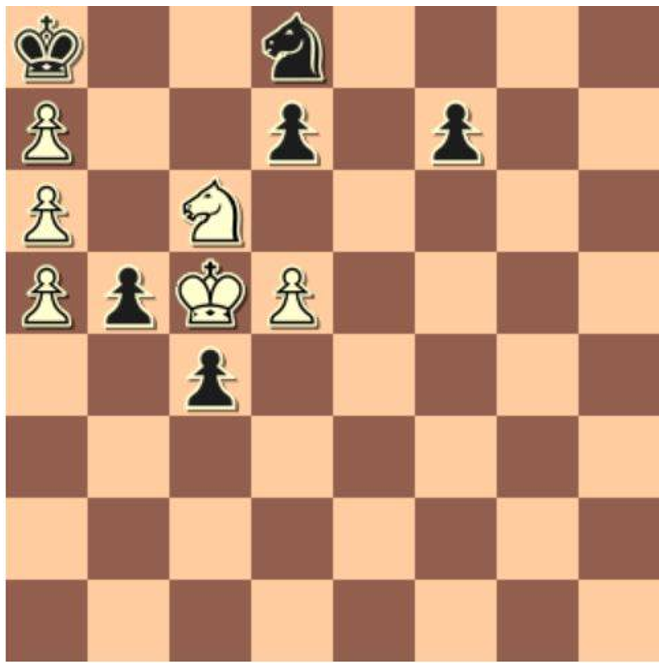
A Nice Little Combination

Although I have long retired from serious chess tournaments (they take too much time, a luxury...

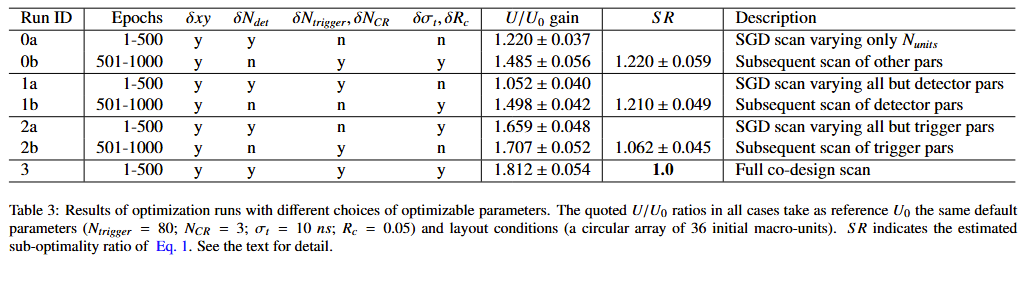
The Strange Case Of The Monotonous Running Average

These days I am putting the finishing touches on a hybrid algorithm that optimizes a system (a...

Turning 60

Strange how time goes by. And strange I would say that, since I know time does not flow, it is...

User picture.
picture for Hank Campbellpicture for Patrick Lockerbypicture for Heidi Hendersonpicture for Bente Lilja Byepicture for Sascha Vongehrpicture for Johannes Koelman
Tommaso DorigoRSS Feed of this column.

Tommaso Dorigo is an experimental particle physicist, who works for the INFN at the University of Padova, and collaborates with the CMS and the SWGO experiments. He is the president of the Read More »

Blogroll
In 1952 my uncle Antonio, then 18 years old, left his family home in Venice, Italy to never return, running away from the humiliation of a failure at school. With a friend he reached the border with France and crossed it during the night, chased by border patrols and wolves. Caught by the French police Toni - that was the abbreviated name with which was known by everybody - was offered a choice: be sent back to Italy, facing three months of jail, or enrol in the French legion. Afraid of the humiliation and the consequences, he tragically chose the latter.
Another chapter in the saga of the search for the elusive, but dominant, decay mode of the Higgs boson has been reported by the CMS collaboration last month. This is one of those specific sub-fields of research where a hard competition arises on the answer to a relatively minor scientific question. That the Higgs boson couples to b-quarks is indirectly already well demonstrated by a number of other measurements - its coupling to (third generation) quarks being demonstrated by its production rate, for example. Yet, being the first ones to "observe" the H->bb decay is a coveted goal.
Back from vacations, I think I need to report a few random things before I get back into physics blogging. So I'll peruse the science20 article category aptly called "Random Thoughts" for this one occasion.
My summer vacations took place just after a week spent in Ecuador, where I gave 6 hours of lectures on LHC physics and statistics for data analysis to astrophysics PhD students. I did report about that and an eventful hike in the last post. Unfortunately, the first week of my alleged rest was mostly spent fixing a few documents that the European Commission expected to receive by August 31st. As a coordinator of a training network, I have indeed certain obligations that I cannot escape. 

If I am alive, I probably owe it to my current very good physical shape.

That does not mean I narrowly escaped a certain death; rather, it means that if I had been slower there are good chances I would have got hit by lightning, under arduous conditions, at 4300 meters of altitude.

This is the fifth and final part of Chapter 3 of the book "Anomaly! Collider Physics and the Quest for New Phenomena at Fermilab". (the beginning of the chapter was omitted since it described a different story). The chapter recounts the pioneering measurement of the Z mass by the CDF detector, and the competition with SLAC during the summer of 1989.  The title of the post is the same as the one of chapter 3, and it refers to the way some SLAC physicists called their Fermilab colleagues, whose hadron collider was to their eyes obviously inferior to the electron-positron linear collider.
This is the fourth part of Chapter 3 of the book "Anomaly! Collider Physics and the Quest for New Phenomena at Fermilab". The chapter recounts the pioneering measurement of the Z mass by the CDF detector, and the competition with SLAC during the summer of 1989. The title of the post is the same as the one of chapter 3, and it refers to the way some SLAC physicists called their Fermilab colleagues, whose hadron collider was to their eyes obviously inferior to the electron-positron linear collider.