Fake Banner
Travel With Two Infants

The other day I traveled with Kalliopi and our two newborns to Padova from Lulea. After six full...

A Nice Little Combination

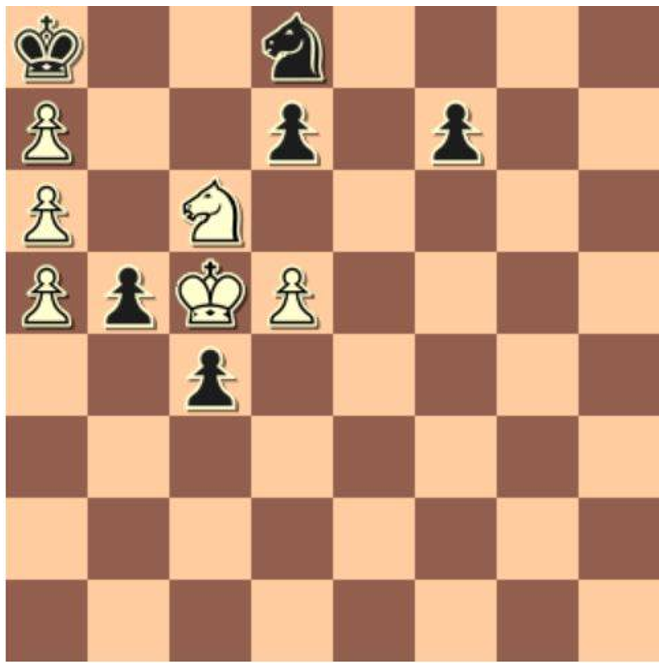
Although I have long retired from serious chess tournaments (they take too much time, a luxury...

The Strange Case Of The Monotonous Running Average

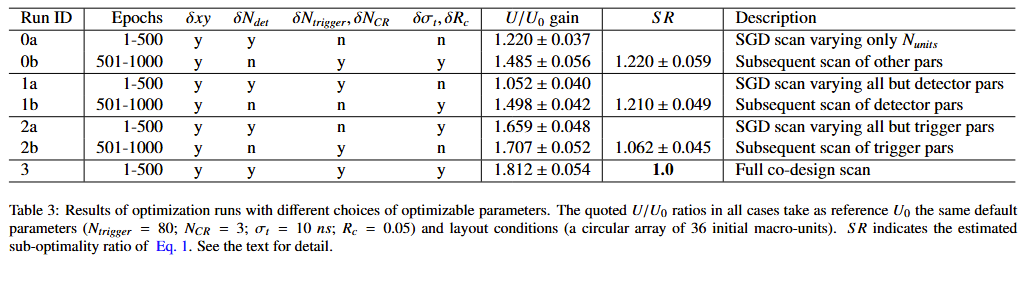
These days I am putting the finishing touches on a hybrid algorithm that optimizes a system (a...

Turning 60

Strange how time goes by. And strange I would say that, since I know time does not flow, it is...

User picture.
picture for Hank Campbellpicture for Patrick Lockerbypicture for Heidi Hendersonpicture for Bente Lilja Byepicture for Sascha Vongehrpicture for Johannes Koelman
Tommaso DorigoRSS Feed of this column.

Tommaso Dorigo is an experimental particle physicist, who works for the INFN at the University of Padova, and collaborates with the CMS and the SWGO experiments. He is the president of the Read More »

Blogroll

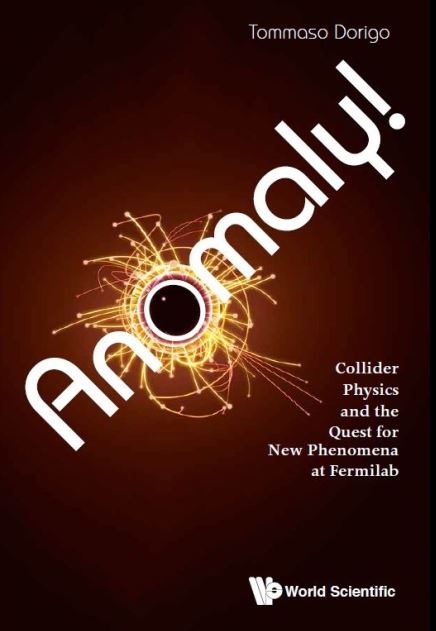
The clip below, together with the following few which will be published every few days in the coming weeks, is extracted from the third chapter of my book "Anomaly! Collider Physics and the Quest for New Phenomena at Fermilab". It recounts the pioneering measurement of the Z mass by the CDF detector, and the competition with SLAC during the summer of 1989.

Do you remember the infamous "g-2" measurement ? The anomalous magnetic moment of the muon has been for over a decade in the agenda of HEP physicists, both as a puzzle and as a hope for good things to come. 

Ever since the Brookhaven laboratories estimated the quantity at a value over 3 standard deviations away from the equally precise theoretical predictions, the topic (could the discrepancy be due to new physics??) has been commonplace in dinner table conversations among HEP physicists. 
On Saturday, July 8th, the "Sala Perla" of the Palazzo del Casinò was crowded by 600 attendees, who filled all seats and then some. The event, titled "Universo: tempo zero - breve storia dell'inizio", was organized in conjunction with the international EPS conference, which takes place until this Wednesday at Lido of Venice. It featured a discussion between the anchor, Silvia Rosa Brusin, and a few guests: Fabiola Gianotti, general director of CERN; Antonio Masiero, vice-president of INFN; and Mirko Pojer, responsible of operations of the LHC collider. The program was enriched by a few videos, and by readings by Sonia Bergamasco and jazz music by Umberto Petrin.
[UPDATE: see at the bottom for some additional commentary following a post on the matter by our friend Lubos Motl in his blog, where he quotes this piece and disagrees on the interest of finding the Xi mass in perfect agreement with an a priori calculation.]

It is always nice to learn that a new hadron is discovered - this broadens our understanding of the extremely complicated fabric of Quantum Chromodynamics (QCD), the theory of strong interactions that govern nuclear matter and are responsible for its stability. 
The 2017 edition of the European Physical Society conference will take place in the Lido of Venice this week, from July 5th to 12th. For the first time in many years -30 as of now- a big international conference in HEP is organized in Italy, a datum I found surprising at first. When I learned it, the years were 26 and I was in a local organizing committee that tried to propose another conference in the same location. Although excellent, our proposal was ditched, and from the episode I learned I should not be too surprised for the hiatus. 
Tormented water masses with distant horizons in flames. Multicoloured reflexions over living oceans. Moving images with an astounding visual impact. These are the first words that come to my mind if I try to describe Paola Nicoletti's paintings. Needless to say, I like them a lot - but judge for yourself from the three images below, or by visiting her web site. And if you do, please drop her a line!
Paola is a friend, who has recently taken her painting quite seriously. I believe these pictures give ample justification for it. Here is what Paola herself writes to describe some of her works: