On Saturday, July 8th, the "Sala Perla" of the Palazzo del Casinò was crowded by 600 attendees, who filled all seats and then some. The event, titled "Universo: tempo zero - breve storia dell'inizio", was organized in conjunction with the international EPS conference, which takes place until this Wednesday at Lido of Venice. It featured a discussion between the anchor, Silvia Rosa Brusin, and a few guests: Fabiola Gianotti, general director of CERN; Antonio Masiero, vice-president of INFN; and Mirko Pojer, responsible of operations of the LHC collider. The program was enriched by a few videos, and by readings by Sonia Bergamasco and jazz music by Umberto Petrin.
[UPDATE: see at the bottom for some additional commentary following a post on the matter by our friend Lubos Motl in his blog, where he quotes this piece and disagrees on the interest of finding the Xi mass in perfect agreement with an a priori calculation.]
It is always nice to learn that a new hadron is discovered - this broadens our understanding of the extremely complicated fabric of Quantum Chromodynamics (QCD), the theory of strong interactions that govern nuclear matter and are responsible for its stability.
The
2017 edition of the European Physical Society conference will take place in the Lido of Venice this week, from July 5th to 12th. For the first time in many years -30 as of now- a big international conference in HEP is organized in Italy, a datum I found surprising at first. When I learned it, the years were 26 and I was in a local organizing committee that tried to propose another conference in the same location. Although excellent, our proposal was ditched, and from the episode I learned I should not be too surprised for the hiatus.
Tormented water masses with distant horizons in flames. Multicoloured reflexions over living oceans. Moving images with an astounding visual impact. These are the first words that come to my mind if I try to describe Paola Nicoletti's paintings. Needless to say, I like them a lot - but judge for yourself from the three images below, or by
visiting her web site. And if you do, please drop her a line!
Paola is a friend, who has recently taken her painting quite seriously. I believe these pictures give ample justification for it. Here is what Paola herself writes to describe some of her works:
The "Art&Science" project is coming to the final phase as far as the activities in Venice are concerned. About 100 15 to 17-year-old students from high schools in Venice have assisted to lessons on particle physics and the Higgs boson in the past months, and have been challenged to produce, alone or in groups of up to three, artistic compositions inspired by what they had learned. This resulted in 38 artworks, many of which are really interesting. The 17 best works will be exposed at the Palazzo del Casinò of the Lido of Venice, the site of the international EPS conference, next July 5-12, and the three best among them will receive prizes during a public event on July 8th, in presence of the CERN director general Fabiola Gianotti.


 Choosing Your Bets: The Selection Bias
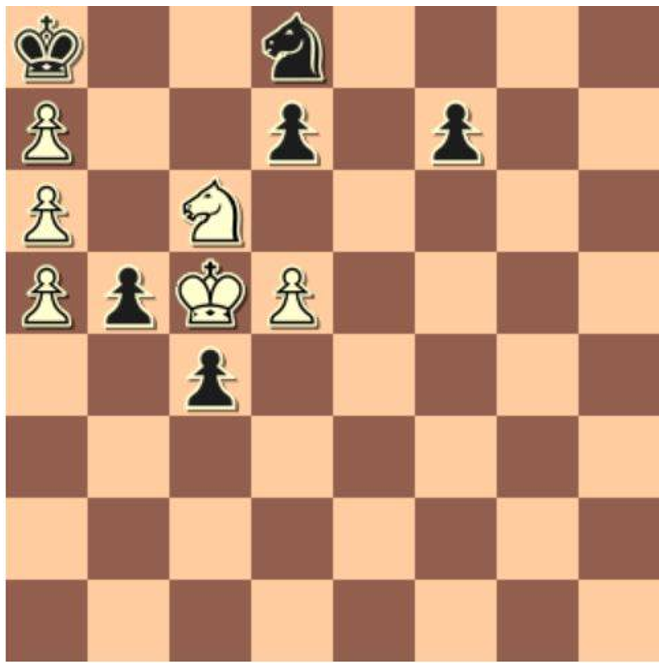 A Chess Study Requiring Backpropagation
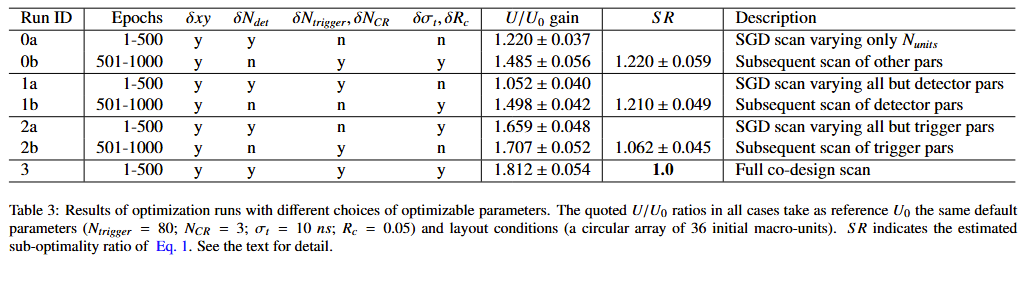 Co-Design Of Scientific Experiments