Fake Banner
Travel With Two Infants

The other day I traveled with Kalliopi and our two newborns to Padova from Lulea. After six full...

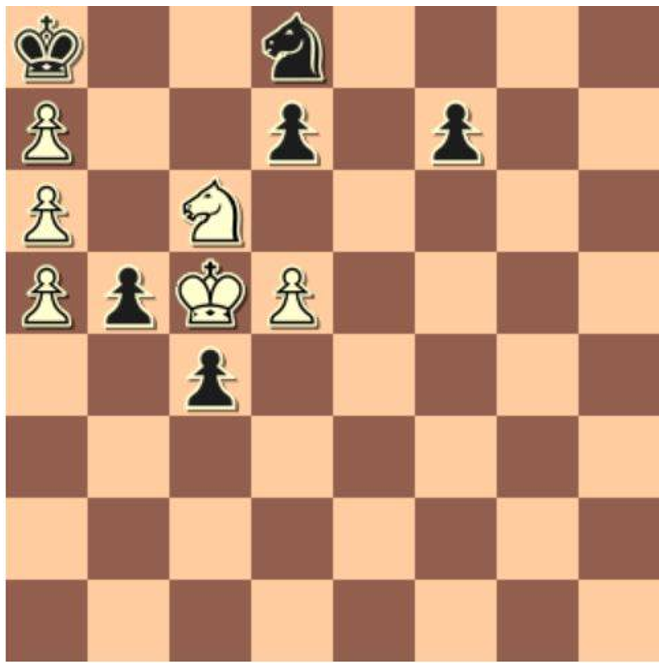
A Nice Little Combination

Although I have long retired from serious chess tournaments (they take too much time, a luxury...

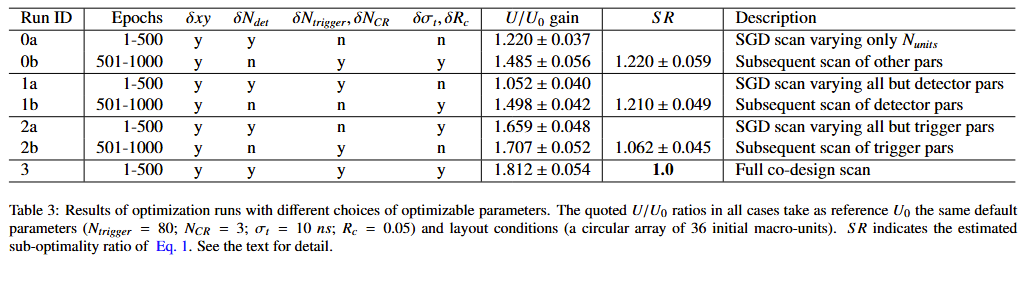
The Strange Case Of The Monotonous Running Average

These days I am putting the finishing touches on a hybrid algorithm that optimizes a system (a...

Turning 60

Strange how time goes by. And strange I would say that, since I know time does not flow, it is...

User picture.
picture for Hank Campbellpicture for Patrick Lockerbypicture for Heidi Hendersonpicture for Bente Lilja Byepicture for Sascha Vongehrpicture for Johannes Koelman
Tommaso DorigoRSS Feed of this column.

Tommaso Dorigo is an experimental particle physicist, who works for the INFN at the University of Padova, and collaborates with the CMS and the SWGO experiments. He is the president of the Read More »

Blogroll
Decision trees are one of the many players in the booming field of supervised machine learning. They can be used to classify elements into two or more classes, depending on their characteristics. Their interest in particle physics applications is large, as we always need to try and decide on a statistical basis what kind of physics process originated the particle collision we see in our detector.
Today I would like to mention that my book "Anomaly! Collider Physics and the Quest for New Phenomena at Fermilab" is now available for purchase as E-Book at its World Scientific site.
I would like to use this space to advertise a couple of blogs you might be interesting to know about. Many of you who erratically read this blog may probably have already bumped into those sites, but I figured that as the readership of a site varies continuously, there is always the need to do some periodic evangelization.

Every year, at about this time, the level of activity of physicists working in experimental collaborations at high-energy colliders and elsewhere increases dramatically. We are approaching the time of "winter conferences", so called in order to distinguish them from "summer conferences". 
During winter conferences, which take place between mid-February and the end of March in La Thuile, Lake Louise, and other fashionable places close to ski resorts, experimentalists gather to show off their latest results. The same ritual repeats during the summer in a few more varied locations around the world. 

The so-called Lambda_b baryon is a well-studied particle nowadays, with several experiments having measured its main production properties and decay modes in the course of the past two decades. It is a particle made of quarks: three of them, like the proton and the neutron. Being electrically neutral, it is easily likened to the neutron, which has a quark composition "udd". In the space of quark configurations, the Lambda_b is in fact obtained by exchanging a down-type quark of the neutron with a bottom quark, getting the "udb" combination.
Lubos Motl published the other day in his crazily active blog a very nice new review of "Anomaly! Collider Physics and the Quest for New Phenomena at Fermilab". The review is authored by Tristan du Pree, a colleague of mine who has worked in CMS until very recently - now he moved to a new job and changed to ATLAS! (BTW  thanks Lubos, and thanks Tristan!)
I liked a lot Tristan's commentary of my work, and since he mentions with quite appreciative terms the slow-motion description of a peculiar collision I offer in my book, I figured I'd paste that below.