During the past few months I have been giving seminars and colloquia in several institutes around Europe and the US. The topic was more or less always the same, i.e. the discovery criterion used in fundamental physics to decide whether to claim for the observation of a new phenomenon. We set this at 5-sigma -that's, e.g., how the Higgs boson has been discovered in 2012. This is an arbitrary choice, and there is a lot to learn from a study of the history of how the criterion became an established practice, and from the statistical issues it entails.
Here is a list of the past events:
- Oslo University, October 26
- LIP Lisbon, October 27
- SLAC laboratory, November 8
- Northwestern University, November 11
- Royal Holloway University London, November 30
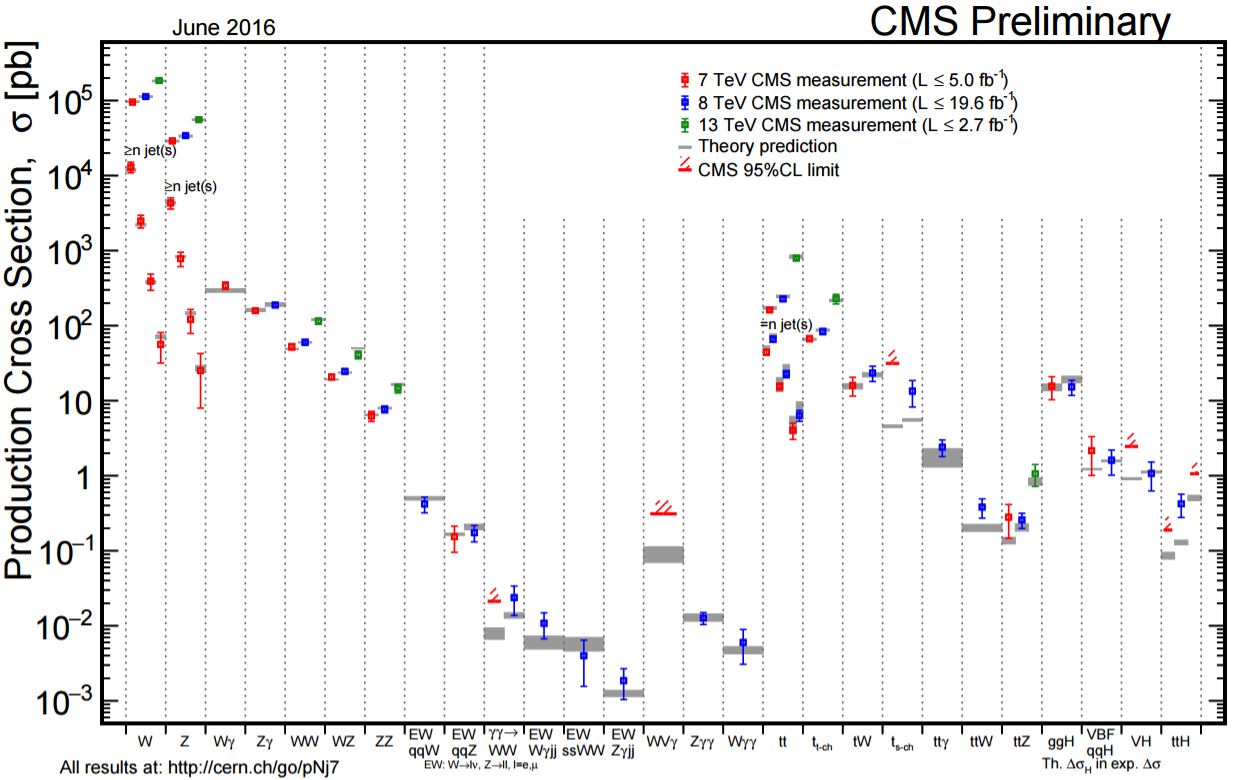
Today while I was having a shower I happened to think at how cool it is that we can actually measure the rate of production, in single hadron-hadron collisions, of multiple elementary particles. A graph like the one below, now routinely produced by ATLAS and CMS whenever they collect more data or switch to a higher center-of-mass energy, looks "natural" to produce, but it is actually surprising that we indeed can pull it off - it requred careful design choices in a number of ways. I wish to discuss one of these here.
In any physicists' new-year wish list there is a mandatory item: the finding of some unexpected, bolt-from-the-blue new physics result - possibly leading to highly-cited publications, press interviews and invitations, and ultimately career advancements or other similar ego boosts. Because we do it for the progress of mankind and the furthering of human knowledge, but we also do it for ourselves- we are human beings too.
As I am traveling around Europe this week, giving seminars in several places (Hamburg yesterday, Berlin today, and Clermont-Ferrand on Friday) my connectivity is erratic and my capability to follow the development of data analysis and new publications is strongly lowered. My connections to the world of LHC research continues through email exchanges, though.
The DZERO collaboration
published earlier this year a search for resonances decaying to

pairs in its Run-2 dataset of 2-TeV proton-antiproton collisions, produced by the now defunct Tevatron collider in the first 10 years of this century.
I am told that when a patient is diagnosed with a terminal illness, he or she will likely go through a well-defined sequence of stages.
The first stage is Denial: the patient will convince him- or herself that there is a mistake in the diagnosis, that somehow the doctors are wrong, or something alike. It is a protective, visceral reaction, one preventing the shock of reckoning with a completely altered landscape. There follows a state of Anger: the "why me" sentiment is the cause of this state of mind. Then there is Fear, brought about by the lack of knowledge of what is coming. Then comes Grief - for oneself as well as for the loved ones. And finally, Acceptance, which brings peace to the soul.


 Choosing Your Bets: The Selection Bias
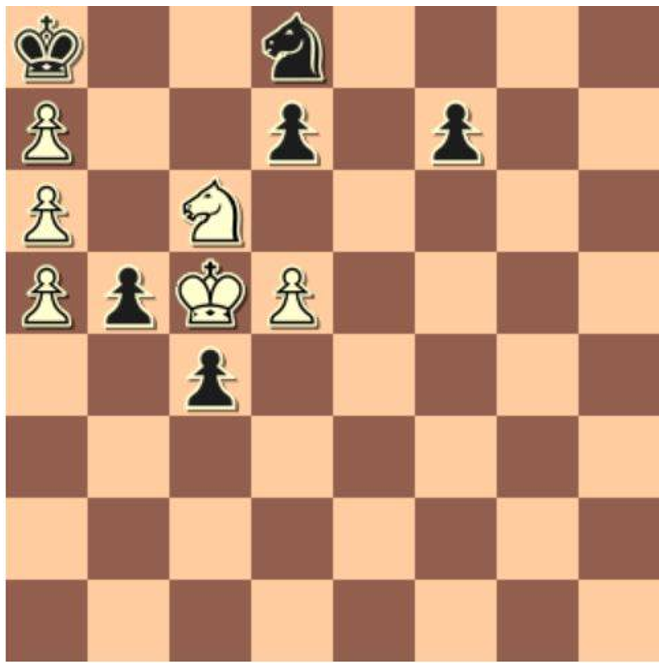 A Chess Study Requiring Backpropagation
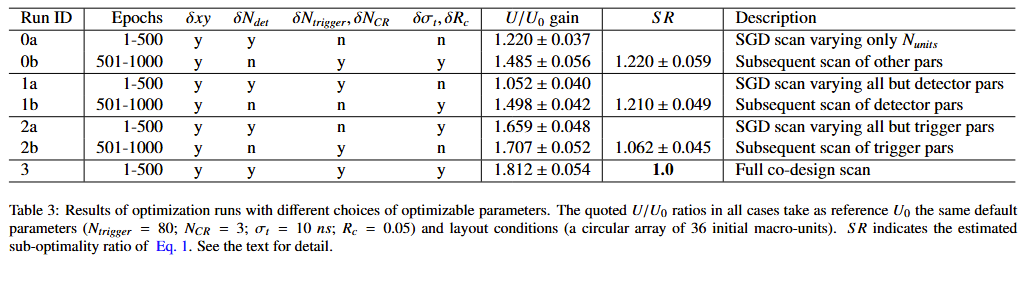 Co-Design Of Scientific Experiments