Fake Banner
Travel With Two Infants

The other day I traveled with Kalliopi and our two newborns to Padova from Lulea. After six full...

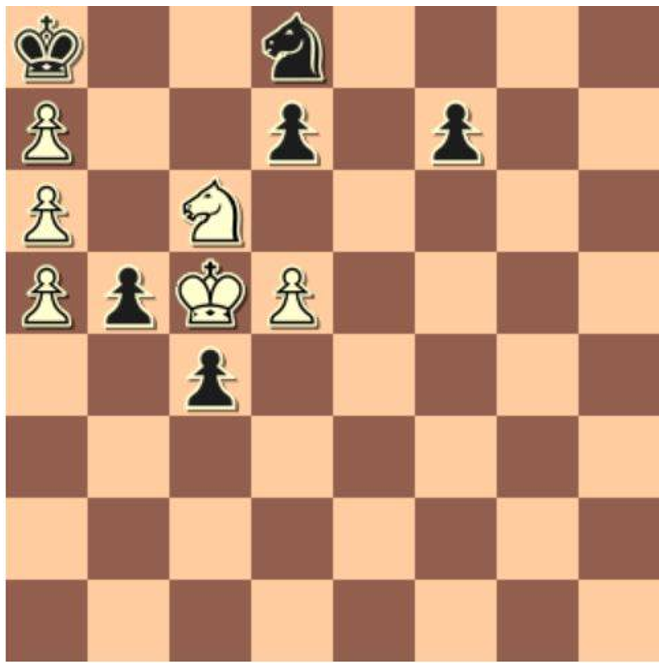
A Nice Little Combination

Although I have long retired from serious chess tournaments (they take too much time, a luxury...

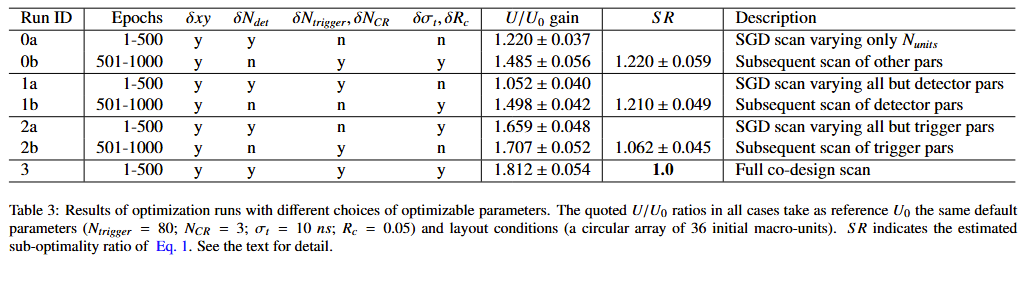
The Strange Case Of The Monotonous Running Average

These days I am putting the finishing touches on a hybrid algorithm that optimizes a system (a...

Turning 60

Strange how time goes by. And strange I would say that, since I know time does not flow, it is...

User picture.
picture for Hank Campbellpicture for Patrick Lockerbypicture for Heidi Hendersonpicture for Bente Lilja Byepicture for Sascha Vongehrpicture for Johannes Koelman
Tommaso DorigoRSS Feed of this column.

Tommaso Dorigo is an experimental particle physicist, who works for the INFN at the University of Padova, and collaborates with the CMS and the SWGO experiments. He is the president of the Read More »

Blogroll
The mystery of what clumps galaxy clusters together, and provides for a quarter of the matter-energy budget of the universe, really looks like _the_ most important scientific question we face today. There is nowadays compelling evidence of the correctness of the standard cosmological model, coming from the cosmic microwave background maps provided lastly by Planck as well as from a number of other observations - of supernovae, galaxy clusters, galaxy rotation curves, etcetera. So we know there has to be dark matter out there. But what is it?
UPDATE: before you read the text below, one useful bit of information. The author of the analysis described below is not a member of ALEPH since 2004. He got access to the data as any of you could, since the ALEPH data is open access by now. There would be a lot to discuss about whether it is a good thing (I think so) or not that any regular joe or jane can take collider data and spin it his or her own way and claim new physics effects, but let's leave it for some other post. What is important is that ALEPH is not behind this publication, and members of it have tried to explain to the author that the claim was bogus. Indeed, on the matter of the source of the signal: it is clearly spurious, as the muons are collinear with the b-jets emitted in the Z decay.

Last August 27 a full-day outreach event was held in the nice small town of Veroia, in northern Greece, as one of the satellite activities to the international conference “Quark Confinement and the Hadron Spectrum” which took place in Thessaloniki during the following days.

Last December, when the ATLAS and CMS experiments gave two bacl-to-back talks at the end-of-the-year LHC "physics jamboree" in the CERN main auditorium, the whole world of particle physics was confronted with a new question nobody had seen coming: could a 750 GeV particle be there, decaying a sizable fraction of the time into pairs of energetic photons? What new physics could account for it? And how to search for an experimental confirmation in other channels or phenomena?

The text below is part of a chapter of "Anomaly!" which I eventually removed from the book, mainly due to the strict page limit set by my publisher. It is a chapter that discusses the preparations for Run 2 of the Fermilab Tevatron, which started in 2002 and lasted almost 10 years. There were many, many stories connected to the construction of the CDF II detector, and it is a real pity that they did not get included in the book. So at least I can offer some of them here for your entertainment... [A disclaimer: the text has not been proofread and is in its initial, uncorrected state.]

The first few copies of my new book, “Anomaly! – Collider Physics and the Quest for New Phenomena at Fermilab” arrived this morning from Singapore.