Fake Banner
Travel With Two Infants

The other day I traveled with Kalliopi and our two newborns to Padova from Lulea. After six full...

A Nice Little Combination

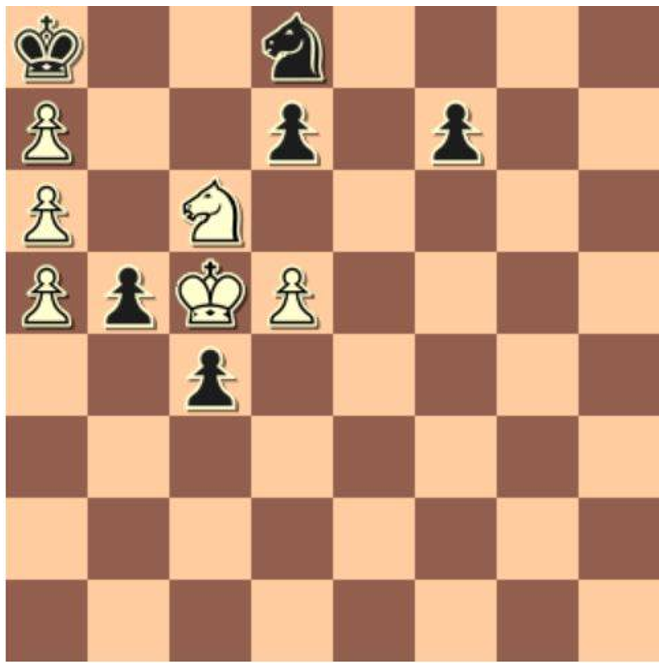
Although I have long retired from serious chess tournaments (they take too much time, a luxury...

The Strange Case Of The Monotonous Running Average

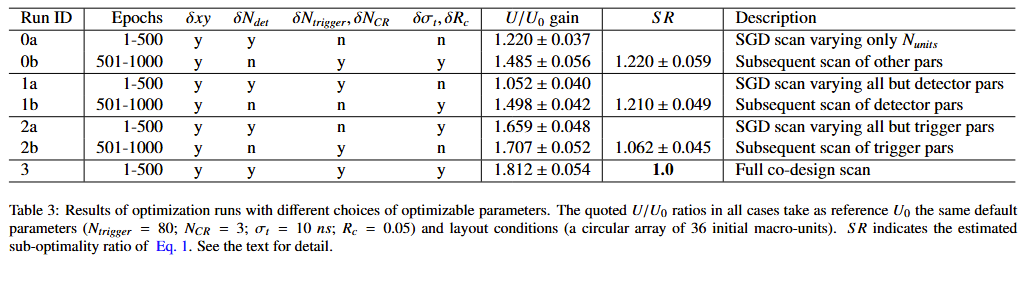
These days I am putting the finishing touches on a hybrid algorithm that optimizes a system (a...

Turning 60

Strange how time goes by. And strange I would say that, since I know time does not flow, it is...

User picture.
picture for Hank Campbellpicture for Patrick Lockerbypicture for Heidi Hendersonpicture for Bente Lilja Byepicture for Sascha Vongehrpicture for Johannes Koelman
Tommaso DorigoRSS Feed of this column.

Tommaso Dorigo is an experimental particle physicist, who works for the INFN at the University of Padova, and collaborates with the CMS and the SWGO experiments. He is the president of the Read More »

Blogroll
The INFN exam for nuclear and subnuclear physicists, to select 58 new researchers, took place on September 19th (first test) and 20th (second test) in Rome. Two different locations for the two tests were set up as the number of candidates who enrolled in the selection were 720, a too large number to manage in a single location.

Yesterday I read with interest and curiosity some pages of a book on the search and discovery of the Higgs boson, which was published last March by Rizzoli (in Italian only, at least for the time being). The book, authored by physics professor and ex CMS spokesperson Guido Tonelli, is titled "La nascita imperfetta delle cose" ("The imperfect birth of things"). 
The 2012 measurements of the Higgs boson, performed by ATLAS and CMS on 7- and 8-TeV datasets collected during Run 1 of the LHC, were a giant triumph of fundamental physics, which conclusively showed the correctness of the theoretical explanation of electroweak symmetry breaking conceived in the 1960s.

The Higgs boson signals found by the experiments were strong and coherent enough to convince physicists as well as the general public, but at the same time the few small inconsistencies unavoidably present in any data sample, driven by statistical fluctuations, were a stimulus for fantasy interpretations. Supersymmetry enthusiasts, in particular, saw the 125 GeV boson as the first found of a set of five. SUSY in fact requires the presence of at least five such states.
Next Monday, the Italian city of Rome will swarm with about 700 young physicists. They will be there to participate to a selection of 58 INFN research scientists. In previous articles (see e.g.
Particle physics conferences are a place where you can listen to many different topics - not just news about the latest precision tests of the standard model or searches for new particles at the energy frontier. If we exclude the very small, workshop-like events where people gather to focus on a very precise topic, all other events do allow for the contamination from reports of parallel fields of research. The reason is of course that there is a significant cross-fertilization between these fields. 
Gino Bolla was an Italian scientist and the head of the Silicon Detector Facility at Fermilab. And he was a friend and a colleague. He died yesterday in a home accident. Below I remember him by recalling some good times together. Read at your own risk. 

Dear Gino,

   news of your accident reach me as I am about to board a flight in Athens, headed back home after a conference in Greece. Like all unfiltered, free media, Facebook can be quite cruel as a means of delivering this kind of information, goddamnit.