Fake Banner
Travel With Two Infants

The other day I traveled with Kalliopi and our two newborns to Padova from Lulea. After six full...

A Nice Little Combination

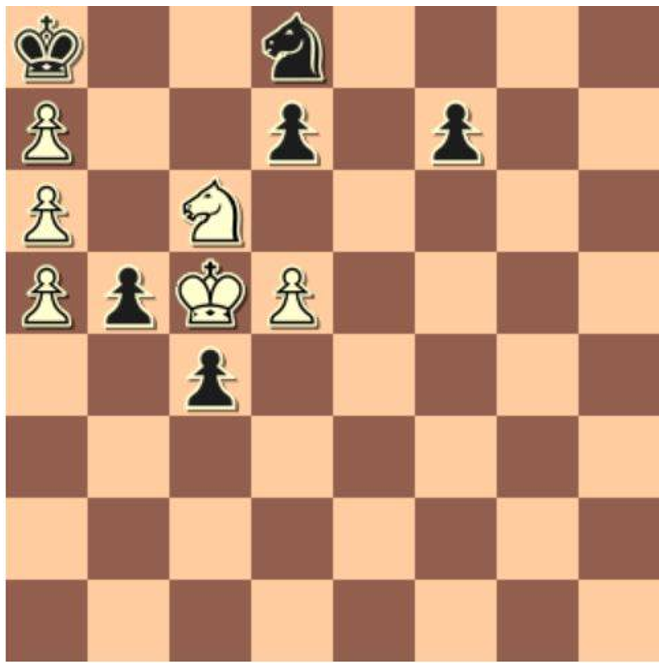
Although I have long retired from serious chess tournaments (they take too much time, a luxury...

The Strange Case Of The Monotonous Running Average

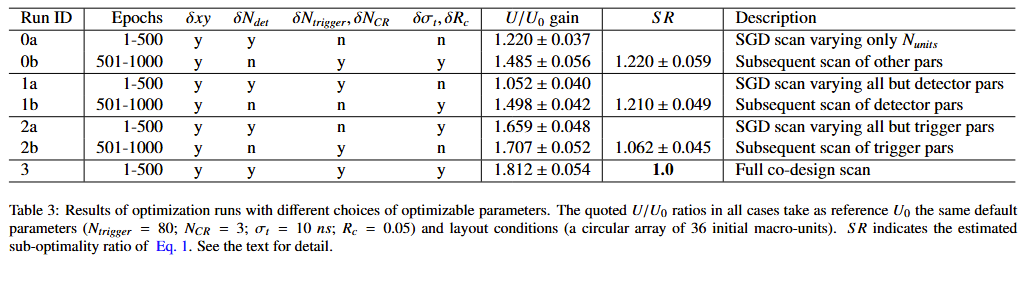
These days I am putting the finishing touches on a hybrid algorithm that optimizes a system (a...

Turning 60

Strange how time goes by. And strange I would say that, since I know time does not flow, it is...

User picture.
picture for Hank Campbellpicture for Patrick Lockerbypicture for Heidi Hendersonpicture for Bente Lilja Byepicture for Sascha Vongehrpicture for Johannes Koelman
Tommaso DorigoRSS Feed of this column.

Tommaso Dorigo is an experimental particle physicist, who works for the INFN at the University of Padova, and collaborates with the CMS and the SWGO experiments. He is the president of the Read More »

Blogroll
As an old time chessplayer who's stopped competing in tournaments, I often entertain myself with the odd blitz game in some internet chess server. And more often than not, I play rather crappy chess. So nothing to report there... However fluctuations do occur.
I just played a combinative-style game which I wish to share, although I did not have the time yet (and I think I won't have time in the near future) to check the moves with a computer program. So my moves might well be flawed. Regardless, I enjoyed playing the game so that's enough motivation to report it here.
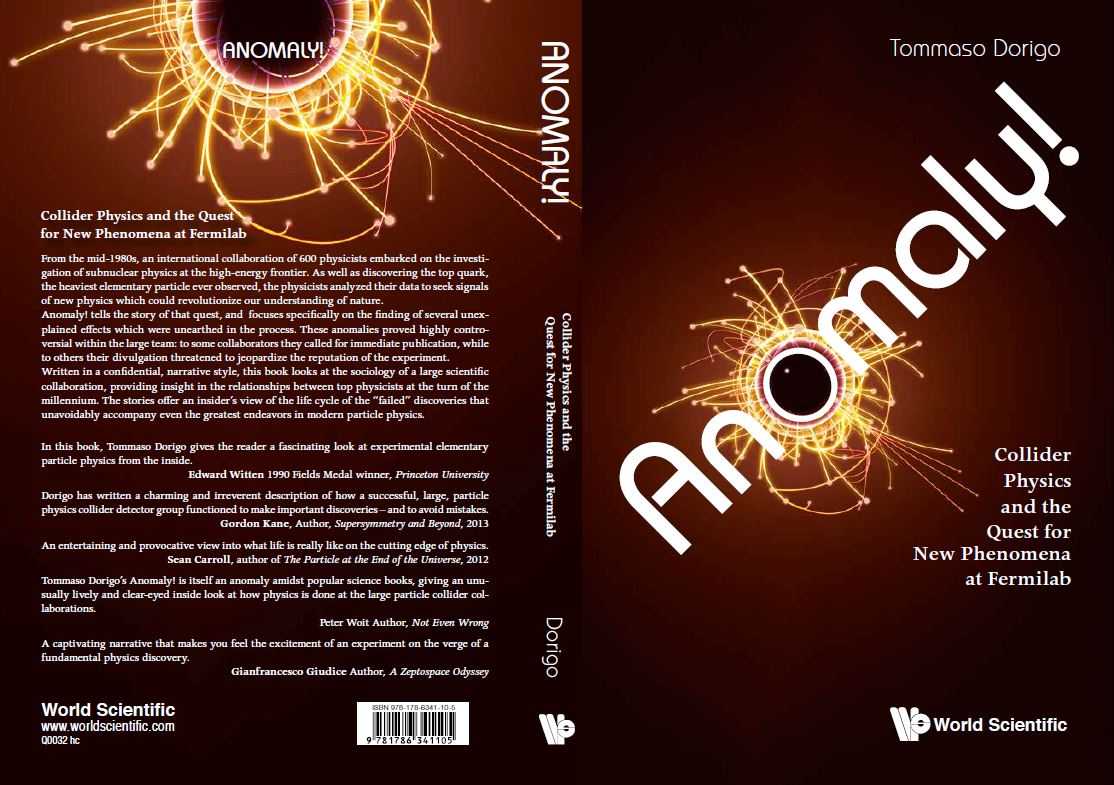
The book "Anomaly! Collider Physics and the Quest for New Phenomena at Fermilab" is going to press as we speak, and its distribution in bookstores is foreseen for the beginning of November. In the meantime, I am getting ready to present it in several laboratories and institutes. I am posting here the coordinates of events which are already scheduled, in case anybody lives nearby and/or has an interest in attending.
- On November 29th at 4PM there will be a presentation at CERN (more details will follow).


The Italian National Institute for Nuclear Physics offers 20 post-doctoral positions in experimental physics to foreigners with a PhD obtained no earlier than November 2008. 
So if have a PhD (in Physics, but I guess other disciplines are also valid as long as your cv conforms), you like Italy, or if you would like to come and work with me at the search and study of the Higgs boson with the CMS experiment (or even if you would like to do something very different, in another town, with another experiment) you might consider applying!

The economical conditions are not extraordinary in an absolute sense, but you would still end up getting a salary more or less like mine, which in Italy sort of allows one to live a decent life.
While I do not believe that this series of posts can be really useful to my younger colleagues, who will in a month have to participate in a tough selection for INFN researchers in Rome, I think there is some value in continuing what I have started last month. 
After all, as physicists we are problem solvers, and some exercise is good for all of us. Plus, the laypersons who occasionally visit this blog may actually enjoy fiddling with the questions. For them, though, I thought it would be useful to also get to see the answers to the questions, or at least _some_ answer.
As a long-time meteor observer, I never lose an occasion to watch the peak of good showers. The problem is that similar occasions have become less frequent in the recent times, due to a busier agenda. 
In the past few days, however, I was at CERN and could afford going out to observe the night sky, so it made sense to spend at least a couple of hours to check on the peak activity of the Perseids, which this year was predicted to be stronger than usual.
As explained in the first installment of this series, these questions are a warm-up for my younger colleagues, who will in two months have to pass a tough exam to become INFN researchers. In fact, now that the application period has ended, I can say that there have been 718 applications for 58 positions. That's a lot, but OTOH any applicants starts off with a one-in-12.4 chance of getting the job, which is not so terribly small.