Fake Banner
Travel With Two Infants

The other day I traveled with Kalliopi and our two newborns to Padova from Lulea. After six full...

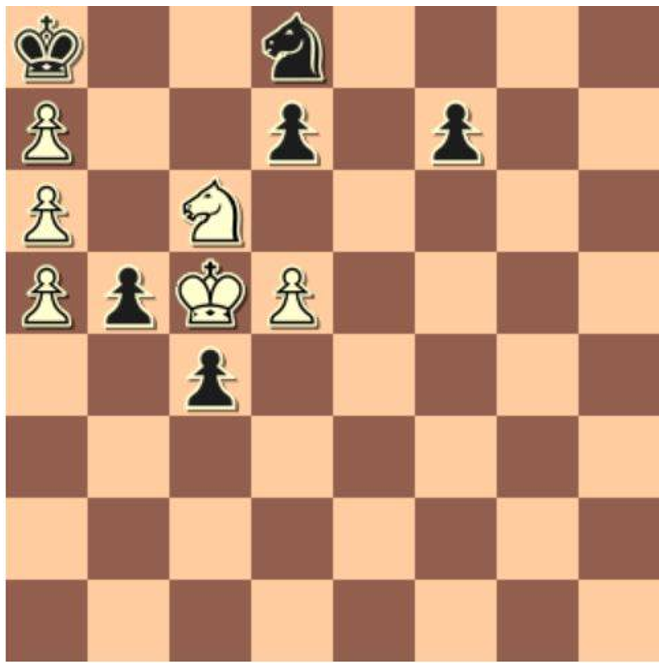
A Nice Little Combination

Although I have long retired from serious chess tournaments (they take too much time, a luxury...

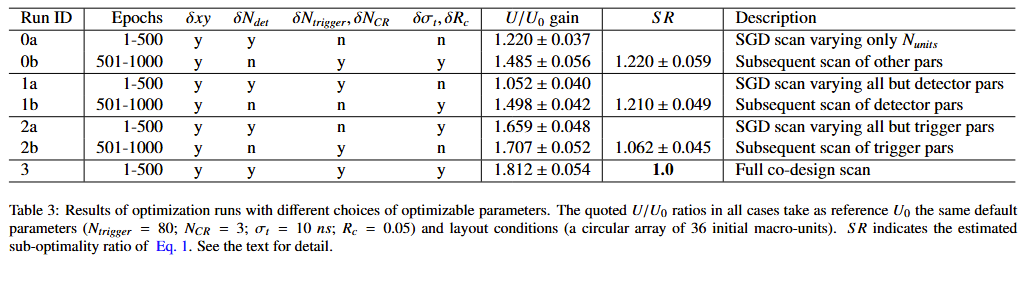
The Strange Case Of The Monotonous Running Average

These days I am putting the finishing touches on a hybrid algorithm that optimizes a system (a...

Turning 60

Strange how time goes by. And strange I would say that, since I know time does not flow, it is...

User picture.
picture for Hank Campbellpicture for Patrick Lockerbypicture for Heidi Hendersonpicture for Bente Lilja Byepicture for Sascha Vongehrpicture for Johannes Koelman
Tommaso DorigoRSS Feed of this column.

Tommaso Dorigo is an experimental particle physicist, who works for the INFN at the University of Padova, and collaborates with the CMS and the SWGO experiments. He is the president of the Read More »

Blogroll
As explained in the previous installment of this series, these questions are a warm-up for my younger colleagues, who will in two months have to pass a tough exam to become INFN researchers.
By the way, when I wrote the first question yesterday I thought I would not need to explain it in detail, but it just occurred to me that a disclaimer would be useful. Here it is:
Today I wish to start a series of posts that are supposed to help my younger colleagues who will, in two months from now, compete for a position as INFN research scientists. 
The INFN has opened 73 new positions and the selection includes two written exams besides an evaluation of titles and an oral colloquium. The rules also say that the candidates will have to pass the written exams with a score of at least 140/200 on each, in order to access the oral colloquium. Of course, no information is given on how the tests will be graded, so 140 over 200 does not really mean much at this point.
My book "Anomaly! - Collider Physics and the Quest for New Phenomena at Fermilab" is slowly getting its finishing touches, as the second round of proofreading draws to a close. The book is scheduled to appear in bookstores on November 5th, and it makes sense to start planning some events for its presentation.
One such event will take place at the CERN library on November 29th, at 4PM. I am told that CERN already ordered the book to sell it in its bookshop, so it will be good to present the work to the community there - after all, the book is for everybody but I expect that it can be of higher interest to scientists and people in some way connected to research in High-Energy physics.
Gavin Salam's talk at the "Altarelli Memorial" session of the ICNFP 2016 conference, which is presently taking place in Kolimbari (Crete), was very interesting and I wish to report here about it. 
I am spending a week in Kolimbari, a nice seaside place in western Crete. Here the fifth International Conference on New Frontiers in Physics is being held in the Orthodox Academy of Crete. The conference gathers together high-energy experimentalists and theorists, nuclear physicists, neutrino physicists, and also other specialists. 
As I am not talking this year (I am here because I am co-organizing a mini-workshop on Higgs physics), I thought it was a good idea to ask the organizers if they needed help, and I got the task of organizing the poster selection committee. 26 posters have been presented, and will be on display tomorrow evening. We will have to select the best ones, whose authors will win a prize.

Final results of searches for particles decaying to photon pairs in 2015 data keep hopes alive for imminent ground-breaking discovery

On December 15th last year, as the physics coordinators of the ATLAS and CMS collaborations showcased the results of their new searches, particle physicists around the world held their breath. Both experiments showed preliminary results from the analysis of LHC data acquired during 2015 at 13 TeV. That unprecedented energy made the potential for new discoveries high.