Fake Banner
Travel With Two Infants

The other day I traveled with Kalliopi and our two newborns to Padova from Lulea. After six full...

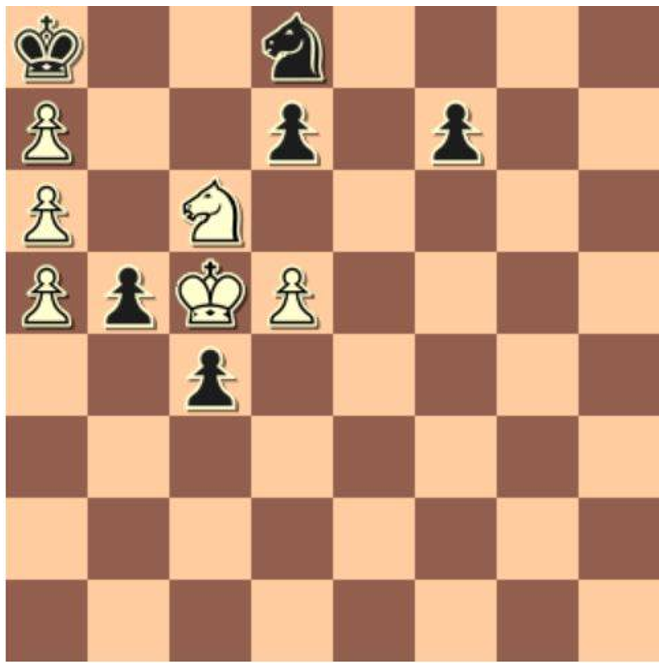
A Nice Little Combination

Although I have long retired from serious chess tournaments (they take too much time, a luxury...

The Strange Case Of The Monotonous Running Average

These days I am putting the finishing touches on a hybrid algorithm that optimizes a system (a...

Turning 60

Strange how time goes by. And strange I would say that, since I know time does not flow, it is...

User picture.
picture for Hank Campbellpicture for Patrick Lockerbypicture for Heidi Hendersonpicture for Bente Lilja Byepicture for Sascha Vongehrpicture for Johannes Koelman
Tommaso DorigoRSS Feed of this column.

Tommaso Dorigo is an experimental particle physicist, who works for the INFN at the University of Padova, and collaborates with the CMS and the SWGO experiments. He is the president of the Read More »

Blogroll
With CERN's Large Hadron Collider slowly but steadily cranking up its instantaneous luminosity, expectations are rising on the results that CMS and ATLAS will present at the 2016 summer conferences, in particular ICHEP (which will take place in Chicago at the beginning of August). The data being collected will be used to draw some conclusions on the tentative signal of a diphoton resonance, as well as on the other 3-sigma effects seen by about 0.13 % of the searches carried out on previous data this far.
Despite the foul weather that has sieged central Europe in the past few days, with floods, destruction, even deaths, and the occasional evacuation of the auditorium where physicists discussed their recent results, the 28th edition of the "Rencontres de Blois" has taken place as usual.
The conference is a periodic event where particle physics and cosmology are discussed with an attention to interdisciplinarity. It takes place in the city of Blois, in central France, a nice town on the river Loire. There, a sizable number of interesting talks have been taking place in the last few days. But one in particular has stirred the interest of particle physicists worldwide.
I feel one could describe the new B-physics result by ATLAS as "stalking". A very subtle detail of the behavior of neutral B mesons has been recently measured, in search of deviations from Standard Model predictions - or for a confirmation of the model. 
First off I should give some background on what ATLAS is, and what neutral B mesons are. ATLAS is one of the big multi-purpose experiments of the Large Hadron Collider at CERN, the machine that discovered the Higgs boson in 2012 and which is poised to search for new physics for the next two decades, studying proton-proton collisions at 13 TeV in the center of mass.
In a chapter of the book I have written, "Anomaly! - Collider physics and the quest for new phenomena at Fermilab" (available from September this year), I made an effort to explain a rather counter-intuitive mechanism at the basis of data collection in hadron colliders: the trigger prescale. I would like to have a dry run of the text here, to know if it is really too hard to understand - I still have time to tweak it if needed. So let me know if you understand the description below!

The text below is maybe hard to read as it is taken off context; however, let me at least spend one
I am told by a TOTEM manager that this is public news and so it can be blogged about - so here I would like to explain a rather cunning plan that the TOTEM and the CMS collaborations have put together to enhance the possibilities of a discovery, and a better characterization, of the particle that everybody hopes is real, the 750 GeV resonance seen in photon pairs data by ATLAS and CMS in their 2015 data.
With the Large Hadron Collider now finally up and running after the unfortunate weasel incident, physicists at CERN and around the world are eager to put their hands on the new 2016 collisions data. The #MoarCollisions hashtag keeps entertaining the tweeting researchers and their followers, and everybody is anxious to finally ascertain whether the tentative signal of a new 750 GeV particle seen in diphoton decays in last year's data will reappear and confirm an epic discovery, or what.