

Fake Banner
Choosing Your Bets: The Selection Bias

As some of the long-time readers of this blog know, in this column I have occasionally discussed...

Have A Master In Science, Want A Post-Doc Position Directly?

Do you have a master in Science, and want to start a Post-Doc position directly? You can have it...
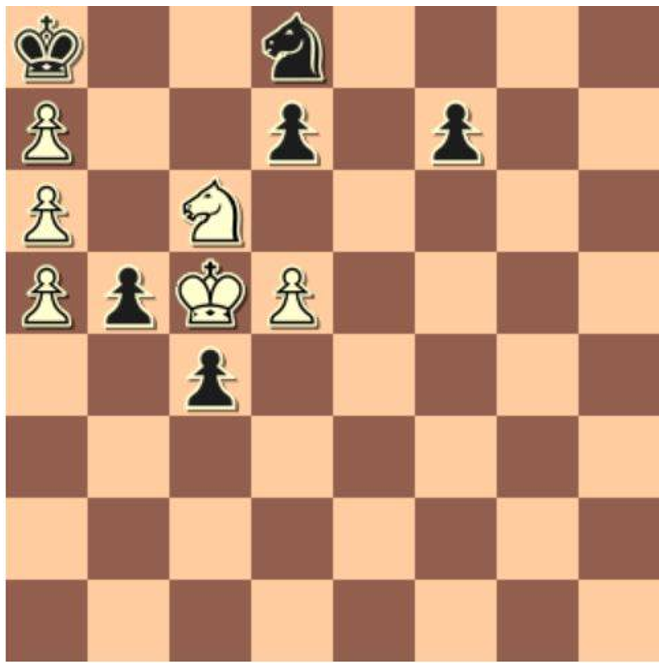
A Chess Study Requiring Backpropagation

The following position is a win for white. But how?It seems like white is able to grab a knight...
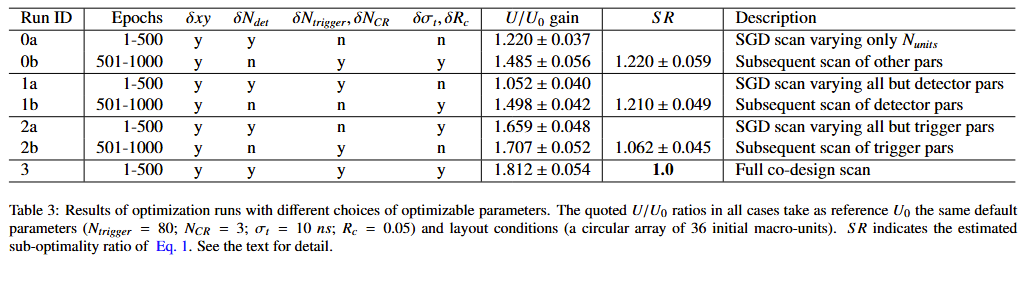
Co-Design Of Scientific Experiments

Next Monday, or Tuesday at the latest, you will find a new bulky paper in the arXiv. Titled "On...

User picture.
picture for Hank Campbellpicture for Heidi Hendersonpicture for Patrick Lockerbypicture for Bente Lilja Byepicture for Sascha Vongehrpicture for Johannes Koelman
Tommaso DorigoRSS Feed of this column.

Tommaso Dorigo is an experimental particle physicist, who works for the INFN at the University of Padova, and collaborates with the CMS and the SWGO experiments. He is the president of the Read More »

Blogroll
I feel one could describe the new B-physics result by ATLAS as "stalking". A very subtle detail of the behavior of neutral B mesons has been recently measured, in search of deviations from Standard Model predictions - or for a confirmation of the model. 
First off I should give some background on what ATLAS is, and what neutral B mesons are. ATLAS is one of the big multi-purpose experiments of the Large Hadron Collider at CERN, the machine that discovered the Higgs boson in 2012 and which is poised to search for new physics for the next two decades, studying proton-proton collisions at 13 TeV in the center of mass.
In a chapter of the book I have written, "Anomaly! - Collider physics and the quest for new phenomena at Fermilab" (available from September this year), I made an effort to explain a rather counter-intuitive mechanism at the basis of data collection in hadron colliders: the trigger prescale. I would like to have a dry run of the text here, to know if it is really too hard to understand - I still have time to tweak it if needed. So let me know if you understand the description below!

The text below is maybe hard to read as it is taken off context; however, let me at least spend one
I am told by a TOTEM manager that this is public news and so it can be blogged about - so here I would like to explain a rather cunning plan that the TOTEM and the CMS collaborations have put together to enhance the possibilities of a discovery, and a better characterization, of the particle that everybody hopes is real, the 750 GeV resonance seen in photon pairs data by ATLAS and CMS in their 2015 data.
With the Large Hadron Collider now finally up and running after the unfortunate weasel incident, physicists at CERN and around the world are eager to put their hands on the new 2016 collisions data. The #MoarCollisions hashtag keeps entertaining the tweeting researchers and their followers, and everybody is anxious to finally ascertain whether the tentative signal of a new 750 GeV particle seen in diphoton decays in last year's data will reappear and confirm an epic discovery, or what.

The twelfth edition of “Quark Confinement and the Hadron Spectrum“, a particle physics conference specialized in QCD and Heavy Ion physics, will be held in Thessaloniki this year, from

While tediously compiling a list of scientific publications that chance to have my name in the authors list (I have to apply for a career advancement and apparently the committee will scrutinize the hundred-page-long lists of that kind that all candidates submit), I discovered today that I just passed the mark of 1000 published articles. This happened on February 18th 2016 with the appearance in print of a paper on dijet resonance searches by CMS. Yay! And 7 more have been added to the list since then.





